The Likely Origins Of “Here We Go Round the Mulberry Bush” Are Surprisingly Dark
Published June 28, 2026 · CLASSICAL
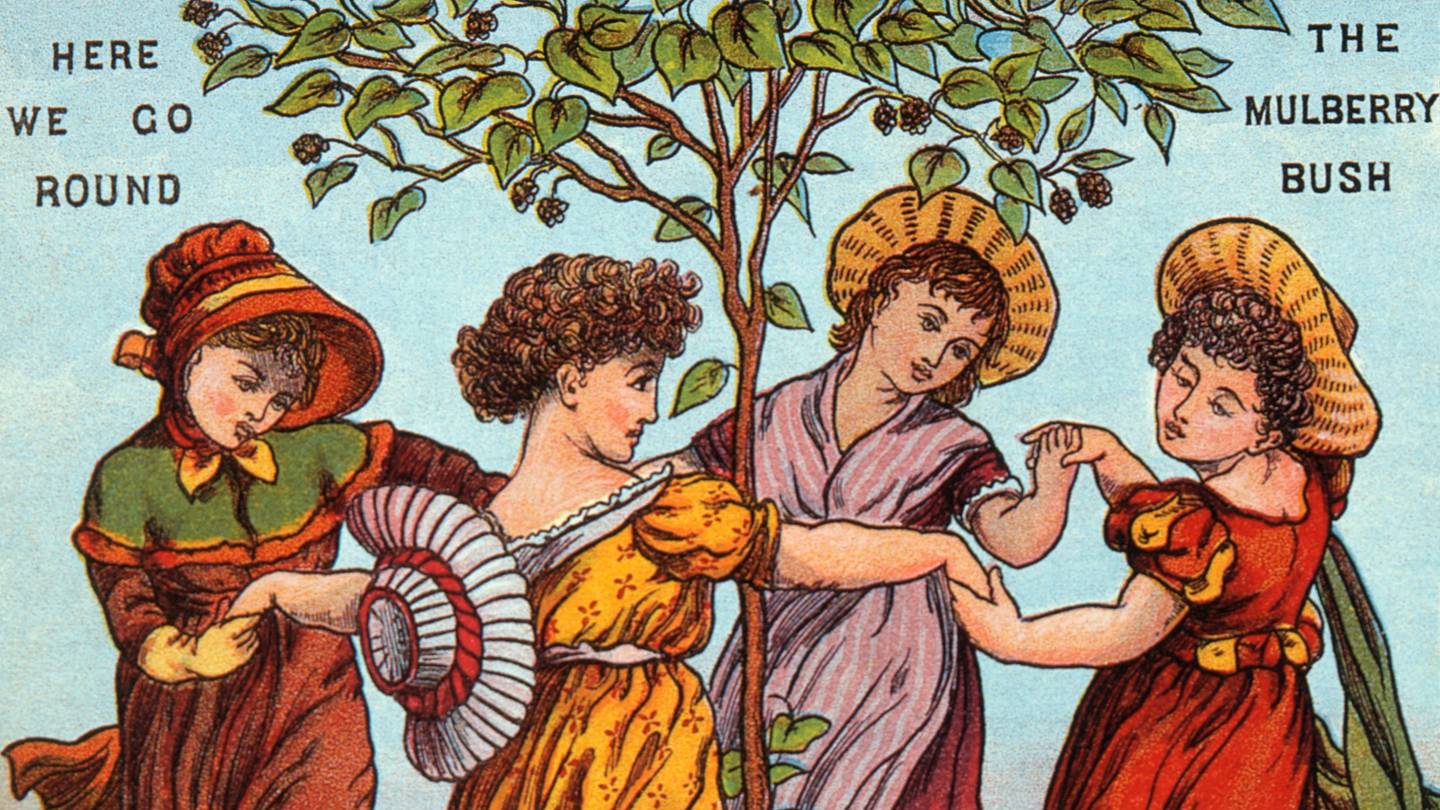
Nursery rhymes tend to be about dark subject matter if you look closely. “Here We Go Round the Mulberry Bush” is an exception, with perfectly innocent lyrics—despite a very troubling theorized origin.
Nursery rhymes have long been a subject of fascination, not only for their catchy melodies and simple lyrics but also for the hidden stories and historical contexts they may conceal. Among these, "Here We Go Round the Mulberry Bush" stands out for its apparent innocence, featuring lyrics that describe daily routines and playful imagery. However, recent discussions have brought forward a theory suggesting the rhyme might have origins far more somber than its cheerful surface implies.
Unlike many traditional nursery rhymes, which often reference grim events or social issues cloaked in metaphor, "Here We Go Round the Mulberry Bush" appears straightforward and benign. The song's repetitive structure and depiction of everyday activities have made it a staple in early childhood education, promoting movement and communal participation. Yet, some researchers and historians contend that beneath this simplicity could lie an unsettling historical backdrop.
Related stories


The theory posits that the rhyme may have been inspired by practices or conditions associated with confinement or punishment. Though the lyrics themselves do not explicitly convey darkness, the setting implied by the mulberry bush and the cyclical nature of the song's actions have led to speculation about links to prison life or institutional routines. This interpretation, while not universally accepted, invites a reevaluation of how nursery rhymes can encapsulate complex social histories.
Details regarding the precise origin of "Here We Go Round the Mulberry Bush" remain limited, with no definitive historical records confirming the dark theory. The song's earliest documented uses date back several centuries, but the context surrounding its creation and initial popularity is not fully clear. As such, the proposed connection to troubling past events is largely circumstantial and based on interpretative analysis rather than concrete evidence.
The contrast between the rhyme’s lighthearted lyrics and the possibility of a grim genesis emphasizes the layered nature of folk songs and nursery rhymes. These compositions often serve multiple purposes: entertainment, education, and, at times, subtle commentary on societal conditions. The case of "Here We Go Round the Mulberry Bush" exemplifies how what is perceived as innocent children's lore might have been shaped by more complex realities.
Moreover, the mulberry bush itself carries symbolic weight in various cultural contexts, though its significance within this particular rhyme is ambiguous. Some interpretations connect mulberry bushes to locations where prisoners exercised or to communal gathering spots within confined spaces. This association, though speculative, contributes to the darker reading of the song’s origins.
While the current mainstream understanding celebrates the rhyme for its role in childhood play and learning, the emergence of alternative historical perspectives enriches the discussion surrounding nursery rhymes. It opens pathways for further scholarly inquiry into the social and cultural environments that produced these enduring pieces of oral tradition.
In summary, "Here We Go Round the Mulberry Bush" exemplifies the duality present in many traditional nursery rhymes. Its surface-level innocence contrasts with a debated, possibly troubling background linked to confinement and routine. Despite the lack of definitive proof, this potential origin story encourages a more nuanced appreciation of the complexities woven into seemingly simple children's songs, reflecting broader historical narratives that have influenced popular culture over time.
Full story & global impact
This article was synthesized and rewritten by MusicTop Editorial from reporting published by NewsAPI (original source unavailable). Read the publisher's report for the complete source context.
Original source link unavailable · Source: NewsAPI (original source unavailable)