The ‘Mozart effect’ began as a fifteen-minute bump on one spatial-reasoning test taken by 36 college students, then grew into a national belief that classical music makes babies smarter
Published July 6, 2026 · CLASSICAL

The 1993 study was real. It measured a small, temporary gain on a single spatial task in adults. Almost everything the phrase came to mean was added afterward. The post The ‘Mozart effect’ began as a fifteen-minute bump on one spatial-reasoning test taken by …
In 1993, a scientific study sparked what would become a pervasive cultural phenomenon known as the ‘Mozart effect.’ The original research focused on a small sample of 36 college students and measured their performance on a spatial reasoning task. The results indicated a modest, short-lived improvement in this specific test immediately after listening to a Mozart piano sonata.
Despite the narrow scope and limited duration of the findings, the phrase ‘Mozart effect’ rapidly transcended its initial academic context. Public interpretations expanded the concept into a broader claim that exposure to Mozart’s music could enhance general intelligence, particularly in infants and young children. This shift transformed a brief cognitive uptick observed in adults into a widely held belief about lifelong intellectual benefits.
Related stories
Jouer Mozart et Haydn à l’accordéon ? Avec “Murmures”, Fanny Vicens relève le défi
 Meet Linus Chen-Plotkin, the 18-year-old Philadelphia student who analysed more than 600 works by Mozart, Beethoven, Haydn, and Schubert and found Mozart's melodies were less predictable
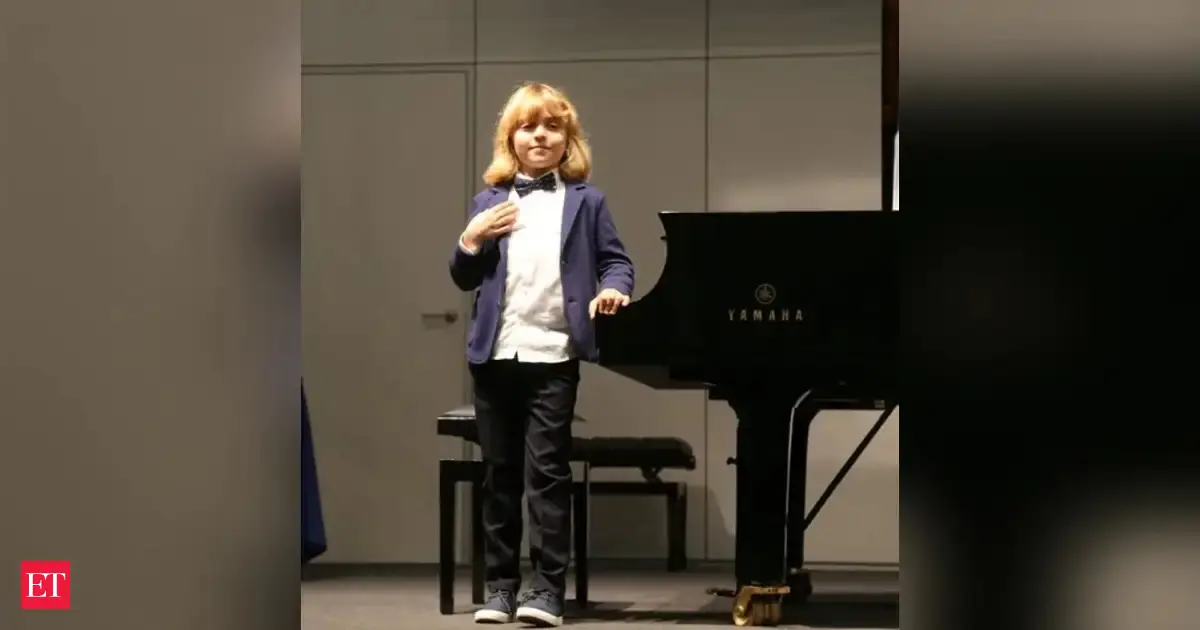 Meet Alberto Cartuccia Cingolani, the 9-year-old Italian piano prodigy who began Mozart lessons at 3 and collected 42 first-place awards by age 7
The original experiment did not examine infants or long-term cognitive development, nor did it demonstrate universal improvements across multiple cognitive domains. Instead, it isolated a temporary elevation on a single type of spatial reasoning task, which itself was limited in scale and sample size. Over time, promotional efforts and media coverage amplified and distorted these results, contributing to the mythologizing of classical music as a cognitive enhancer.
Commercial interests and educational programs capitalized on this popularized interpretation, marketing music recordings and early learning products under the banner of boosting babies’ brains. These initiatives often neglected the scientific nuances and the study’s modest, narrowly defined outcomes, instead promoting a simplified narrative that classical music listening inherently fosters intelligence.
Subsequent scientific investigations have produced mixed results, with many researchers questioning the replicability and robustness of the initial findings. Some studies suggest that any cognitive improvements linked to music exposure may be attributable to increased arousal or mood rather than the music’s specific qualities. The ‘Mozart effect’ thus remains a controversial and debated concept within cognitive science and music psychology.
While the original 1993 study was genuine and methodologically sound within its limits, the broader cultural interpretation diverged significantly from the evidence. This discrepancy highlights how scientific findings can be recontextualized and amplified in the public sphere, sometimes leading to misconceptions about their implications.
As the ‘Mozart effect’ continues to influence music education and parenting practices, it serves as a cautionary example of how research can be oversimplified and mythologized. The legacy of this phenomenon underscores the importance of critically examining how scientific results are communicated and understood beyond academic circles.
Despite the enduring popularity of the ‘Mozart effect,’ details about the original study’s parameters and limitations remain crucial to understanding its true significance. Without this context, the narrative risks perpetuating an overgeneralized belief disconnected from the initial findings.
In summary, the ‘Mozart effect’ originated from a brief, narrowly focused cognitive enhancement observed in a small group of adults, which was subsequently transformed into a widespread but scientifically unsubstantiated belief about classical music’s impact on infant intelligence. This evolution reflects broader challenges in the translation of scientific research into public knowledge and highlights the necessity for careful interpretation and communication of study results.
Full story & global impact
This article was synthesized and rewritten by MusicTop Editorial from reporting published by NewsAPI (original source unavailable). Read the publisher's report for the complete source context.
Original source link unavailable · Source: NewsAPI (original source unavailable)