What Next for the Boston Symphony? — Lessons from the Past
Published April 14, 2026 · CLASSICAL
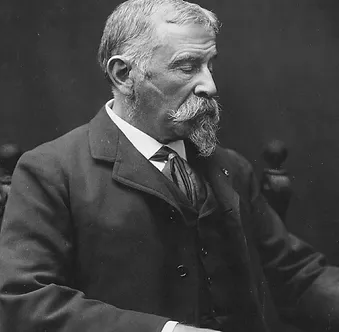
The current Boston “Arts Fuse” carries my thoughts about the pertinence today of Henry Higginson, who invented, owned, and operated the Boston Symphony until 1919. You can access the full article here. Excerpts follow: About a dozen years ago I was invited, i…
The Boston Symphony Orchestra (BSO), one of America’s most venerable cultural institutions, continues to navigate challenges and opportunities that echo its own storied past. A recent discussion featured in the Boston-based publication Arts Fuse revisits the foundational role of Henry Higginson, whose vision and stewardship shaped the orchestra from its inception until 1919. Although detailed contemporary insights remain limited, the historical perspective offers a valuable lens through which to consider the BSO’s future trajectory.
Henry Lee Higginson was not merely a patron but the driving force behind the Boston Symphony’s creation and early development. His commitment extended beyond financial support; he was deeply involved in the orchestra’s operational and artistic dimensions. This hands-on leadership model established a blueprint for sustaining a high-caliber symphonic ensemble in the United States during a period when classical music institutions were still finding their footing.
Related stories


Higginson’s tenure as the orchestra’s owner and operator ended in 1919, marking the conclusion of a formative chapter. His approach combined entrepreneurial determination with a passion for artistic excellence, which contributed significantly to the BSO’s reputation for quality and stability. This early 20th-century context was crucial in setting standards that have influenced generations of conductors, musicians, and administrators who followed.
More than a century later, the Boston Symphony continues to honor this foundational heritage while confronting contemporary realities. The orchestra’s leadership and stakeholders must balance tradition with innovation, securing sustainable funding, engaging diverse audiences, and embracing evolving musical expressions. Reflecting on Higginson’s legacy underscores the importance of adaptive governance and vision-driven stewardship in the orchestral world.
The discussion in Arts Fuse underscores that while historical precedents provide valuable lessons, specific strategies for the BSO’s next chapters remain underexplored in the public domain. Without detailed disclosures on current administrative or artistic plans, the orchestra’s path forward is subject to interpretation based on broader cultural and institutional trends.
Nevertheless, revisiting Higginson’s impact offers a reminder that successful orchestral institutions often depend on leaders who are both patrons and visionaries. The BSO’s ability to maintain artistic integrity alongside financial viability has roots in this early model of committed ownership and engagement.
In the contemporary landscape, orchestras face challenges such as shifting audience demographics, digital transformation, and funding uncertainties. Boston’s experience, informed by its historical trajectory, suggests that maintaining relevance will require a synthesis of respect for tradition and openness to change.
As the Boston Symphony Orchestra charts its future, insights drawn from its origins under Henry Higginson’s guidance remain pertinent. They highlight the enduring necessity for thoughtful leadership that can navigate the intersection of artistry, community, and sustainability. While further details about current strategies are scarce, the historical perspective enriches understanding of what it takes to uphold a legacy while evolving with the times.
In sum, the Boston Symphony’s past, particularly the foundational role played by Henry Higginson, provides a meaningful framework for considering its ongoing evolution. The institution stands at a crossroads familiar to many storied ensembles—striving to honor its heritage while embracing the possibilities of a dynamic cultural environment. This balance will be critical as the BSO continues to define its identity in the decades ahead.
Full story & global impact
This article was synthesized and rewritten by MusicTop Editorial from reporting published by NewsAPI (original source unavailable). Read the publisher's report for the complete source context.
Original source link unavailable · Source: NewsAPI (original source unavailable)