Wonderfully oddball music app turns virtual physics into sounds
Published July 29, 2026 · CLASSICAL
Technology is not always about getting more controlled, more digital and more logical. And a mad new music program that's just launched is a brilliant demonstration of that… and why it matters.Continue ReadingCategory: Music, Consumer Tech, TechnologyTags: Sy…
Emerging from the intersection of physics simulation and digital music, Anukari introduces a fundamentally different approach to sound generation. Developed by Evan Mezeske, a former Google engineering lead based in Arizona, this software treats music creation as an interactive physics experiment rather than a conventional audio playback or synthesis process.
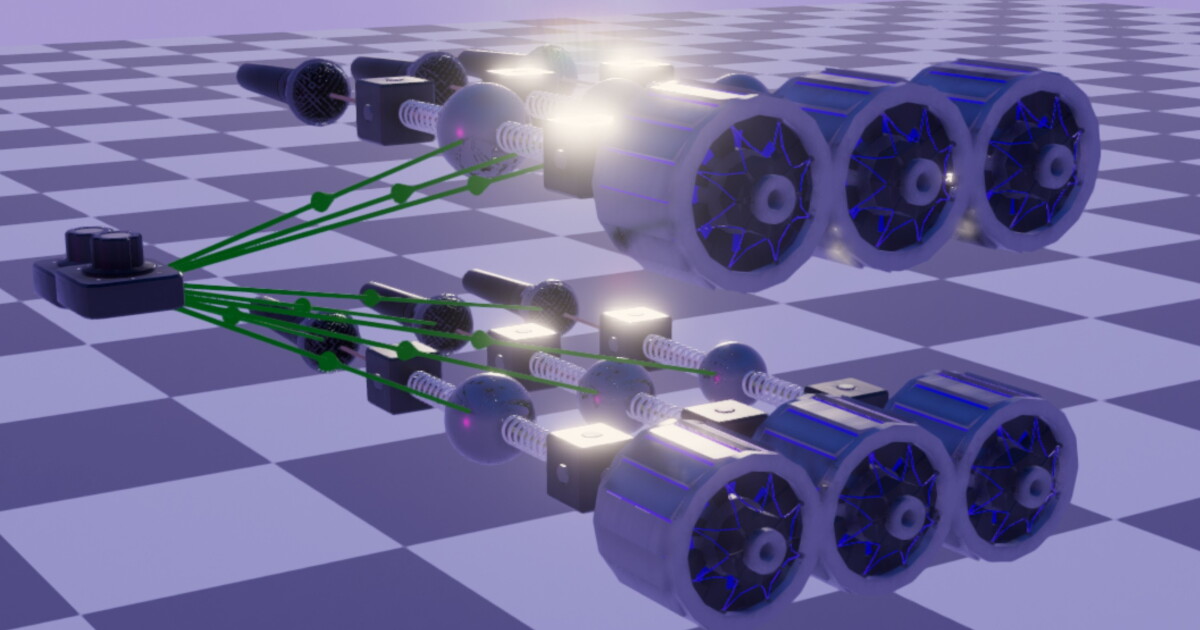
Unlike traditional digital audio tools that rely on predefined waveforms or sampled instruments, Anukari invites users to construct complex virtual assemblies composed of metallic blocks, springs, and weights within a three-dimensional digital environment. These assemblies behave under physical laws, allowing users to strike or manipulate them and hear the resulting sounds directly derived from simulated mechanical interactions.
Related stories

The core innovation lies in the software's use of a dedicated physics engine that calculates the dynamic motion, collisions, and vibrations of these virtual components at high precision. When a user triggers a virtual mallet using piano-style keys, the kinetic energy propagates through the constructed mesh, producing rich, evolving sounds ranging from metallic clangs to drones and snaps. This departure from scripted audio generation results in unpredictable and organic sonic textures that respond authentically to user input.
Such intensive real-time computation poses significant challenges, as simulating the exact physical states of potentially hundreds of interactive elements at audio sampling rates demands substantial processing power. Anukari addresses this by leveraging the parallel processing capabilities of graphics processing units (GPUs), offloading tasks from the central processing unit (CPU). This strategy mirrors trends in 2026 software development, where complex signal processing increasingly harnesses GPUs to efficiently manage demanding algorithms.
Beyond sound synthesis, Anukari supports bidirectional interaction with audio. Users can input real-world sounds—such as vocal recordings—which the program converts into virtual forces that influence the behavior of the digital structures, effectively animating the physics simulation through external audio stimuli.
The software is designed to integrate seamlessly into existing music production workflows. It is available both as a standalone application and as an audio plugin compatible with popular digital audio workstations like GarageBand and Ableton Live. This flexibility enables musicians to incorporate Anukari's distinctive sound palette into live performance setups or studio productions, exporting compositions as standard audio files.
Recognizing the visual appeal of its physics-driven mechanics, Anukari includes a built-in video recording feature that captures synchronized footage of the virtual 3D structures alongside the audio output. This facilitates sharing of both sonic and visual aspects of performances on social platforms, enhancing user engagement and creative expression.
After three years of development, Anukari has transitioned from public beta to a stable 1.0 release. This version introduces robust stability measures such as automated recovery from simulation errors, preventing crashes and protecting audio hardware from unexpected signal spikes due to erratic physics glitches.
While its unconventional approach may initially seem chaotic or experimental, Anukari offers a compelling tool for artists eager to explore sound design through the lens of physical interaction and emergent behavior. By redefining how digital music can be generated and experienced, it exemplifies a growing shift toward more immersive and unpredictable electronic music creation methods.
Details about user adoption rates and long-term impact remain limited, but early indications suggest that Anukari's unique blend of physics simulation and audio processing is attracting both technology enthusiasts and experimental musicians seeking novel soundscapes. Its release marks a noteworthy milestone in the evolution of music technology, expanding the boundaries of what software instruments can achieve.
Full story & global impact
This article was synthesized and rewritten by MusicTop Editorial from reporting published by newatlas.com. Read the publisher's report for the complete source context.
Read original source: newatlas.com