Psychology says if devotional songs give you goosebumps and make you emotional, your brain may be responding to more than faith
Published September 3, 2026 · CLASSICAL
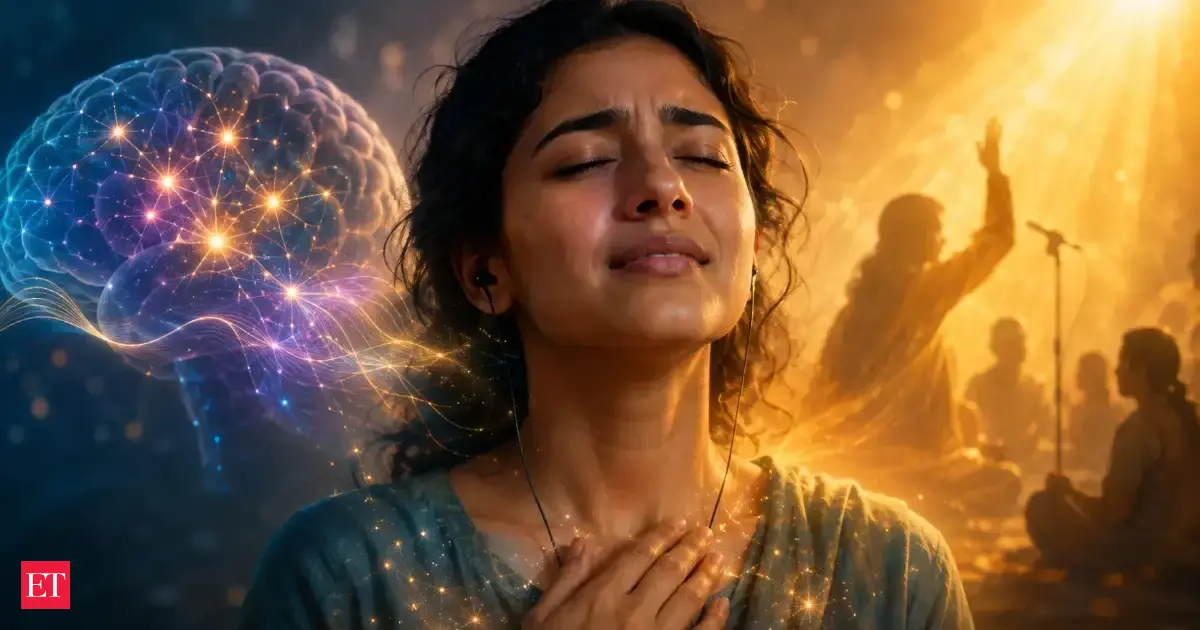
A devotional song can feel especially powerful because of its connection to autobiographical memory. Music is closely tied to personal experiences, particularly when a song has been heard repeatedly during emotionally meaningful moments or important periods o…
Devotional songs have long held a unique place in human experience, often eliciting powerful emotional responses such as goosebumps or tears. While these reactions are commonly attributed to spiritual connection or faith, recent insights suggest that the brain's response to such music extends beyond religious sentiment.
Research highlighted by economictimes.indiatimes.com points to the significant role of autobiographical memory in shaping our emotional engagement with devotional music. When a person repeatedly hears a devotional song during moments of personal significance, those songs become intertwined with the memories of those experiences. This bond enhances the emotional impact whenever the music is revisited.
Related stories
 Quote of the day by Shakira: ‘Best way to get a guy's attention is to be…’: Grammy-winning singer on modern dating psychology, self-confidence, romance and why mystery works sometimes
 Quote of the day by Jungkook of KPop BTS, 'When I begin to feel tired and do not want to work anymore, I see my members next to me working so hard without taking a break. When I see the members like that, I end up thinking a lot. Because we can see each other grow and hold each other accountable, we all improve together' offers inspiring lesson on hard work, accountability, growing stronger as team, shows psychology of true successful person
 Psychology says people who always wear headphones may be doing more than listening to music, here's what this everyday habit reveals
Unlike generic musical cues, devotional songs often accompany pivotal life events or recurring rituals, embedding themselves deeply into an individual's memory landscape. The brain's processing of these songs can trigger vivid recollections, complete with sensory and emotional details, which may surpass the intensity of memories evoked by other stimuli.
Related music video
Selected for this story · Published within the last two years
This intertwining of music and memory explains why a devotional melody can provoke visceral reactions such as chills or emotional release. The familiar tune acts as a portal to past experiences, conveying not just spiritual meaning but also personal history. Hence, the response is not solely rooted in faith but also in the psychological imprint left by repeated, meaningful exposure.
The phenomenon underscores the broader understanding that music is a powerful mnemonic device. It serves as a bridge connecting listeners to their inner narratives and emotional states, shaped by the contexts in which the music was first encountered. This connection enhances the subjective experience of devotional songs, making them uniquely potent.
Moreover, this mechanism may vary among individuals based on their personal histories with the song and the specific memories associated with it. Consequently, two people might experience the same devotional song differently, with one finding it deeply moving due to its ties to a cherished memory, while another might feel a more neutral response.

While faith remains a central element in the cultural and spiritual significance of devotional music, its emotional resonance is amplified by the brain’s capacity to link music with autobiographical memories. This dual influence enriches the listener's experience, blending spiritual and psychological dimensions.
Despite these insights, details on the specific neurological processes underpinning this interplay between memory, emotion, and music remain limited. Further interdisciplinary research combining psychology, neuroscience, and musicology could illuminate how devotional songs uniquely engage the brain.
In summary, the emotional power of devotional songs extends beyond their spiritual content. Their ability to evoke intense feelings is partly due to their deep association with personal memories, highlighting the complex ways in which music and memory interact in the human brain.
Full story & global impact
This article was synthesized and rewritten by MusicTop Editorial from reporting published by economictimes.indiatimes.com. Read the publisher's report for the complete source context.
Read original source: economictimes.indiatimes.com