Why we sing: Music, spirituality and the search for meaning
Published September 26, 2026 · CLASSICAL
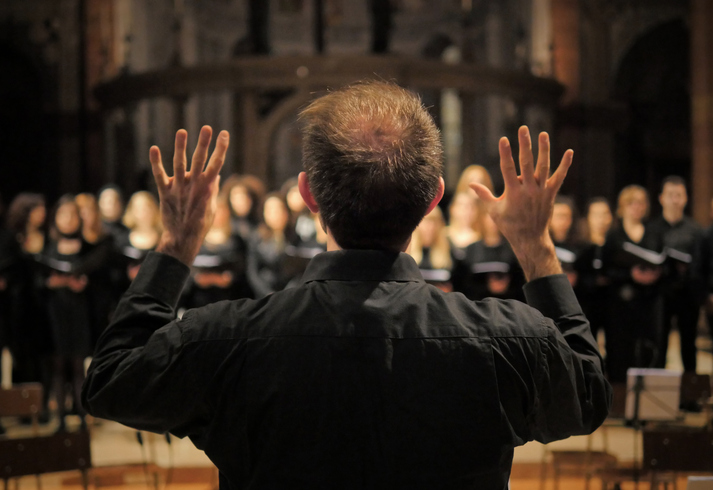
A conference at the University of Birmingham explored how singing can express faith, build community and help people find meaning.
A recent two-day conference at the University of Birmingham convened theologians, musicians, and scholars to investigate the multifaceted significance of singing within Christian faith and worship. The event, titled “Reasons to Sing: Singing, Spirituality and the Search for Meaning,” delved into how vocal music transcends mere communication, fostering spiritual expression, communal bonds, and personal transformation.
Tracing the historical resonance of singing in Christianity, the conference opened with reflections on 16th-century composer William Byrd, who praised singing as a holistic practice benefiting both body and spirit. Byrd’s early insights underscored singing’s enduring role in Christian liturgy and personal devotion, a theme that reverberated throughout the discussions.
Related stories

Central to the conference was the exploration of the human voice as a unique conduit for spiritual experience. Classical soprano and theologian Jacqueline Leary-Warsaw emphasized the inseparable link between the embodied voice and individual identity, highlighting how singing synthesizes breath, memory, language, and intention. This integration enables singing to articulate emotions and spiritual realities that often elude spoken language, particularly in moments of worship, mourning, and celebration.
The notion of the "sacramentality of the voice" emerged as a key theological concept, suggesting that while singing is not a sacrament itself, it functions as a tangible expression of prayer and divine presence. This idea was echoed by Michael Glover, a priest and scholar, who framed sacred music as a medium that not only conveys Christian truths intellectually but also engages listeners emotionally and spiritually. He pointed to musical interpretations of Christ’s Passion as examples where listeners are invited to participate deeply in the narrative, experiencing it beyond mere storytelling.
Former Bishop of Kingston, Richard Cheetham, contributed a perspective that highlighted music’s capacity to engage the whole person—mind, heart, and body—surpassing the limitations of analytical discourse. Drawing on his own journey through science, philosophy, and ministry, Cheetham illustrated how Christian song embodies the full spectrum of human experience, from anguish to joy, aligning with the biblical Psalms’ emotive range. He also linked singing with the Christian understanding of love as central to divine-human relationships, underscoring singing as an act that embodies this spiritual truth.
The conference further examined historical and doctrinal debates surrounding singing, particularly during the Reformation. Vedran Obucina discussed Protestant concerns that musical complexity might obstruct direct engagement with scripture. However, he argued that singing unites breath, intellect, emotion, and attention, making spiritual beliefs audible and fostering formation rather than distraction.
Music therapy and pastoral care were also themes explored by participants such as Kate Fawcett and Daisy Widdicombe, who shared insights on singing’s therapeutic and connective power in hospital and mental health settings. Their research demonstrated that singing facilitates spiritual relief, emotional expression, and communal connection even outside formal worship contexts, highlighting its accessibility and profound impact.
Liturgical musicology professor Daniele Sabaino traced shifts in Catholic liturgical music post-Vatican II, noting a transformation from viewing music as an adjunct to liturgy toward understanding it as an integral participatory act of worship. This inclusive approach recognizes that singing, listening, silence, and other liturgical elements collectively shape the worship experience, adaptable to various cultural and temporal contexts.
Community and inclusivity featured prominently through the work of June Boyce-Tillman, who promoted music’s role in fostering unity and empowerment across diverse groups, including those with disabilities. She stressed that removing singing from people’s lives diminishes their agency and that music can dissolve barriers between performers and audiences, creating more authentic communal experiences.
Ethnomusicologist Chae-Lin Kim broadened the definition of singing by presenting research on signed songs within a Protestant deaf church, illustrating how sign language serves as a spiritual and communicative expression that resonates deeply with worshippers. This highlighted the varied modalities through which faith communities engage with sacred music.
The conference concluded by acknowledging singing as a profound, multidimensional practice firmly rooted in Christian worship and spirituality. It emerged as a vehicle for expressing faith, shaping communal identity, and navigating the complexities of human experience. Through historical reflection, theological inquiry, and practical application, the event underscored singing’s enduring power to connect individuals with the divine and with one another across time, place, and culture.
Full story & global impact
This article was synthesized and rewritten by MusicTop Editorial from reporting published by christiantoday.com. Read the publisher's report for the complete source context.
Read original source: christiantoday.com