LA’s 60-Foot Light Sculpture Actually Makes Music Visible
Published October 5, 2026 · CLASSICAL
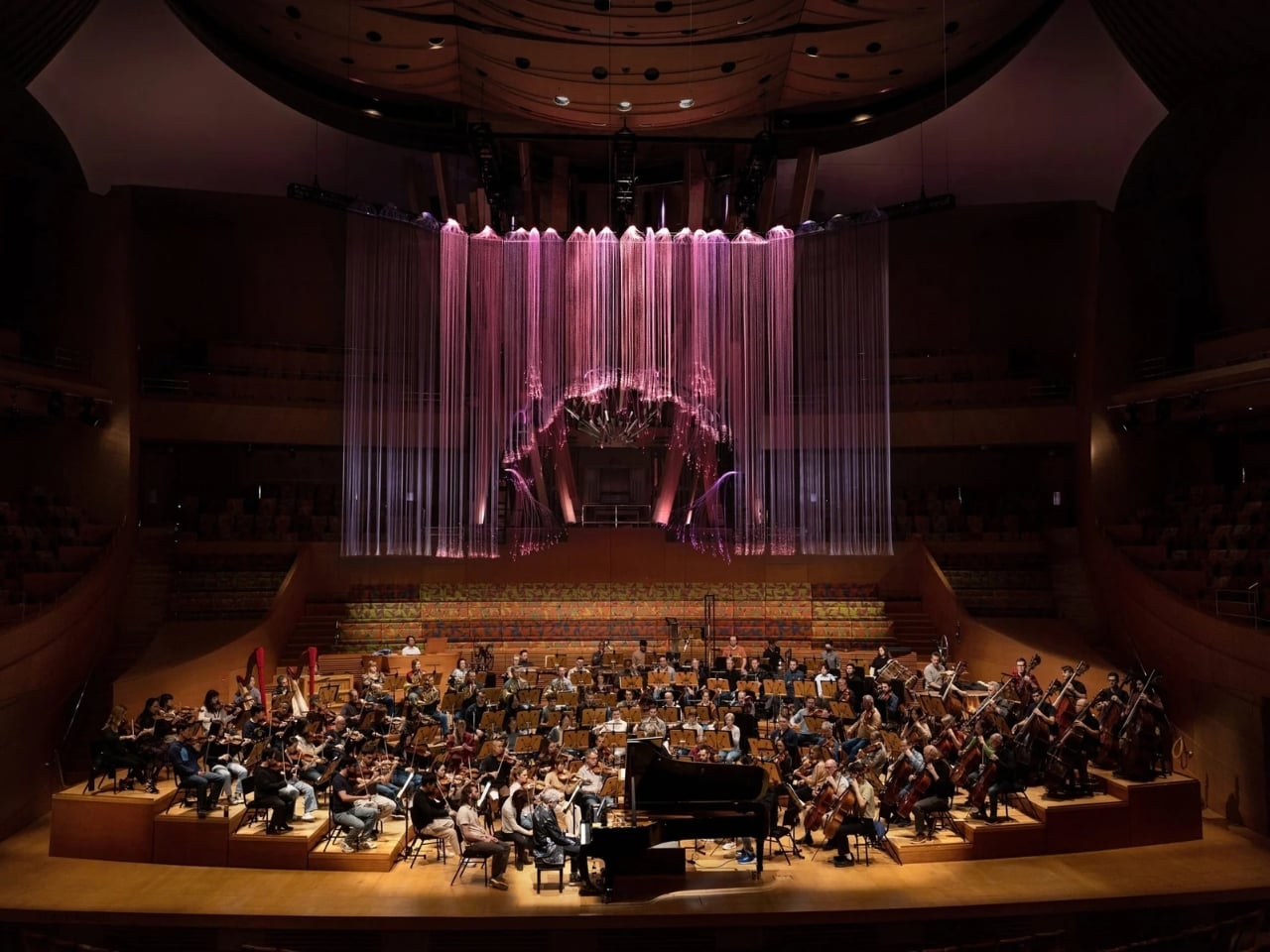
An orchestra can fill a room with sound, yet the experience of that sound is mostly invisible. For someone curious about live classical music, a screen might seem like the obvious way to make a performance feel more immediate. But projected images can also pu…
In a groundbreaking collaboration blending visual art and classical music, Grimanesa Amorós has unveiled Radiance, an expansive light sculpture installed at Los Angeles’ Walt Disney Concert Hall. Commissioned by the Los Angeles Philharmonic, this installation was designed specifically for performances of Alexander Scriabin’s Prometheus: The Poem of Fire, bringing a novel sensory dimension to the concert experience.
Measuring 60 feet in length and 35 feet in width, Radiance occupies a commanding presence above the orchestra. Constructed from reflective materials and rope-like LED tubes capable of shifting colors, the sculpture introduces a tangible visual element that exists in the same physical space as the musicians. Unlike video projections, Radiance’s physicality enhances the ambient environment without detracting from the live performance at the heart of the event.
The design concept behind Radiance avoids literal imagery, despite its inspiration from the Greek myth of Prometheus and the Incan deity Viracocha, both associated with fire. Instead of replicating flames, the installation explores fire as an abstract motif expressed through evolving hues and intensities. This approach allows the artwork to convey transformation and mood rather than a direct narrative, inviting audiences to engage with the music’s emotional layers without preconceptions.
Amorós meticulously choreographed the lighting sequence to synchronize with the orchestra’s performance, highlighting six major moments across the composition. This deliberate pacing differentiates Radiance from typical beat-responsive light shows, emphasizing a harmonious integration that supports rather than competes with the music. The lighting transitions—from urgent reds to expansive ambers—create a dynamic atmospheric backdrop that resonates with the musical progression.
Importantly, the installation extends beyond the sculpture itself. Amorós incorporated the existing architectural lighting within Walt Disney Concert Hall into the overall design, enabling the entire space to participate in the visual narrative. This immersive strategy transforms the venue from a passive setting into an active participant in the performance, engaging the audience as part of the sensory experience rather than mere observers.
Radiance was presented during three performances, underscoring its role as an ephemeral encounter tailored to the live moment rather than a permanent exhibit or digital spectacle. Its success lies in enhancing the audience’s connection to music that is inherently intangible, making sound visible without superseding the act of listening.
The visual integration respects the hall’s iconic interior, which is already renowned for its distinctive design. By weaving light throughout the space, the installation complements rather than competes with the architecture, enriching the concert environment while preserving the primacy of the musical performance.
This project exemplifies a sophisticated use of light as a medium to deepen audience engagement with classical music. Rather than adopting flashy effects to attract attention, Radiance offers a nuanced visual language that amplifies the emotional and spatial dimensions of the concert, providing a fresh way to experience an established repertoire.
While Radiance photographs strikingly against the hall’s interior, its full impact depends on the synergy of timing, sound, and shared presence that only a live performance can deliver. This installation redefines how visual art can coexist with music, enhancing appreciation without diminishing the essential auditory focus.
Details regarding the future of Radiance or potential adaptations for other venues remain limited. However, this innovative fusion of light and sound marks a significant step in expanding the possibilities for multimedia collaboration in classical music settings.
Full story & global impact
This article was synthesized and rewritten by MusicTop Editorial from reporting published by yankodesign.com. Read the publisher's report for the complete source context.
Read original source: yankodesign.com