William Kentridge’s Orpheus exhibition opens at Greece’s National Archaeological Museum
Published October 30, 2026 · CLASSICAL
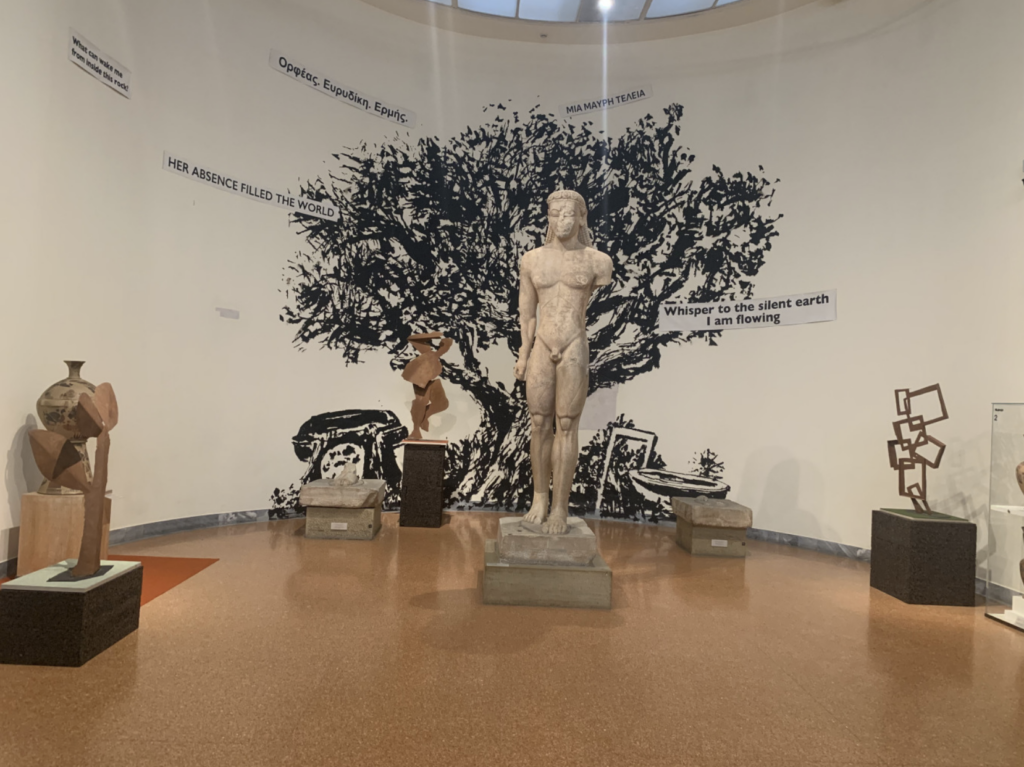
The past meets the present, myth meets reality, and ancient Greek art meets contemporary creation at the National Archaeological Museum in Athens, where the solo exhibition Imitate the Sleep of Stones by internationally renowned South African artist William K…
A compelling artistic exchange between antiquity and modernity has taken form at the National Archaeological Museum in Athens, where William Kentridge, the acclaimed South African artist, unveils his solo exhibition centered on the myth of Orpheus. This presentation reinterprets the ancient narrative of Orpheus’s descent into the Underworld in an innovative fusion of contemporary art and classical heritage.
The exhibition, titled Imitate the Sleep of Stones, situates Kentridge’s new creations alongside treasured antiquities from the museum’s collection, creating a dialogue that spans millennia. This juxtaposition highlights the enduring resonance of Orpheus’s story — a powerful emblem of love, loss, and artistic transcendence — within both ancient and present-day cultural expressions.
Related stories
Fontaines D.C., Hayley Williams, FKA Twigs and more among line-up for Primavera Sound Porto 2027
Greek Minister of Culture Lina Mendoni has emphasized the exhibition’s role in reinforcing the synergy between Greece’s historical legacy and contemporary artistic practices. Describing the museum as an unparalleled venue for revisiting Orpheus’s mythos, she also linked the exhibition to Kentridge’s broader involvement in Greece’s cultural scene, notably his direction of Monteverdi’s Orfeo for the Greek National Opera's new season and an upcoming large-scale solo show scheduled for June at the National Museum of Contemporary Art.
Kentridge himself has expressed profound appreciation for the opportunity to engage with Athens’ rich classical environment. Working primarily in Johannesburg, he remarked on the uniqueness of presenting his interpretations of the Orpheus myth in the city where these stories originated and evolved.
Central to the exhibition are multifaceted works that explore themes of transformation, memory, and impermanence. Among them is the 2026 installation Frieze, which features thirteen rust-colored steel figures merging human and natural elements, evoking motifs of migration and collective history. The presence of paper silhouettes of trees further connects to literary reflections on Eurydice’s metamorphosis, linking the myth to ideas of excavation and the passage of time.
A standout piece is a diorama employing the 19th-century Pepper’s ghost illusion, blending physical space with projected imagery. This effect produces ephemeral figures that appear and vanish within the constructed environment, mirroring the elusive journey of Orpheus through realms of visibility and disappearance. This convergence of drawing, performance, cinema, and theatrical technique underscores the myth’s multifaceted nature.
The contemporary artworks converse directly with notable ancient artifacts, including a red-figure Corinthian calyx krater from circa 400–375 BC depicting Orpheus with his lyre, an ivory lyre from a Bronze Age tomb at Menidi, and a white kylix by the Pistoxenos Painter illustrating a Thracian woman confronting Orpheus, loaned from the Acropolis Museum. These pieces underscore the deep historical roots of the myth and its musical and emotional dimensions.
Kentridge’s exhibition in Athens exemplifies a deliberate cultural policy aimed at fostering interactive experiences between Greece’s classical treasures and modern artistic innovation. It invites diverse audiences to witness the continuity of mythological themes and their reinterpretation through new media and perspectives.
Details about the full scope and future developments of Kentridge’s projects in Greece remain forthcoming, yet this exhibition already marks a significant moment in the ongoing dialogue between past and present in the arts. It stands as a testament to both the timelessness of Orpheus’s tale and the dynamic possibilities of cultural collaboration across epochs and continents.
Full story & global impact
This article was synthesized and rewritten by MusicTop Editorial from reporting published by en.protothema.gr. Read the publisher's report for the complete source context.
Read original source: en.protothema.gr