How one lemur species evolved to sing like an opera star
Published November 20, 2026 · CLASSICAL
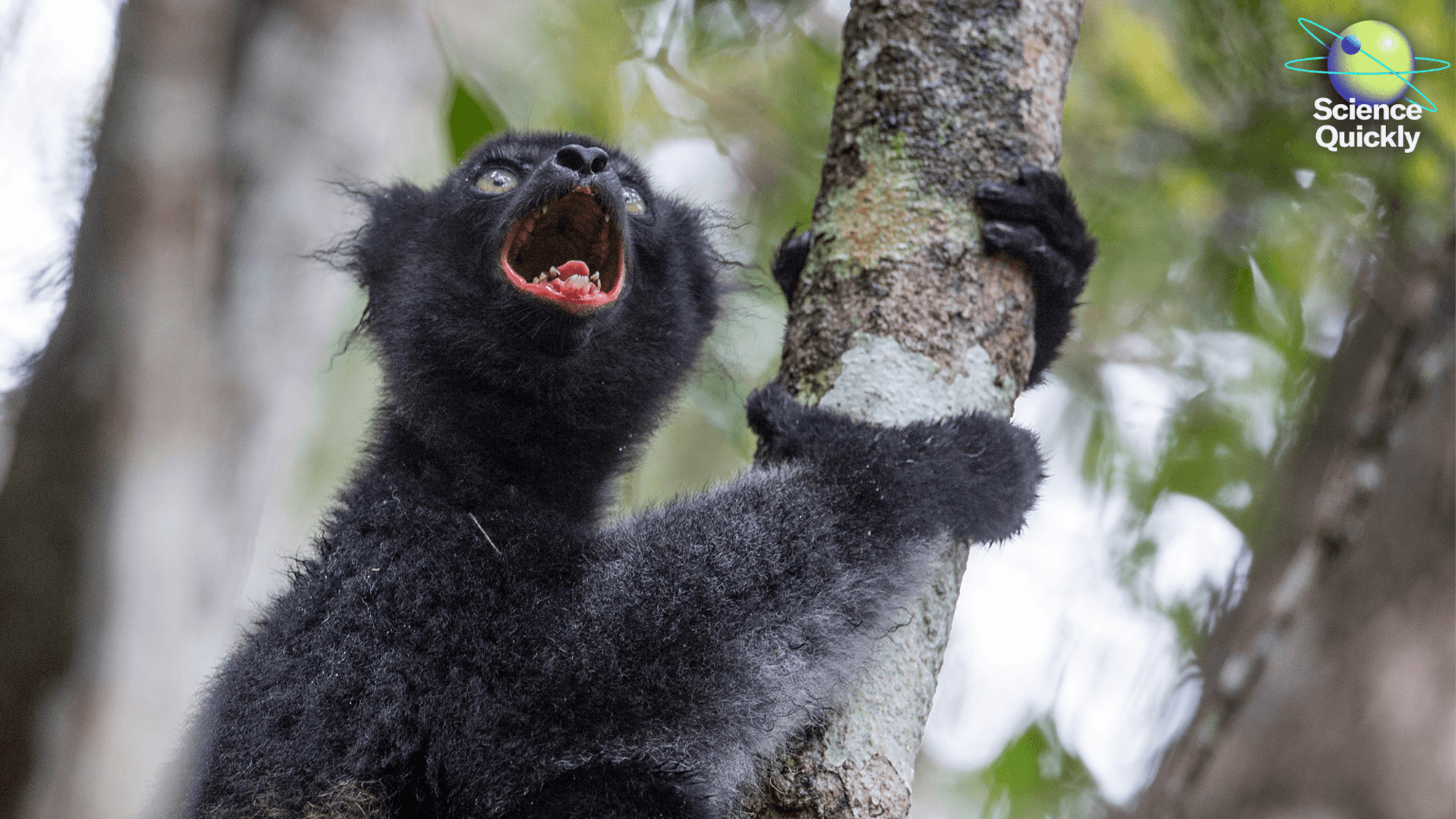
After millions of years of evolution turned these lemurs into showstopping singers, scientists are tuning in with conservation in mind
Indri lemurs, native to Madagascar, have developed a unique singing ability that resembles operatic vocal techniques found in human sopranos. This vocal evolution appears to serve the critical purpose of broadcasting territorial claims within the dense rainforest environment, where sound efficiency and audibility are essential.
The origin of this behavior traces back millions of years, with Indris being the only true singing lemur species among over 100 species on the island. Unlike other lemurs that produce calls or sounds, Indris generate complex, rhythmic vocalizations that include changes in pitch and phrasing, qualifying them as songmakers.
Related stories
Research conducted by a team at the University of Turin, Italy, has shed light on the functional role of these songs. Adult breeding pairs sing coordinated duets that convey information about the size and composition of their group, signaling to neighboring lemur groups and reinforcing territorial boundaries through a contagious chain of vocal exchanges.

This form of long-range communication is particularly challenging in Madagascar’s hilly rainforest, where sound must travel over varied terrain to reach other groups. The Indris’ solution involves producing loud, piercing calls that can penetrate the environment effectively.
What makes Indri singing remarkable is the discovery that their vocalizations incorporate a technique akin to the formant tuning used by operatic sopranos. This involves adjusting the opening of the mouth to align the resonant frequencies in the vocal tract with the pitch being sung, thereby maximizing sound resonance and carrying power.
Filippo Carugati, a researcher involved in the study, noted parallels between the mouth movements of singing Indris and those of human opera singers, particularly in how the mouth opens wider when higher notes are produced. This adaptation enhances the transmission of their songs without requiring excessive vocal effort.

The use of advanced tracking software allowed scientists to quantify these mouth-opening movements in live Indris despite challenging field conditions. Their findings confirmed a consistent correlation between mouth aperture and pitch, suggesting an evolutionary convergence with human vocal techniques separated by 74 million years of divergence.
Such convergent evolution highlights the ecological pressures that shaped this form of communication. For Indris, vocal efficiency is paramount to maintain territory and social cohesion, just as it is for opera singers who must project their voices over an orchestra without amplification.
Chelsea Feltman, a classically trained soprano, provided expert insight into the physiological mechanisms behind formant tuning. She explained how the vocal folds produce pitch that is then shaped by the throat and mouth cavity to enhance sound resonance, a process essential for operatic singing and, as research indicates, for Indri calls as well.
This efficient vocal production reduces the need for excessive airflow and muscular strain, lowering the risk of vocal damage—an important consideration for Indris, whose survival depends on vocal communication rather than career progression.
The discovery of this sophisticated singing technique in lemurs broadens understanding of primate vocal evolution, revealing that complex song behavior has independently emerged in several primate lineages including gibbons, tarsiers, titi monkeys, and now Indris.
Further research is required to determine whether Indris intentionally modulate their formant tuning or if it results subconsciously from anatomical constraints. Additionally, direct measurements of loudness in relation to mouth movements remain to be conducted.
This study not only deepens scientific knowledge of animal communication but also underscores the importance of conserving Madagascar’s unique habitats. Protecting Indris ensures the preservation of one of the planet’s rare instances of advanced, operatic-like singing in the animal kingdom.
The intersection of biology and music revealed here invites a reevaluation of the boundaries between human and animal vocal abilities, emphasizing the evolutionary creativity present in natural ecosystems.
Full story & global impact
This article was synthesized and rewritten by MusicTop Editorial from reporting published by scientificamerican.com. Read the publisher's report for the complete source context.
Read original source: scientificamerican.com