Yamaboko Festival Floats Parade Through Kyoto
Published July 17, 2026 · EUROPA
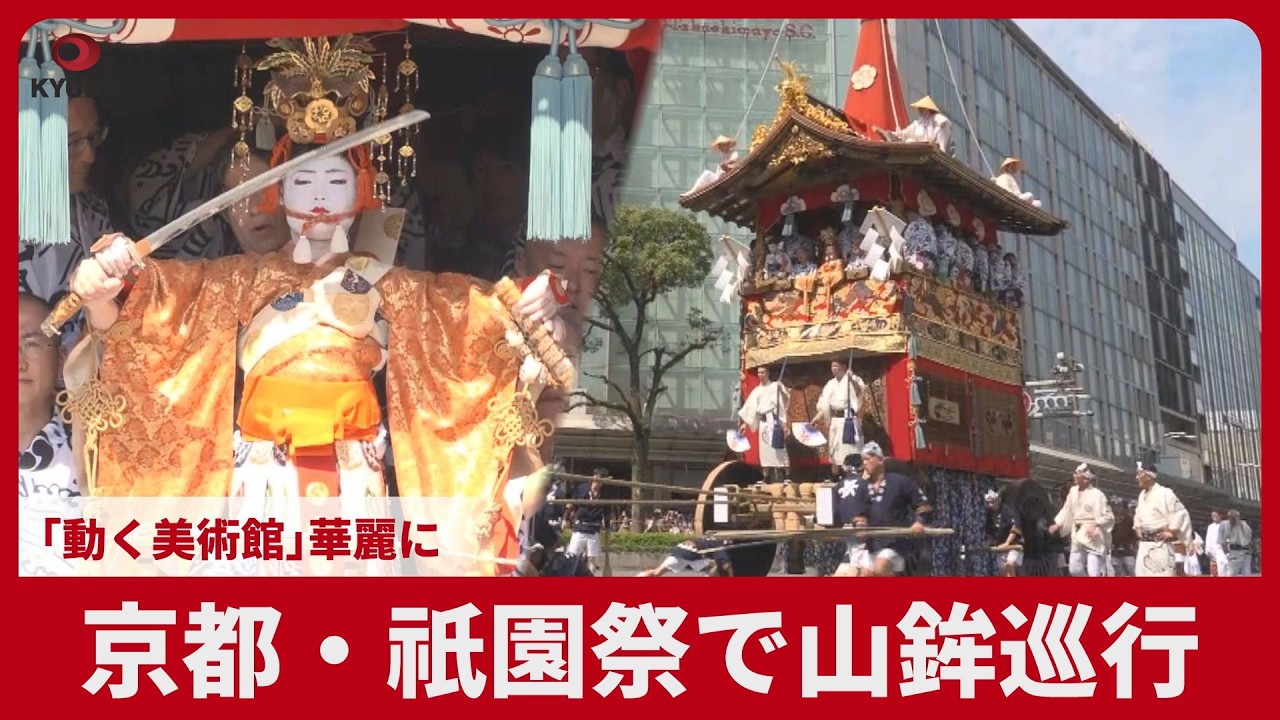
The Yamaboko float procession, a highlight of the Gion Festival’s Saki Matsuri festivities, was held in Kyoto on July 17, with 23 elaborately decorated floats known as "moving art museums" making their way through the city center. (News On Japan)
Kyoto’s historic center recently witnessed the vibrant spectacle of the Yamaboko float procession, a cornerstone event of the Gion Festival’s Saki Matsuri, held on July 17. This parade brought together 23 elaborately adorned floats, each a testament to centuries of traditional craftsmanship and cultural heritage.
The floats, often described as "moving art museums," traversed the city streets accompanied by the distinctive rhythm and melodies of the festival’s traditional music. These sounds evoke the festival’s deep historical roots and contribute to the immersive atmosphere experienced by participants and spectators alike.
Related stories

Originating in 869 during a period when the ancient capital of Heian-kyo faced a devastating epidemic, the Gion Festival began as a religious purification rite aimed at appeasing malevolent spirits thought to spread disease. This ritual, known as goryo-e, was performed in the Shinsen-en garden and involved erecting symbolic spears representing Japan’s provinces.
Over time, the ceremony became closely linked to the Gion Shrine, presently Yasaka Shrine, and evolved into a major annual event deeply embedded in Kyoto’s cultural fabric. The festival’s name traces back to this shrine and the guardian deity Gozu Tenno, revered for protection against plagues.
The surrounding district flourished as a hub for pilgrims and locals, eventually becoming famed for its traditional tea houses, eateries, and entertainment venues. This area also gained renown for its association with geiko and maiko, Kyoto’s cultural icons, and preserved wooden architecture that reflects the city’s traditional aesthetic.
The Yamaboko floats themselves emerged during the medieval era, coinciding with the rise of Kyoto’s prosperous merchant class who played a pivotal role in organizing the festival. Each float is cared for by local neighborhood groups, with the expertise required for their construction and operation meticulously passed down through generations.
Notably, these floats are built without the use of nails, relying instead on ropes and traditional wooden joinery techniques. Teams of residents then pull the floats through the city’s central streets. The parade features two main types of floats: smaller yama floats showcasing figures and scenes from Japanese and Chinese folklore and Noh theater, and larger hoko floats distinguished by towering poles historically believed to attract and contain harmful spirits.
The floats are richly decorated with intricate carvings, metalwork, and textiles, some incorporating rare fabrics imported from regions as far as China, Persia, and Europe. This international influence, combined with the craftsmanship on display, underscores why the procession is regarded as a cultural treasure.
Despite enduring numerous challenges—including wars such as the Onin War in the 15th century, destructive fires, and political upheaval—the festival has persisted. Periodic suspensions were followed by community-led revivals, underscoring the event’s resilience and importance to Kyoto’s identity.
The tradition of the Yamaboko parade was historically split into two phases, an arrangement that was unified mid-20th century before being restored in 2014. The Saki Matsuri procession now occurs on July 17, with the Ato Matsuri following a week later on July 24, maintaining a rhythm that honors its longstanding heritage.
Recognition of the festival’s cultural significance extended beyond Japan’s borders when it was inscribed on UNESCO's Representative List of the Intangible Cultural Heritage of Humanity in 2009. It later formed part of a broader UNESCO designation that highlights Japan’s diverse and elaborate float festivals.
This year’s Yamaboko procession not only celebrated the artistic and historical legacy of Kyoto but also reinforced the community spirit that sustains the festival. As the floats wound their way through the city, the event offered a vivid glimpse into the past while continuing a tradition that remains a vibrant part of Japan’s cultural calendar.
Full story & global impact
This article was synthesized and rewritten by MusicTop Editorial from reporting published by newsonjapan.com. Read the publisher's report for the complete source context.
Read original source: newsonjapan.com