When vision becomes feelings: Love song to synagogues in Jewish art
Published July 23, 2026 · EUROPA
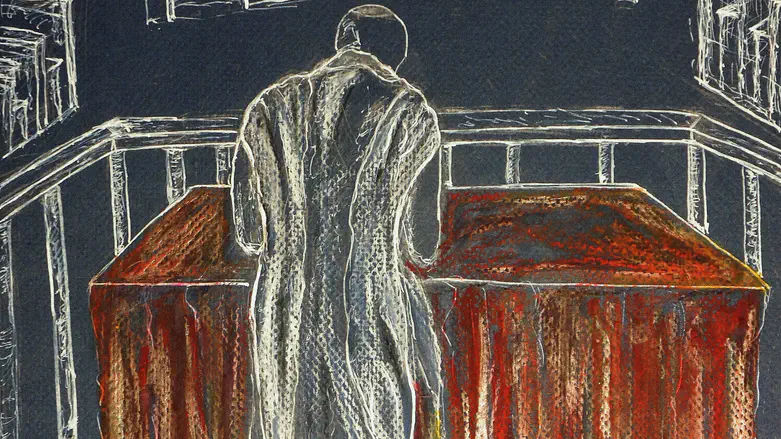
An essay that examines, for the first time, a specific aspect of European Jewish art's historical perspective over a period of 150 years, from the second part of the XIX century till today: The aspect of love expressed in the Jewish artists’ works depicting…
Over the past century and a half, European Jewish art has occasionally transcended mere architectural representation to reveal deep emotional connections with synagogues, a subject traditionally depicted with restraint. A recent essay published by israelnationalnews.com highlights this rare yet profound aspect of Jewish visual culture, focusing on works created from the late 19th century through the present day.
Historically, synagogues in Jewish art have often served as neutral markers of religious affiliation or cultural landscape, emphasizing form and place without overt emotional engagement. This conventional approach stems from both the artistic complexity involved in rendering buildings expressively and a cultural hesitation to portray sacred spaces with personal sentiment. However, this narrative has exceptions, where artists have managed to convey palpable affection and spiritual intimacy toward these houses of worship.
Related stories
Phoebe Bridgers Makes L.A.’s Intuit Dome Into an Intimate Space Full of Love, Grief, Light Shows, ‘Peter Pan’ Cosplay and a Great Billie Eilish Duet: Concert Review
The essay commemorates the 120th anniversary of the Helsinki Synagogue, framing this exploration within a 150-year span that begins in 1878 and extends into 2026. It traces contributions from Jewish artists rooted in the Yiddish cultural sphere of Eastern Europe—including Poland, Belarus, Lithuania, and Ukraine—while also touching on synagogues depicted in Finland and Israel, symbolically linking European Jewish hearts to the spiritual center of Jerusalem and the Holy Land.
One pioneering figure in this artistic tradition is Maurycy Gottlieb (1856–1879), a Polish Jewish prodigy whose brief yet intense career left an indelible mark. Despite facing significant anti-Semitic obstacles, Gottlieb's extraordinary talent earned him recognition at prestigious institutions such as the Krakow Fine Art Academy, Munich Academy of Art, and beyond. His 1878 masterpiece, "Jews Praying in the Synagogue on Yom Kippur," stands out as a seminal work combining technical skill with profound emotional depth. This large-scale painting not only depicts a solemn moment of prayer but also integrates personal narrative through multiple self-portraits and familial references, revealing an intimate connection between artist, faith, and community.
Gottlieb's work is remarkable for its blend of classical academic technique and soulful expression, capturing a complex interplay of beauty, contemplation, and cultural identity rarely seen in synagogue imagery. The painting's dedication and symbolic details suggest it was a poignant farewell from the artist, who died shortly after its completion under circumstances linked to personal heartbreak.
Following Gottlieb, Samuel Hirzenberg (1865–1908), another Polish Jewish artist, continued this tradition of conveying affection for synagogues through art. Originating from a modest background in Lodz, Hirzenberg pursued formal art education against familial resistance, studying at the Krakow Academy of Fine Arts and later in Paris and Munich. His career path mirrored Gottlieb's in its international scope and dedication to Jewish themes.
Hirzenberg's move to Palestine in 1907, invited by Boris Schatz to join the Bezalel School of Art, marked a significant moment in the merging of Eastern European Jewish artistic heritage with the nascent cultural life of the Jewish homeland. His delicate drawing "Synagogue in Jerusalem" exemplifies a heartfelt portrayal of sacred architecture, rendered with warmth and reverence. Though his time in Palestine was brief due to declining health, Hirzenberg’s work endures as a testament to the enduring bond between Jewish artists and their spiritual centers.
The evolution of synagogue art across these 150 years reflects broader shifts in artistic language as well—from the romantic realism of the late 19th century, through the expressive modernism of the early 20th century, toward the metaphorical and intellectual expressions characteristic of contemporary art. Each period brought new methods for artists to negotiate the challenge of imbuing static architectural subjects with emotional resonance.
This lineage of synagogue imagery not only documents architectural and religious heritage but also serves as a canvas for exploring Jewish identity, memory, and longing. The selected artworks analyzed underscore the powerful role that synagogues play not merely as physical spaces but as symbols of communal continuity and heartfelt devotion.
While many depictions remain neutral and observational, the rare instances of emotional engagement with the synagogue motif reveal the depth of feeling artists have invested in their cultural and spiritual worlds. These works contribute to the visual narrative of Jewish life and faith, offering insights into the personal and collective experiences that have shaped Jewish art over generations.
As Jewish communities commemorate milestones such as the Helsinki Synagogue’s 120th anniversary, reflections on this unique artistic heritage help illuminate the enduring relationship between art, faith, and identity. The continued study and recognition of these emotionally charged synagogue portrayals enrich the understanding of Jewish artistic contributions within the broader European and global cultural landscape.
Full story & global impact
This article was synthesized and rewritten by MusicTop Editorial from reporting published by israelnationalnews.com. Read the publisher's report for the complete source context.
Read original source: israelnationalnews.com