The resurrection of the musical vampire: from the 19th century stage to The Vampire Lestat
Published July 30, 2026 · EUROPA
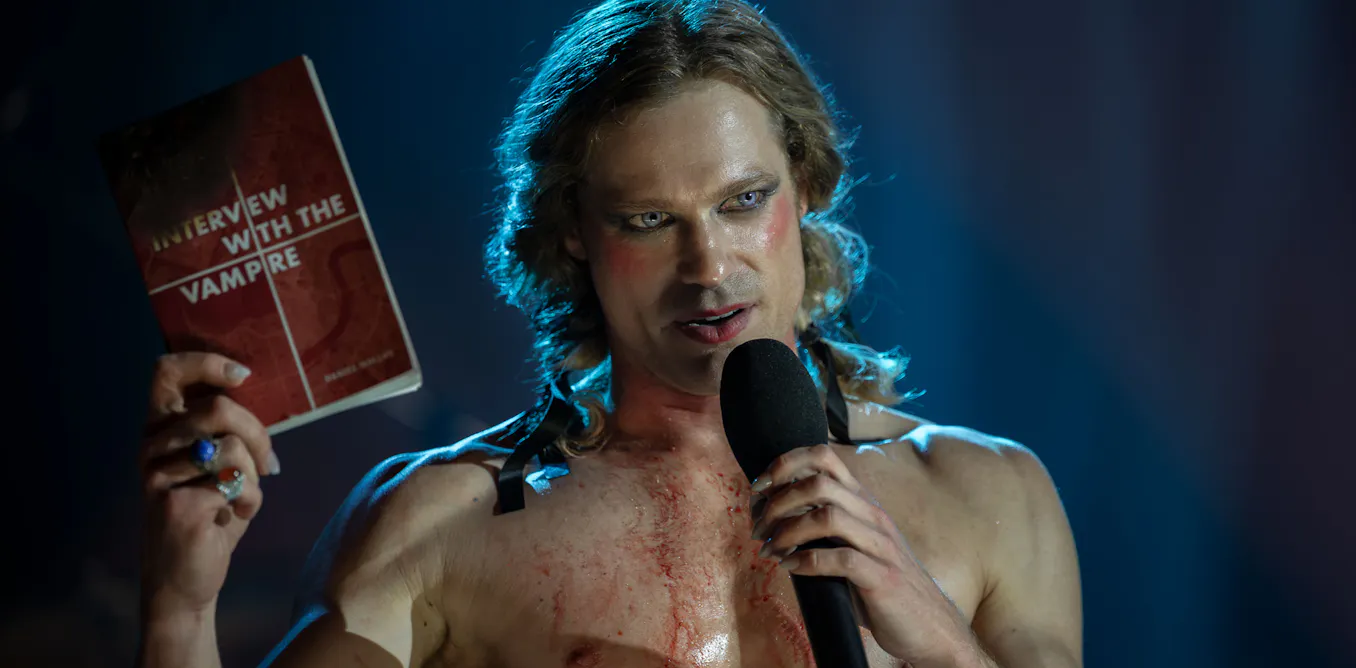
Where Lestat (2005) killed off the vampire musical, TV’s Lestat is resurrecting it.
June 7, 2026, marked a significant turning point for vampire musicals, a genre long haunted by commercial failures despite its rich history. On that day, the stage adaptation of The Lost Boys triumphantly secured four Tony Awards, while AMC premiered the third season of Interview with the Vampire, now rebranded as The Vampire Lestat. This new season blends rockstar theatrics and original songs, breathing fresh life into the vampire musical tradition.
Vampires and musical theatre share a natural synergy grounded in their intense emotional expressiveness and propensity for dramatic spectacle. In fact, the 19th-century stage saw the rise of vampire operas such as Heinrich Marschner’s 1828 Der Vampyr, which married gothic themes with musical storytelling. However, the vampire musical’s journey onto Broadway in the early 2000s was fraught with obstacles, with productions like Dance of the Vampires (2002), Dracula (2004), and Lestat (2005) failing to resonate with American audiences and critics alike.
Related stories

Dance of the Vampires, originally a celebrated 1997 musical in Vienna, encountered creative discord during its Broadway transition. The production team struggled to reconcile the original’s gothic romance and brooding atmosphere with a vision more tailored to American tastes, veering toward slapstick comedy that diluted the vampire’s mystique. This tonal imbalance undermined the show’s emotional core and alienated audiences expecting a more nuanced blend of darkness and humor.
Similarly, Broadway’s Dracula adaptation grappled with conflicting artistic choices that hindered its success. Critics noted the show’s awkward staging, gratuitous nudity, and a departure from camp that removed much of the vampire’s charismatic allure. The titular character was portrayed with minimal emotional range, despite actor Tom Hewitt’s background in camp-infused roles. Subsequent international versions of Dracula adjusted these elements, emphasizing romantic and sensual dimensions that better aligned with the primary demographic of musical theatre—female audiences. This reframing bolstered the show’s appeal overseas, highlighting the importance of aligning vampire musicals with contemporary cultural sensibilities.
The Lestat musical on Broadway condensed the vampire’s extensive narrative but missed opportunities to fully integrate his connection to music. Unlike the AMC series, which casts Lestat as a rockstar whose identity is intertwined with his performances, the stage version overlooked the potential for music-driven character exploration. The television adaptation’s success, reflected in a perfect Rotten Tomatoes score, demonstrates how embedding music organically into the storyline can elevate vampire narratives.
The Lost Boys musical capitalizes on this synergy by presenting its vampire characters as members of a rock band, a choice that lends authenticity to their musical numbers and enhances audience engagement. Its production values evoke the grandeur of 1980s megamusicals, complete with flying vampires and visually striking sets, reaffirming that spectacle remains a cornerstone of successful musical theatre.
Underlying these developments is a broader understanding of how vampires function within the musical genre. Traditionally depicted as soulless beings, vampires pose a paradox in musicals, which demand raw emotional expression through song. The new wave of vampire musicals resolves this by portraying vampires as emotionally volatile or ‘failed’ in their supernatural detachment, thus justifying their musical outpourings. This evolution allows characters like Lestat to embody a complex blend of love, pain, and theatricality, engaging audiences on a visceral level.
The renewed viability of vampire musicals on Broadway and television suggests a lifting of a long-standing creative curse. By embracing the inherent passions of both vampires and musicals, recent productions have crafted experiences that resonate with contemporary audiences. As these singing vampires stake their claim in live entertainment, the future promises an exciting expansion of this once-struggling genre.
Full story & global impact
This article was synthesized and rewritten by MusicTop Editorial from reporting published by theconversation.com. Read the publisher's report for the complete source context.
Read original source: theconversation.com