The Mysterious Art of Conducting
Published August 9, 2026 · EUROPA
An inside look at music’s widely misunderstood profession
The role of the orchestral conductor remains one of the most enigmatic and debated within the realm of classical music. While some view conductors as indispensable leaders, others dismiss their gestures as mere theatrics. This duality reflects a profession shrouded in mystique, balancing between practical necessity and artistic symbolism.
Unlike instrumentalists whose technical mastery is visibly demanding, conductors rely on subtle, often intangible gestures to unify large ensembles. For many observers, the act of conducting—waving a baton or moving hands—can appear deceptively simple or even superfluous, prompting questions about the actual influence wielded by these figures on stage.
Related stories
 Phoebe Bridgers Banned Phones at Her Concerts and It’s Creating a Beautiful and Mysterious Experience Where People Are Drawing Her Amazing Light Show by Hand
 Everything We Know About Slipknot's Mysterious Website Tease
 How 'furious' Ed Sheeran has been spectacularly 'thrown under a bus by the people he considers friends' - as insiders reveal the mysterious phone call that could see the inoffensive 'prince of pop' de-throned for good
Despite skepticism, the conductor’s presence is critical for orchestras that can number upwards of 70 to 100 musicians. Communication among such large groups presents unique challenges; musicians seated far apart cannot easily coordinate timing, dynamics, or expression by eye contact alone. The conductor functions as the ensemble’s central coordinator, ensuring cohesion and collective interpretation.
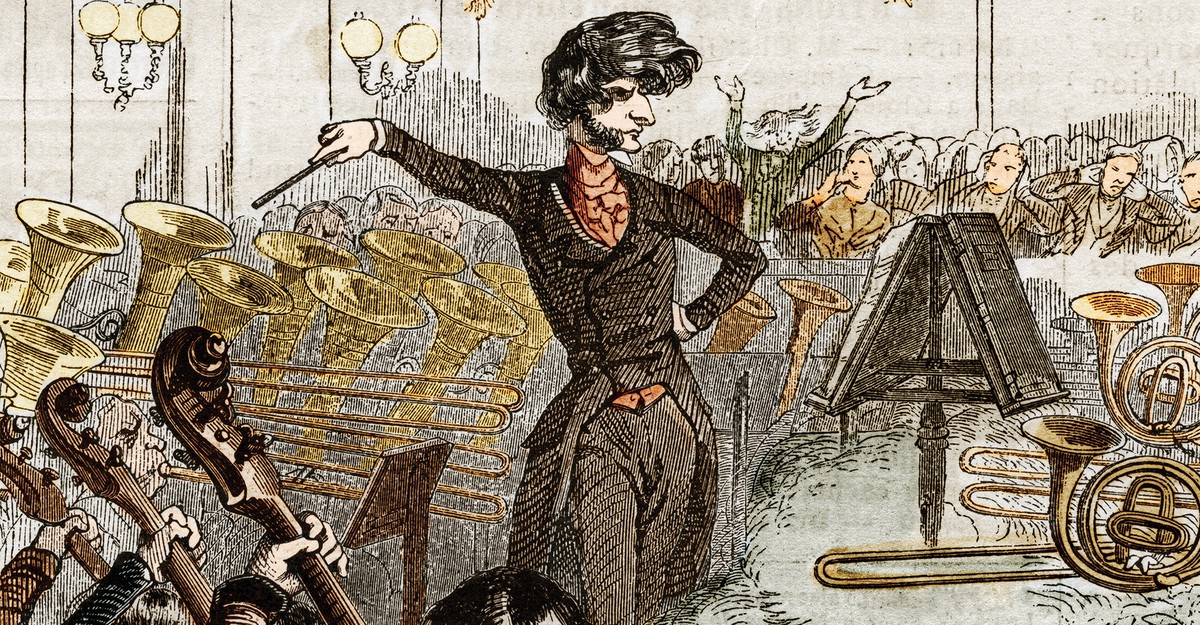
Historically, conducting as a distinct profession emerged in the mid-19th century, shaped by technological and musical developments during the Industrial Revolution. Innovations like the addition of valve mechanisms to brass instruments and the creation of new instruments expanded orchestral possibilities, resulting in larger, more sonically diverse ensembles. These expansive orchestras necessitated a dedicated individual to guide performance, as traditional methods of ensemble leadership—such as a lead violinist or keyboardist directing while playing—proved insufficient.
This transformation coincided with a cultural shift in the perception of composers and conductors. The Romantic era elevated the artist to a quasi-mythical status, portraying conductors as visionary figures who could harness vast orchestral forces to realize complex, emotionally charged works. Prominent composers of the time, including Hector Berlioz and Richard Wagner, often conducted their own intricate compositions, embodying the conductor’s role as both interpreter and creative authority.
Beyond logistical coordination, conductors are tasked with shaping the music’s expressive flow. Unlike many popular genres, classical orchestral music typically eschews a rigid, metronomic beat in favor of nuanced tempo changes and dynamic contrasts that give performances their emotional depth. The conductor must navigate these fluctuations in real-time, responding to the orchestra’s evolving sound and guiding the ensemble through interpretations that vary from one performance to another.
In this dynamic exchange, trust is paramount. Musicians rely on the conductor’s leadership to maintain direction and unity, while the conductor depends on the collective artistry of the players to realize the musical vision. This symbiotic relationship underscores the conductor’s dual role as both leader and listener, balancing authority with responsiveness.
Notably, the necessity of conductors diminishes in smaller ensembles, such as quartets or trios, where musicians communicate more directly. In larger orchestras, however, the conductor’s role as a unifying force becomes indispensable, providing an agreed-upon structure that facilitates complex musical conversation among many participants.
Modern orchestral culture has evolved significantly from the autocratic models of the past. Whereas early 20th-century conductors sometimes exercised harsh authority over musicians, contemporary conductors tend to foster collaborative and respectful environments. The profession now emphasizes partnership rather than domination, reflecting broader social changes and the realities of unionized orchestral workplaces.
Ultimately, the value of a conductor is measured by their ability to enhance the performance beyond what the orchestra could achieve independently. Musicians can quickly discern whether a conductor’s guidance enriches the music or hampers it. When effective, the conductor elevates the ensemble’s artistry, enabling a collective expression that resonates deeply with audiences.
Understanding the conductor’s multifaceted role reveals why this figure remains central to orchestral music despite its complexities. Far from a mere timekeeper or showman, the conductor embodies a crucial artistic and organizational function, bridging individual musicianship and unified performance in a constantly evolving musical dialogue.
Full story & global impact
This article was synthesized and rewritten by MusicTop Editorial from reporting published by theatlantic.com. Read the publisher's report for the complete source context.
Read original source: theatlantic.com