Katarina Barruk joiks for survival
Published August 15, 2026 · EUROPA
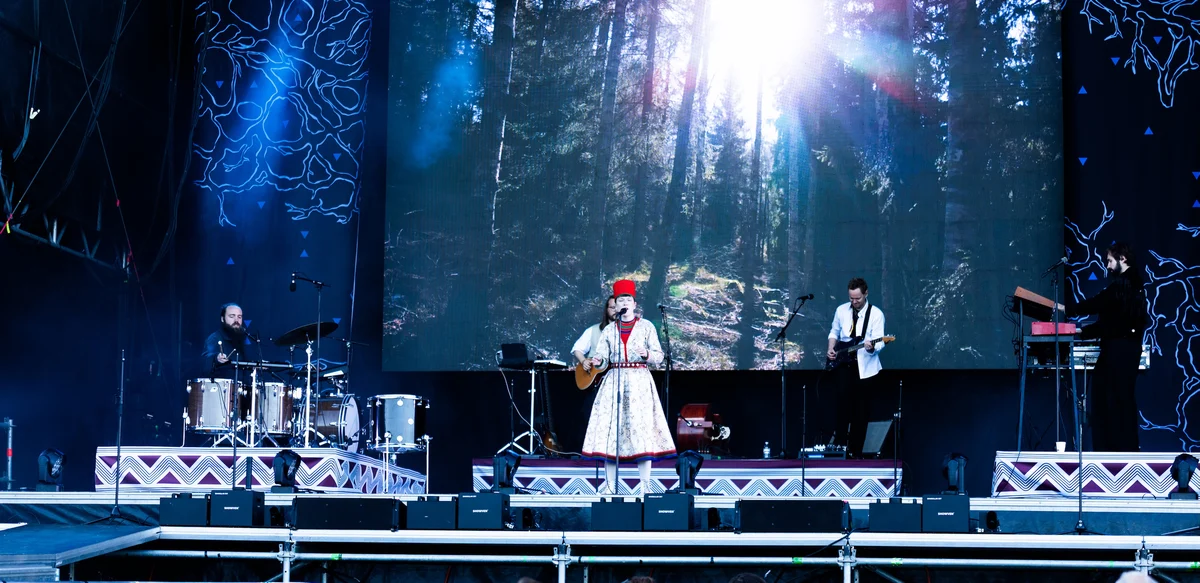
In the remote Arctic community of Vadsø, folk-fusion artist Katarina Barruk spearheads the largest-ever Ume Sámi concert, turning centuries of oppression into empowering documentation.
In the far north of Norway, where the Arctic landscape stretches vast and remote, the cultural voice of the Ume Sámi people has found a powerful new platform. Katarina Barruk, a pioneering folk-fusion artist, recently led the largest concert ever dedicated to the Ume Sámi language and heritage. This landmark event took place during Varangerfestivalen in Vadsø, an Arctic city steeped in history and surrounded by diverse Sámi cultures.
Vadsø itself is situated within a region marked by historical tragedies and enduring resilience. Just a short distance away, in Vardø, a chilling memorial commemorates 135 individuals persecuted as witches during the 17th century. This stark reminder of past oppression stands alongside the ongoing challenges faced by the Sámi people, Europe’s only recognized Indigenous group, whose cultural identity has for centuries been threatened by assimilation policies from Scandinavian governments.
Related stories

The Sámi homeland, known as Sábmie, arcs across sections of Norway, Sweden, Finland, and Russia, encompassing various Sámi communities distinguished by their languages and traditions. Among these, Ume Sámi is critically endangered, with estimates of active speakers ranging from 20 to 100. Barruk, herself an Ume Sámi speaker, embodies the struggle and revival of this language through her artistic endeavors.
Barruk’s career milestones are notable. She was the first Sámi artist to grace the Royal Albert Hall stage during the Proms and co-composed music for the first Ume Sámi theatre production in a century, celebrating the forest Sámi culture. Her recent concert at Varangerfestivalen not only showcased her own work but also featured collaborations with artists like Jörgen Stenberg and Marja Mortensson, who represent other Sámi traditions, reflecting the cultural mosaic of the region.
The Varangerfestivalen, running since 1982, transforms Vadsø into a vibrant hub where Arctic music and culture intersect. Barruk’s concert, opening the festival on the Northern Soul stage, was more than a performance; it was a cultural assertion. She emphasized that her mission transcends personal fame, focusing instead on creating space for Ume Sámi voices and inspiring community pride in a language and culture long marginalized.
Musically, Barruk’s work interweaves traditional joik—a form of song intimately tied to people and places—with contemporary alt-pop elements. This fusion captures the essence of Sámi storytelling and memory, especially poignant in pieces like “Umealven,” which evokes the Ume River before its transformation by hydroelectric dams. Through her music, Barruk preserves ancestral narratives and landscapes, offering listeners both an artistic and historical experience.
The concert also underscored the political dimensions of Sámi artistry. Barruk and her peers have increasingly embraced their roles as cultural advocates amid rising nationalist sentiments in Scandinavia. Their music becomes a platform to address ongoing issues of cultural survival, recognition, and rights, linking past injustices to present-day struggles.
Traditional regalia played a symbolic role in the event’s finale, where Barruk wore a modernized gápttie dress crafted by designer Anna-Stina Svakko. This blend of heritage and contemporary expression visually reinforced the concert’s theme of cultural continuity and renewal.
Barruk’s creative process remains deeply rooted in her homeland. Despite living in Oslo, she frequently returns to Sábmie for inspiration, underscoring the inseparability of her music from the land and language of her ancestors. This connection is vital not only for her artistry but also as a form of resistance against historical and ongoing displacement faced by Sámi communities.
The festival’s volunteer base, including recent arrivals like a Ukrainian driver, reflects a broader spirit of solidarity and community engagement in this remote Arctic region. Their contributions help sustain events like Varangerfestivalen, which serve as crucial platforms for Indigenous cultural expression.
Katarina Barruk’s leadership in bringing Ume Sámi music to a wider audience represents a significant moment in Indigenous cultural preservation. By blending tradition with innovation, and local roots with international reach, she is helping to ensure that the voices and stories of her people continue to resonate far beyond the Arctic Circle.
Full story & global impact
This article was synthesized and rewritten by MusicTop Editorial from reporting published by thelineofbestfit.com. Read the publisher's report for the complete source context.
Read original source: thelineofbestfit.com