Flags, music as Taliban authorities mark five years ruling Afghanistan
Published August 15, 2026 · EUROPA
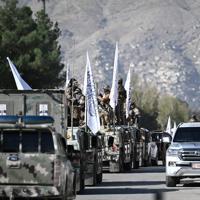
The Taliban government celebrated five years of ruling Afghanistan on Aug. 14, with flags galore and convoys of military vehicles, while critics decried tightening restrictions in all areas of daily life.
On August 14, 2026, Afghanistan witnessed the fifth anniversary of the Taliban's return to power, marked by public displays of nationalistic fervor and ceremonial activities in Kabul. The day was characterized by a significant presence of Taliban security forces, convoys of decorated military vehicles, and numerous flags symbolizing the current regime’s tenure.
The celebrations unfolded notably near the former United States Embassy, where hundreds of locals gathered to participate in the festivities. The crowd included men, boys, and young girls who rode in pickup trucks adorned with white flags symbolizing Taliban governance. The atmosphere was punctuated by vibrant murals across the city promoting themes of independence and national pride, alongside the sounds of religious and patriotic music.
Related stories



Military helicopters conducted flyovers above the capital, and the streets were filled with vehicles and motorbikes festooned with Taliban insignia. Security personnel were visibly present within the crowd, armed and maintaining order. The government also planned a series of sporting events, including cricket matches, though these were marked by exclusionary policies such as the prohibition of female spectators.
Taliban forces seized Kabul on August 15, 2021, following a swift offensive that coincided with the withdrawal of U.S.-led troops, leading to the collapse of the previous government. Since then, the Taliban have sought to consolidate their control, utilizing resources left behind by departing foreign forces, including military vehicles now paraded through the city.
Despite overt displays of control and attempts to project stability, the regime faces considerable challenges. Economic indicators reveal a decline in GDP per capita, exacerbated by the influx of millions of returnees from neighboring Iran and Pakistan over recent years. Although the World Bank estimates a modest real growth rate of 4.8 percent, the broader economic situation remains precarious.
The government spokesman has emphasized ongoing efforts to establish economic foundations and has called for public patience as these initiatives take root. Meanwhile, some Afghan youth acknowledge improvements in security and infrastructure, as well as emerging entrepreneurial opportunities. However, unemployment remains a critical issue, particularly affecting the younger population.
On the international front, the Taliban administration has engaged diplomatically with various countries, including some in Europe, but formal recognition remains limited, with Russia standing as the sole country to officially acknowledge the regime. Relations with Pakistan have deteriorated sharply, culminating in armed conflict this year, which has further aggravated Afghanistan's humanitarian and economic crises amidst widespread reductions in international aid.
Human rights organizations, including the United Nations, have highlighted the increasingly repressive environment under Taliban rule. Reports detail pervasive restrictions affecting nearly every facet of daily life in Afghanistan. Media freedom has been severely curtailed, with journalists facing harassment, detention, and exile. The status of women has notably regressed, with bans on their presence in public spaces, exclusion from most forms of employment, and the prohibition of girls’ education beyond a certain age.
Voices from within Afghanistan express a profound sense of despair, particularly from women who describe the past five years as deeply oppressive. The societal impact of these policies continues to resonate amid celebrations that offer a stark contrast to the lived realities of many citizens.
As Afghanistan marks this significant milestone under Taliban governance, the juxtaposition of public jubilation with ongoing socio-economic hardships and human rights concerns reflects the complex and multifaceted nature of the country's current trajectory. Details on future policy directions and international engagement remain limited, underscoring an uncertain path forward for Afghanistan and its people.
Full story & global impact
This article was synthesized and rewritten by MusicTop Editorial from reporting published by hurriyetdailynews.com. Read the publisher's report for the complete source context.
Read original source: hurriyetdailynews.com