Melbourne’s Best Australian Short Winner ‘Our Choir Has Always Been Travelling’ Is Going On Tour (EXCLUSIVE)
Published August 18, 2026 · EUROPA
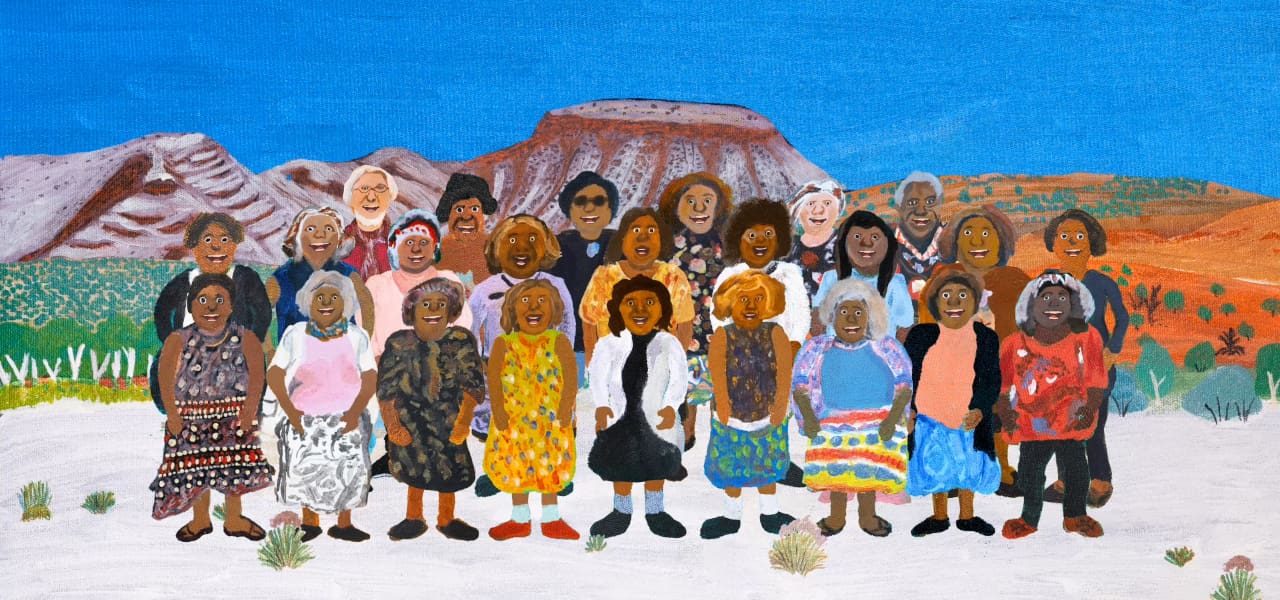
Fresh off winning MIFF's Best Australian Short prize, 'Our Choir Has Always Been Travelling' is about to hit the road.
The animated short film Our Choir Has Always Been Travelling has recently been honored with the VicScreen Erwin Rado Award for Best Australian Short Film at the Melbourne International Film Festival (MIFF). This award included a cash prize of AUS $10,000. Following this accolade, the film is set to embark on a national touring exhibition across Australia.
Our Choir Has Always Been Travelling was co-directed by Judith Pungarta Inkamala, Marjorie “Nunga” Williams, and Nelson Armstrong. It presents a vivid and colorful animation capturing the history and spirit of the Central Australian Aboriginal Women’s Choir. The ten-minute film incorporates multiple languages including English, Western Aranda, and Pitjantjatjara, and it traces the choir’s journey through the perspectives of six artists and singers affiliated with Alice Springs art centers Tangentyere Artists and Hermannsburg Potters.
Related stories

The film’s narrative and visual style were developed through a collaborative process involving the choir members themselves. A multi-day scriptwriting workshop with the six choristers produced much of the script verbatim, ensuring that the storytelling remained authentic and rooted in the artists’ own experiences. This approach departed from previous documentary and book projects about the choir, which were not created by First Nations members of the group.
Artist Judith Inkamala painted every character figure in the film, contributing a personal touch to each choir member and extra, while digital animator Nelson Armstrong transformed these hand-painted canvases and ceramic sculptures into animated sequences using a cut-out technique. Sound also plays a central role in this production, with recordings of the choir’s performances integrated into the film’s soundtrack. Additional ambient sounds were recorded locally in Alice Springs and during travels in Europe to reflect the choir’s international tours.
The choir’s history spans many decades, beginning in the early- to mid-20th century during the Mission era when choir members translated German hymns into Western Aranda. The group toured South Australia and Victoria in 1961, recorded an album in 1993 in Tamworth, and performed internationally in the United States and Europe. These historical layers serve as the backbone for both the film and the upcoming exhibition.
The exhibition celebrating the film’s success is being developed by Artback NT in collaboration with Tangentyere Artists and Hermannsburg Potters. It will feature the animated film alongside archival choir footage, paintings, and ceramic works created by the six featured artists. Funding for this project includes support from the Australian Government’s Visions of Australia program and philanthropic contributions from Sunshine & Crocodiles.
Curated by Eloise Lindeback together with co-directors Inkamala and Williams, the touring exhibition will debut in Mparntwe (Alice Springs) and then travel to major cultural institutions throughout every Australian state and territory. The organizers have expressed intentions for the film to continue screening at international festivals and for the exhibition to visit galleries abroad after its national tour concludes.
The production team included producers Ness Sim, Alinta Brown, and Eloise Lindeback, with a writing collective consisting of Judith Pungarta Inkamala, Eloise Lindeback, Anita Mbitjana Ratara, Marjorie “Nunga” Williams, Betty Conway, N. Donald, and Lizzie Topsy Topora Jako. This assembly of First Nations voices was integral to ensuring the film’s authenticity and storytelling approach.
The choice to animate hand-painted canvases and ceramics rather than rely on digital creations alone gives the film a distinct handcrafted quality. This method preserves the texture of the original artworks, which resonates with the film’s themes of community and cultural continuity.
The inclusion of live and archival audio recordings, together with new sound design recorded on location and abroad, enriches the film’s immersive quality. The soundscape positions music as a character in its own right, reflecting the choir’s ongoing presence and influence across time and geography.
This project exemplifies a model of Indigenous storytelling that centers the artists’ agency in narrating their history and culture. By collaborating directly with the choir members and involving a broad range of creative contributors from the community, the film bridges traditional oral histories with contemporary art forms.
The national touring exhibition presents an opportunity to bring these layered stories to a wider audience across Australia, while also promoting Indigenous art practices. Its planned international engagements could extend this reach further, potentially broadening awareness of Aboriginal cultural expression through film and visual arts.
The film’s trajectory from a local creative initiative to a nationally recognized work with international ambitions highlights evolving opportunities for Indigenous artists in Australia’s cultural sector. The integration of animation, ceramics, painting, and sound into a unified narrative offers an innovative approach that may inspire similar projects in the future.
Full story & global impact
This article was synthesized and rewritten by MusicTop Editorial from reporting published by cartoonbrew.com. Read the publisher's report for the complete source context.
Read original source: cartoonbrew.com