Adobe Firefly can now generate music, speech and sound effects
Published August 21, 2026 · EUROPA

Adobe Firefly’s audio tools became generally available on Thursday. Generate Music, Generate Speech and Generate Sound Effects now sit beside the image, video and design tools in its creative AI studio. Each runs on a different model. Generate Music uses the …
Adobe has broadened its Firefly creative AI platform by introducing fully accessible audio generation tools, including music, speech, and sound effects creation. This marks the company’s latest step in unifying multiple content creation processes within one interface, aiming to minimize disruption for creators who traditionally rely on multiple applications for sound and visuals.
The newly launched audio features are powered by distinct AI models tailored to specific tasks. Generate Music uses Adobe’s proprietary Firefly Music Model to produce original compositions customizable to match the length and emotional tone of accompanying videos. Generate Speech offers voice synthesis capabilities via the Firefly Speech Model, with an optional integration of ElevenLabs’ technology, enabling nuanced control over vocal style, pacing, and emotional delivery. Meanwhile, Generate Sound Effects utilizes the Firefly Audio Model to synchronize auditory elements precisely with visual cues.
Related stories
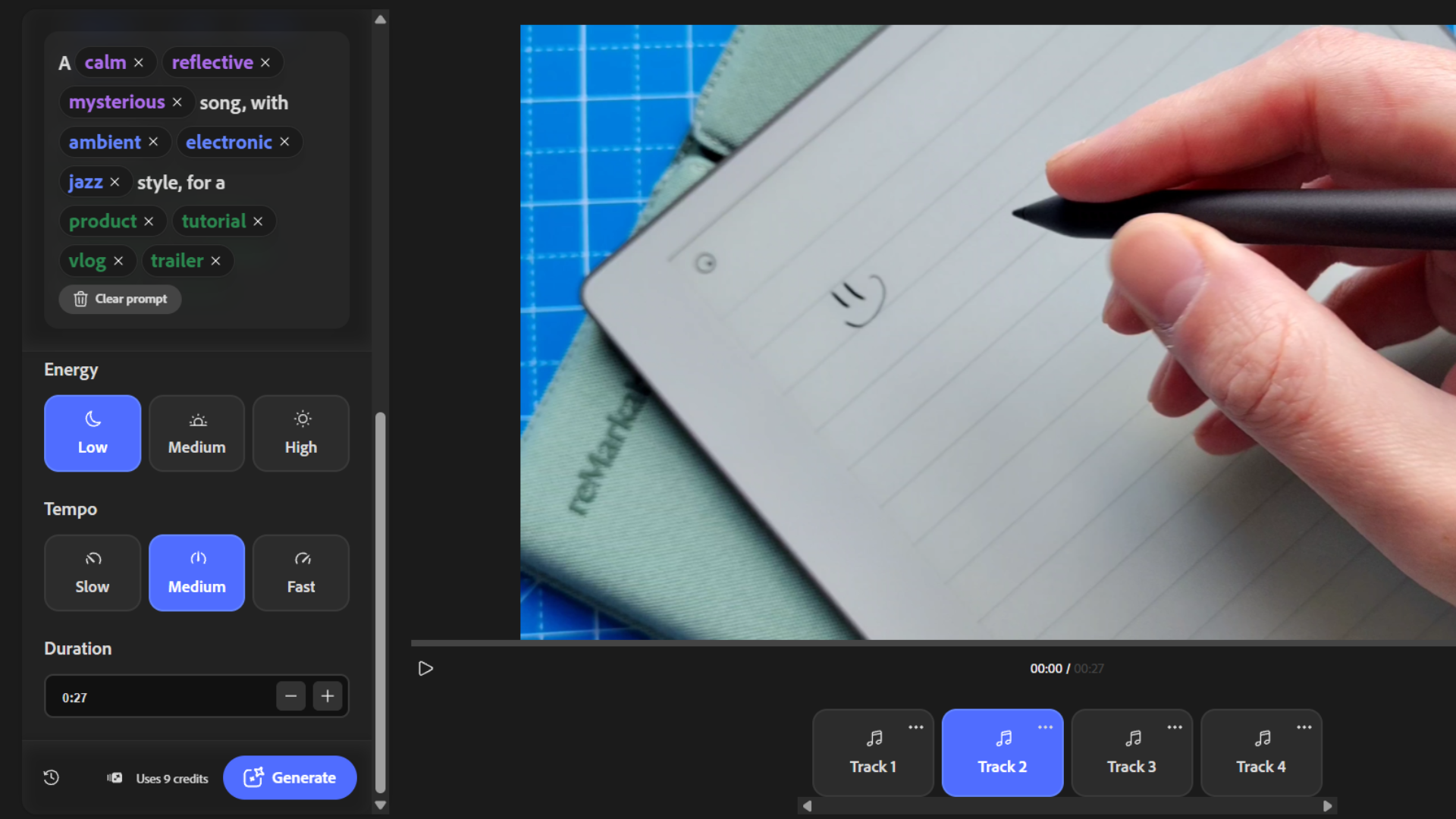
Adobe positions these tools as particularly useful for creators engaged in producing social media content, vlogs, short films, tutorials, and podcast snippets. A key selling point highlighted in the launch is the elimination of the need for a separate audio subscription, allowing creators to access these features within the same workspace as Firefly’s existing image, video, and design tools. By consolidating these capabilities, Adobe intends to reduce the common workflow interruptions caused by switching between disparate software and services.
The company emphasizes the commercial safety of its generated audio content as a distinctive advantage, asserting that tracks produced through Firefly’s music AI are universally licensed and free from copyright takedown risks. This legal safeguard is a significant consideration for creators working with commercial clients, addressing longstanding concerns about intellectual property rights in AI-generated media. Adobe’s confidence in this claim stems from its strategy of training models exclusively on licensed and public domain materials, thereby aiming to avoid the legal entanglements encountered by other AI music generators.
This development arrives amid ongoing legal scrutiny within the AI-generated music sector. Notably, a German court recently ruled against Suno for copyright infringement, marking a precedent in Europe and underscoring the complex regulatory landscape. Adobe’s cautious approach to licensing reflects an awareness of these challenges, striving to provide a compliant and reliable resource for creators.
Firefly’s AI studio does not rely solely on Adobe’s internal models. The platform also incorporates technologies from industry leaders such as Google, ElevenLabs, Kling AI, Luma AI, OpenAI, and Runway. The addition of Google’s Gemini Omni Flash model further enhances Firefly’s multimedia capabilities, enabling creators to input video, audio, images, and text to develop projects from rough ideas to storyboards within a single environment.
The partnership with ElevenLabs is particularly notable given its standing in voice synthesis technology and recent valuation milestones. Adobe’s strategy seems to prioritize establishing Firefly as a comprehensive creative workspace rather than focusing exclusively on developing in-house AI models. This approach allows users to access a variety of cutting-edge tools while remaining within the Firefly ecosystem.
However, this model integration introduces complexities in Adobe’s commercial safety assurances. While Adobe guarantees licensing compliance for content generated by its own Firefly models, extending this guarantee across third-party technologies integrated into the studio is less straightforward. The company’s legal assurance language explicitly applies only to its proprietary models, creating a nuanced distinction that users must consider.
Complementing the audio tools, Adobe has made its Firefly AI Assistant widely available, including a free tier with daily usage limits. This assistant, which debuted in beta earlier this year, supports creative tasks such as batch editing, branded mockups, storyboarding, and brand kit creation. Additionally, the Elements feature helps maintain continuity by storing project assets like characters and locations for use across different creative outputs.
Adobe’s overarching goal with these offerings appears to be cultivating habitual use of Firefly from project inception through completion. By providing core creative functions at no extra cost and integrating advanced finishing tools, Adobe aims to position Firefly as the central hub for digital content production.
Supporting this strategy, Adobe cites research from Berklee College of Music indicating that a significant majority of video creators regularly incorporate music in their content. While the study was funded by Adobe, it was conducted independently by Berklee’s Emerging Artistic Technology Lab, lending some external credibility to the findings.
Ultimately, Adobe’s expansion into AI-generated audio comes at a time of heightened demand and rapid technological advances in the creative industries. The company leverages its licensing-first approach to differentiate itself in a market where legal uncertainties about AI-generated music remain unresolved. If Adobe’s model withstands scrutiny, it could provide a compelling solution for creators seeking seamless, legally sound audio integration within their multimedia projects.
Full story & global impact
This article was synthesized and rewritten by MusicTop Editorial from reporting published by thenextweb.com. Read the publisher's report for the complete source context.
Read original source: thenextweb.com