Boomtown proves that ambition, escapism and conscience can share the same dancefloor
Published August 24, 2026 · EUROPA
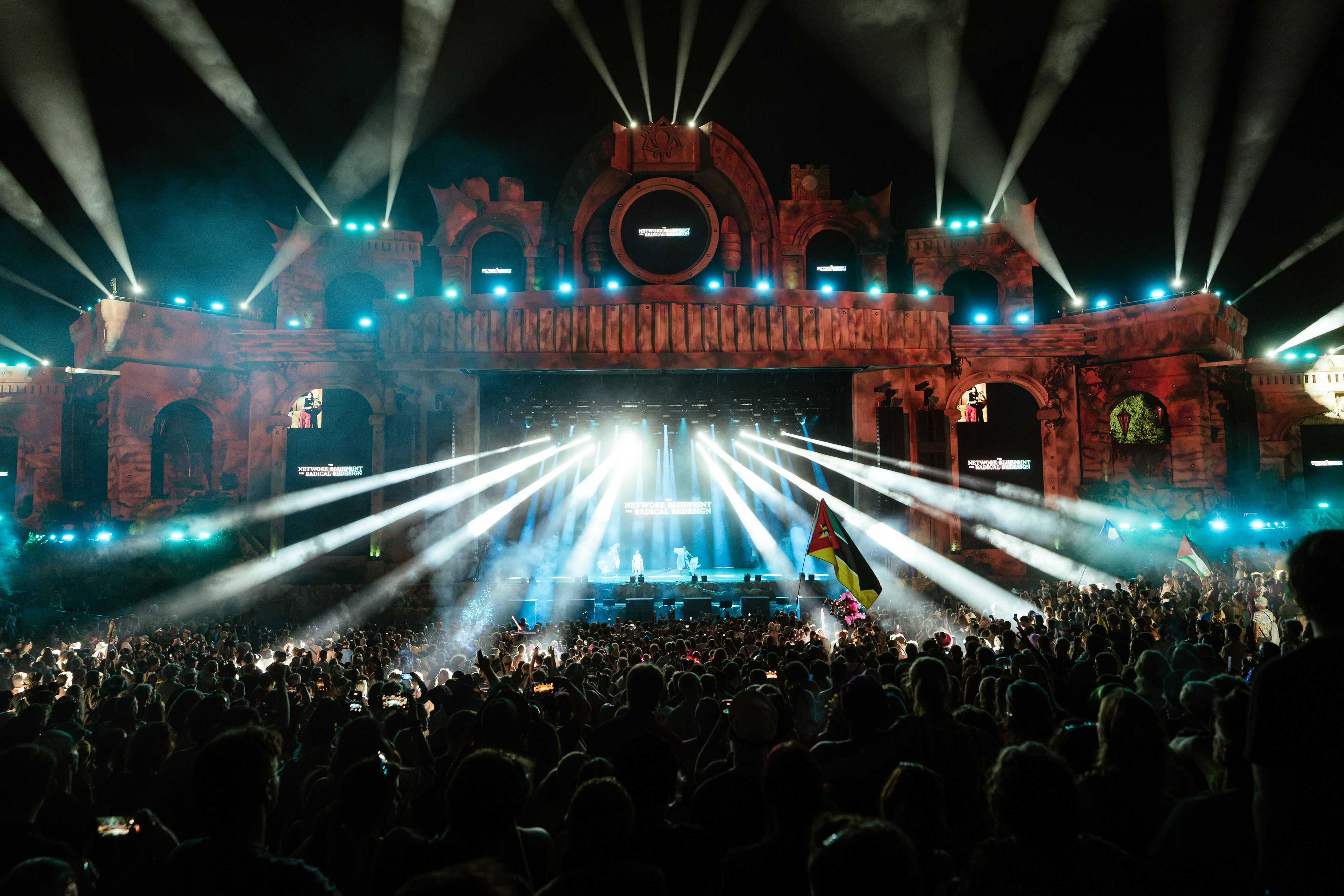
A festival once built on spectacle, Boomtown has come to trust the quieter, in-between moments to hold its crowd together as it expands with a new blueprint for 2026, writes Kayla Sandiford.
Since its inception in 2009, Boomtown Festival has transformed from a modest gathering into an expansive immersive experience set on the Matterly Estate in the South Downs. Originating from the vision of founders Chris Rutherford and Luke Mitchell, the festival was conceived as an alternative to mainstream festivals, emphasizing underground music, countercultural art, and narrative-driven environments.
The festival's early years saw it moving locations, initially launching as a three-day event at Gloucestershire's Speech House Hotel before relocating to Stowe Landscape Gardens. By 2011, Boomtown established a permanent home at the Matterly Estate, an environment well-suited to its growing ambitions due to its natural amphitheatre and outdoor infrastructure. Over time, the festival expanded from a single community to a multi-district cityscape, weaving complex storylines involving lost tribes, futuristic revolutions, and ecological themes.
Related stories

Boomtown's narrative framework is integral to its identity. The festival’s lore revolves around the character Nickolas Boom, whose discovery of an ancient temple and its celestial treasures underpins the thematic arcs that shape the event’s districts and performances. This storytelling element fosters a unique sense of immersion, encouraging attendees to engage with both the spectacle and the spaces between performances.
The COVID-19 pandemic imposed a significant interruption, leading Boomtown to scale back drastically upon its return in 2022. The festival reduced its footprint, consolidating stages and districts primarily within the valley area. This contraction, while necessary, diverged from the founders’ vision of a sprawling, multi-valley city.
By 2026, Boomtown rebounded with a comprehensive redesign dubbed “Chapter Five: Radical Redesign,” marking its most extensive iteration to date. This edition not only restored but expanded the festival’s geography, reviving iconic stages like The Lion’s Den and introducing new areas such as Oldtown and Copperwood Heights. The HYDRO XL stage received a significant capacity boost, accommodating up to 20,000 attendees, contributing to the festival’s record attendance of 77,000.
The 2026 event was thematically anchored in reflection and reimagining societal values, inviting participants to slow down and contemplate ecological and social responsibility. This thematic focus permeated performances, installations, and the festival’s interactive storyline, which addressed contemporary global issues such as environmental degradation and capitalism through allegorical factions like The Liquidians and the Von Vanderhausens.
Beyond the music, the festival emphasized the importance of the spaces between performances—moments for social connection and respite that contribute to the overall experience. Organizers implemented innovative systems to track and encourage positive social interactions among attendees, promoting a culture of recognition and shared responsibility.
Musically, Boomtown maintained its commitment to diversity and underground scenes, featuring over 500 artists across various genres spread over multiple districts and hidden venues. This breadth ensured that attendees could discover new sounds and communities while maintaining a cohesive atmosphere throughout the festival.
The balance between escapism and consciousness stood out as a defining characteristic of Boomtown 2026. While the festival provided ample opportunity for celebration and dance, it did not shy away from embedding ecological and social commentary within its fabric. Performances by artists like poet Kae Tempest underscored this duality, blending artistry with urgent messages about climate change and societal responsibility.
Boomtown’s evolution reflects a broader trend in festival culture, where immersive storytelling, community-building, and activism increasingly intersect. As it moves forward, the festival continues to challenge conventional notions of what a music event can be, fostering a space where ambition, escapism, and conscience coexist on the dancefloor.
Full story & global impact
This article was synthesized and rewritten by MusicTop Editorial from reporting published by thelineofbestfit.com. Read the publisher's report for the complete source context.
Read original source: thelineofbestfit.com