Beauty in Ambiguity: On Marian Anderson’s Lifelong Love For Schubert
Published September 10, 2026 · EUROPA
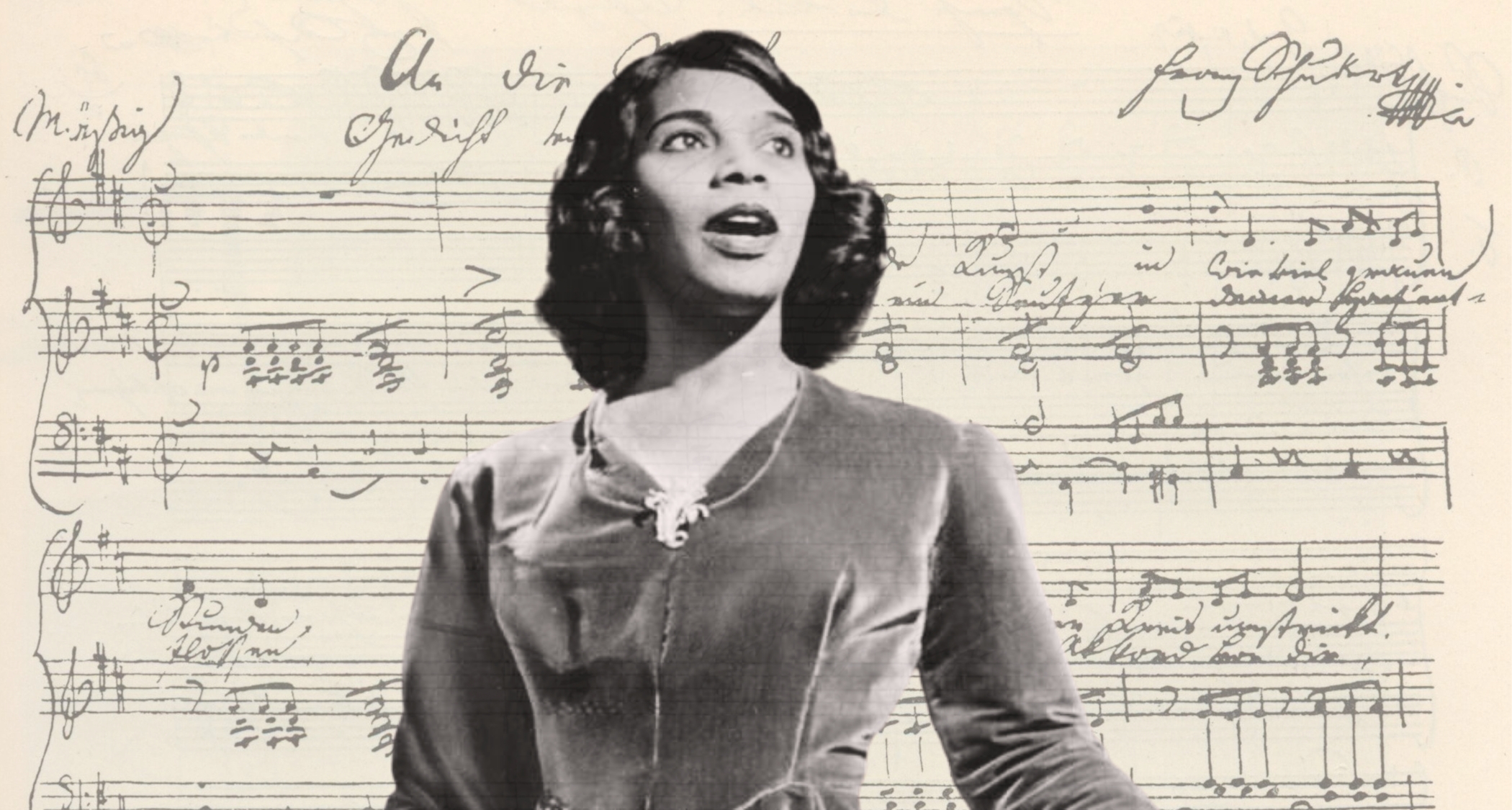
When you’re young, or not so young, and strongly drawn to a genre of music, a certain composer, a particular piece, it’s often hard to explain why, even to yourself. This may be especially true of music unfamiliar to you.
Marian Anderson’s artistic journey was marked by a profound and enduring affinity for the songs of Franz Schubert, a connection that shaped much of her career and artistic identity. This relationship, deeply personal and somewhat ineffable, began in her youth during a church recital by Roland Hayes and propelled her toward rigorous study and performance of German lieder.
Although Anderson never fully articulated the reasons behind her fascination with Schubert’s oeuvre, her commitment to his music was unmistakable. From an early age, she was captivated by the emotional depth and subtle complexity embedded in Schubert’s songs, even without a full understanding of the German texts. This early exposure ignited a passion that later motivated her relocation to Europe to refine her expertise in classical vocal repertoire, particularly Schubert’s works.
Related stories

Throughout her prime performing years, Anderson became celebrated for her impeccable German diction and interpretive skill in Schubert’s lieder, yet she remained reserved in her public commentary about the music’s appeal. When selecting recital programs, she consistently prioritized Schubert’s compositions, acknowledging their abundance and intrinsic beauty without delving deeply into their analysis. She recognized the collaborative rewards these songs offered to both singer and pianist, underscoring their artistic richness.
Related music video
Selected for this story · Published within the last two years
Anderson’s musical interests extended beyond Schubert and German lieder, encompassing a broad embrace of classical music that distinguished her from her familial background, which had limited exposure to such genres. This broad appreciation was coupled with a lifelong reverence for Negro spirituals, which she regarded as equally profound and sublime. Raised in a church choir environment, Anderson’s early musical experiences were steeped in spirituals and hymns, as well as occasional classical choral works, embedding in her a nuanced understanding of music’s capacity to convey layered meanings and emotional ambiguity.
Her perspective on classical music was shaped by the prevailing cultural hierarchies of her time, which often positioned European classical music as superior and universal. Anderson noted disparities in musical appreciation between American and European audiences, observing that European listeners typically approached classical music with greater seriousness. However, she also witnessed a shift in American musical tastes during wartime, where audiences increasingly embraced more challenging works by composers such as Brahms and Schubert, even among soldiers and factory workers.
Despite occasional use of hierarchical language to describe musical genres, Anderson demonstrated openness toward diverse musical forms and artists, including friendships with figures like Duke Ellington. Her critique of American radio programming suggested a belief that audiences could be elevated to appreciate more complex music rather than being constantly offered simpler fare.

Central to Anderson’s artistic ethos was a recognition of the deep emotional and cultural significance of Negro spirituals. She articulated their role as expressions of collective sorrow and hope within the Black experience, equating their profoundness with that found in the most revered European art songs. This conviction was evident in her lifelong repertoire choices and performance style.
The emotional tension and ambiguity characteristic of Schubert’s music resonated with Anderson’s own experiences and artistic sensibility. Schubert’s lieder often juxtapose cheerful melodies with underlying currents of sadness and uncertainty, mirroring the composer’s own troubled life. Anderson’s interpretations captured these nuances, bringing a vulnerability and depth that likely echoed her personal encounters with exclusion and resilience.
Her engagement with Schubert’s song cycle Die schöne Müllerin, though originally composed for male voice, exemplified this connection. Anderson frequently performed select songs from the cycle, notably “Wohin?” and “Ungeduld,” infusing them with expressive subtlety and emotional insight. These songs’ themes of longing, confusion, and unrequited love aligned with the complex emotional landscapes she navigated both in music and life.
Anderson’s artistic path, from her formative years marked by spirituals to her distinguished career as a classical vocalist, illustrates a dialogue between different musical traditions and emotional worlds. Her embrace of Schubert’s lieder alongside Negro spirituals challenges simplistic hierarchies and highlights music’s power to convey multifaceted human experiences.
While detailed personal reflections from Anderson on her attraction to Schubert’s music remain limited, the evidence of her sustained devotion and interpretive mastery speaks volumes. Her legacy invites a reconsideration of the intersections between cultural identity, musical expression, and emotional ambiguity, as embodied in her lifelong love for Schubert’s profound and enigmatic songs.
Full story & global impact
This article was synthesized and rewritten by MusicTop Editorial from reporting published by lithub.com. Read the publisher's report for the complete source context.
Read original source: lithub.com