Nietzsche on Walking and Creativity
Published October 5, 2026 · EUROPA
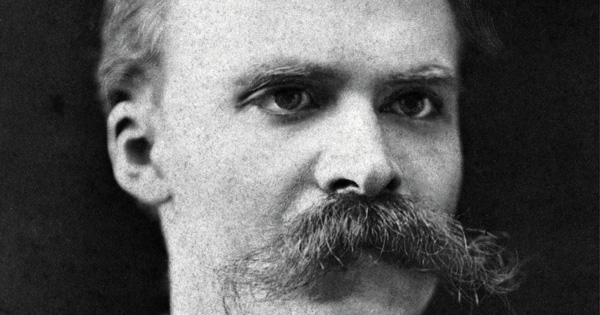
"Our first questions about the value of a book, of a human being, or a musical composition are: Can they walk? Even more, can they dance?"
Friedrich Nietzsche’s enduring legacy as a philosopher is closely intertwined with his steadfast commitment to walking, a practice that grounded his most profound intellectual achievements. Far from mere physical exercise, walking was a vital element of Nietzsche’s creative methodology, deeply influencing the way he conceived and developed his ideas.
During the 1870s, Nietzsche faced significant personal and professional challenges. Isolated due to the controversial nature of his philosophical views and debilitated by severe migraines and nausea, he was often confined to his room. Yet, it was through extended solitary walks in the forests and mountains of Europe that Nietzsche found relief and inspiration. This period of his life, particularly his time spent in the Black Forest, marked a critical phase in which walking served as both a healing mechanism and a catalyst for his creativity.
Nietzsche’s daily routine involved hours of ambulation, frequently covering the same paths repeatedly. These long walks were not aimless wanderings but deliberate intellectual exercises during which he mentally composed much of his work. His notebooks from this time reveal thoughts formed entirely on the move, later transcribed when he returned to his desk. This process culminated in significant works such as The Wanderer and His Shadow, which he developed amid these peripatetic meditations.

Beyond the physical act, Nietzsche conceptualized walking as a metaphor for intellectual freedom and spirit. He emphasized that true philosophical insight and genuine creativity arise not in sedentary contemplation but through the dynamic interplay of mind and body in motion. This view aligns with his broader critique of traditional academic environments, which he saw as confining and stifling to the creative spirit.
Nietzsche’s reflections extended to the arts, including music, which he famously regarded as essential to life. He posited that the vitality of music and other forms of expression could be measured by their capacity to engage the body’s movement — the ecstasy found in walking and dancing. In his philosophy, the ability of a work to 'walk' or 'dance' symbolized its liveliness and creative potency.
His philosophy also embraces the concept of the Eternal Return, a thought experiment envisioning life as a continuous cycle, mirroring the rhythmic and repetitive nature of walking. This notion encapsulates the harmony between the walker and the landscape, where each step is both a repetition and a renewal, emphasizing endurance and cyclical creativity.

Nietzsche’s approach to walking as an intellectual practice was later examined in contemporary studies, such as Frédéric Gros’s A Philosophy of Walking, which explores the reciprocal relationship between walker and environment. These insights reinforce Nietzsche’s belief that ideas born in the freedom of movement possess a distinctive vitality absent from those confined to static reflection.
His advocacy for minimal sitting and maximal engagement with the outdoors underscores his commitment to an active, embodied philosophy. Nietzsche cautioned against accepting ideas developed in isolation from bodily experience, contending that genuine thought emerges from the integration of physical and mental activity.
Nietzsche’s personal experience and philosophical writings have influenced modern understandings of creativity, highlighting the importance of physical movement in fostering mental breakthroughs. While details of the precise influence on contemporary music remain limited, Nietzsche’s insistence on movement as a source of creative ecstasy continues to resonate with artists and thinkers exploring the interplay between body and mind.
In sum, Nietzsche’s life and work exemplify the profound connection between walking and the creative process. His legacy invites a reconsideration of how physical movement informs intellectual and artistic innovation, proposing that the most fertile ideas often arise not from stillness but from the rhythm of steps taken in solitude and reflection.
Full story & global impact
This article was synthesized and rewritten by MusicTop Editorial from reporting published by themarginalian.org. Read the publisher's report for the complete source context.
Read original source: themarginalian.org