Elvis Costello on Getting His Stage Name and Writing ‘Alison’
Published October 25, 2026 · EUROPA

Costello looks back at the making of My Aim Is True and his earliest music in our new interview
Nearly five decades after its initial release, Elvis Costello's debut album My Aim Is True continues to resonate, underscored by a comprehensive anniversary edition featuring an extensive 104-track collection. This release not only revisits the album’s original material but also unveils previously unheard recordings and live performances that illuminate the breadth of Costello’s early musical explorations.
The newly compiled box set reveals a rich diversity in Costello’s songwriting foundations, highlighting his early experiments that foreshadowed later forays into roots music, country, and pre-rock balladry. These tracks, some predating the album sessions, challenge simplified notions of his stylistic beginnings and show an artist crafting a distinctive voice beyond the contemporary punk and new wave milieu.
Related stories

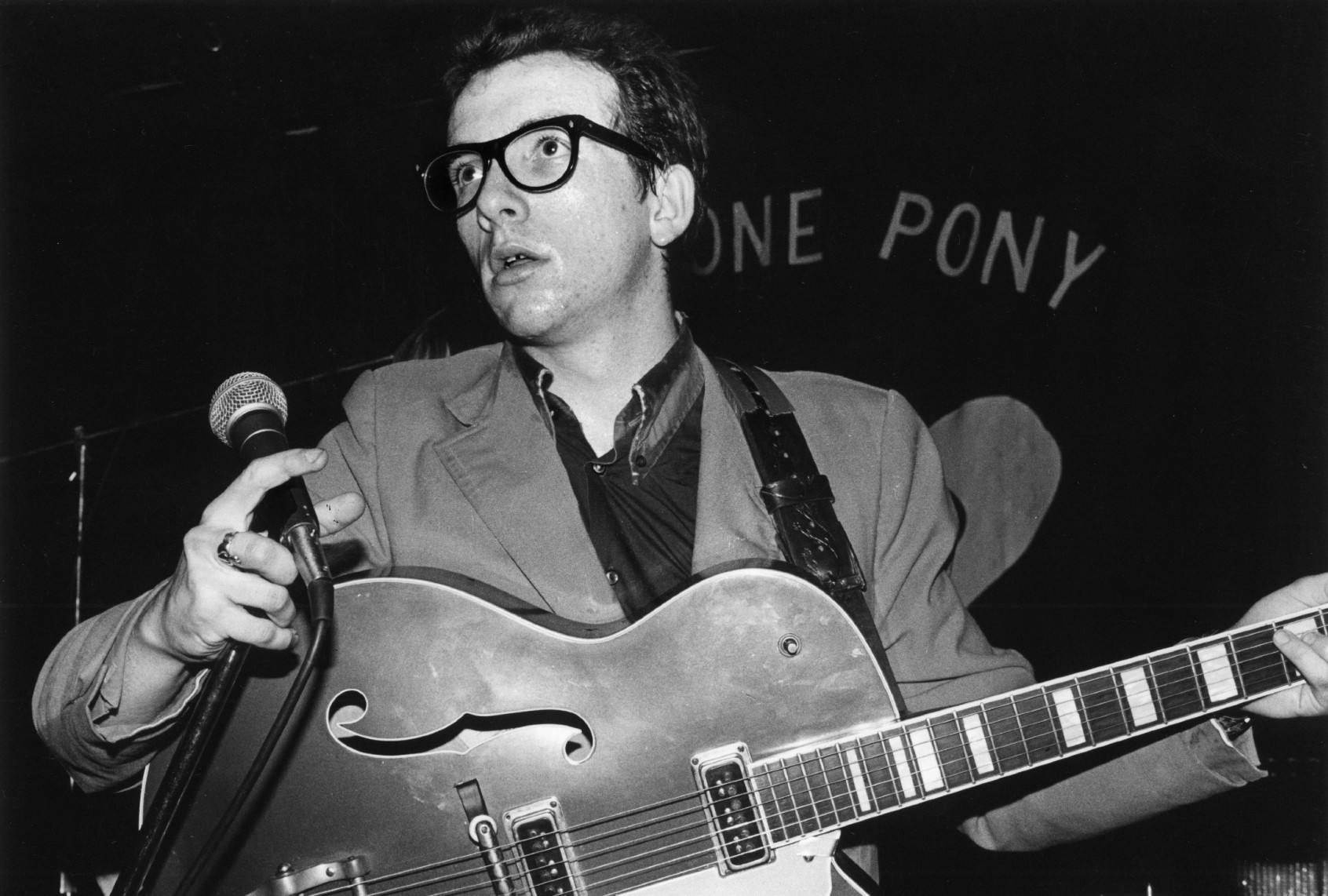
Costello has shared insights into the creative process behind some of his seminal songs, including "(The Angels Wanna Wear My) Red Shoes." He recalls the song’s inception during a train journey to visit his mother, emphasizing the emotional immediacy that drove the lyrics rather than a fully decoded meaning. The track’s contemplation of youth and mortality draws parallels to Neil Young’s thematic reflections, signifying a mature perspective unusual for a 22-year-old navigating early adulthood and familial responsibilities.
Related music video
Selected for this story · Published within the last two years
The themes of disappointment and introspection permeate much of the My Aim Is True material, distinguishing Costello’s approach from the more overtly rebellious tone commonly associated with punk rock at the time. While punk’s ethos often entailed a call to erase the past and start anew, Costello’s work exhibited a more nuanced engagement with personal and social complexities, resisting categorization within any singular movement or “gang.”
Despite the rising tide of punk and new wave bands during the late 1970s, Costello recounts a music scene where these genres did not dominate the mainstream charts immediately. Instead, the airwaves were still largely occupied by disco, classic rock staples, and well-established artists. His early success with the Attractions afforded a brief period of notable chart presence in the UK, though broader international impact, particularly in the United States, was more limited at the time.
The box set also sheds light on Costello’s varied influences and songwriting experiments. Among these are a collection of ragtime and vaudeville-inspired compositions, which remained unreleased for decades due to their intimate nature. These tracks reflect an intentional effort to tap into earlier musical traditions, inspired by artists such as Randy Newman and Van Dyke Parks, and demonstrate Costello’s ambition to explore and integrate diverse musical forms.

A significant turning point in Costello’s career was the adoption of his stage name, a decision influenced by his record label that he initially met with skepticism. This rebranding included visual elements intended to emphasize an everyman persona, complete with distinctive glasses likened to iconic figures. The new identity helped solidify his unique presence in the music world.
Among the enduring mysteries surrounding his work, Costello discusses the origins of “Alison,” a track inspired by a fleeting encounter with a supermarket employee whose expression conveyed a poignant sense of weariness. The song narrates a retrospective love story, marked by regret and affection rather than darker interpretations that some listeners have suggested. Musically, “Alison” draws from unexpected sources, with its phrasing influenced by soul and R&B tunes, demonstrating Costello’s eclectic musical palette.
Costello’s reflections on the songwriting process reveal a continual negotiation between personal expression and broader musical contexts. The balance between staying true to his artistic vision and responding to collaborative dynamics, such as working with backing bands, shaped the tempo and feel of many recordings. These insights contribute to a deeper understanding of the creative environment that produced My Aim Is True and its lasting legacy.
While some details of Costello’s early career choices and the full impact of the anniversary edition remain unfolding, this comprehensive retrospective enriches appreciation for an artist whose work defies simple categorization. It underscores the complexity behind Costello’s rise and the thoughtful craftsmanship underpinning his debut album, marking a significant chapter in the history of modern music.
Full story & global impact
This article was synthesized and rewritten by MusicTop Editorial from reporting published by rollingstone.com. Read the publisher's report for the complete source context.
Read original source: rollingstone.com