Eurovision Asia: a diverse and spectacular showcase of Asian pop
Published November 16, 2026 · EUROPA
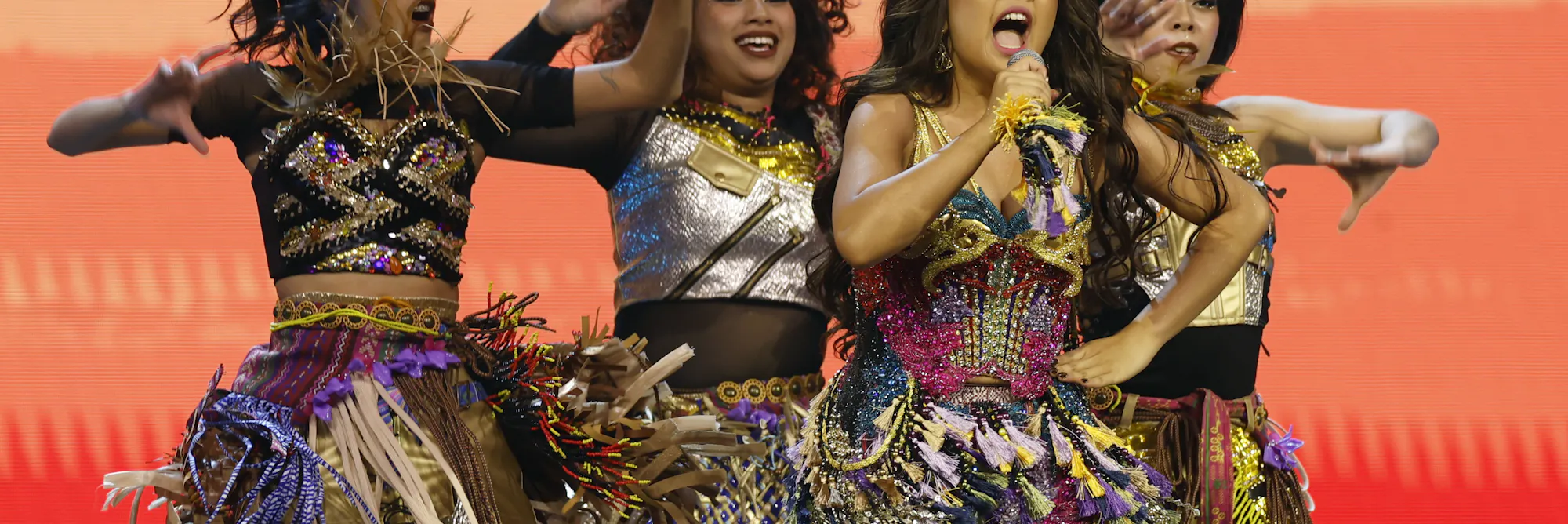
Some major regional players were missing, but the inaugural Asian edition showed it has the potential to be a powerful global platform for Asian pop.
The Philippines emerged victorious at the first edition of Eurovision Asia held on November 14 in Thailand, securing the right to host the contest in 2027. The young singer Carmelle, only 19 years old, took the top prize with her empowering pop song performed in English and Tagalog, earning 211 points from both jury and public votes.
Eleven countries from across Asia participated, including Bangladesh, Bhutan, Vietnam, and the host nation Thailand, which placed second with 169 points. However, several of Asia’s largest markets, such as China, India, Japan, Pakistan, and Indonesia, were absent from the competition. Organizers indicated ongoing negotiations to bring some of these key players on board for future editions.
Related stories


The contest featured performances limited to three minutes on stage with no more than six performers, adhering to a format recognizable to Eurovision fans globally. However, Eurovision Asia infused regional distinctiveness through traditional costumes, cultural gestures like the Thai wai, and frequent use of native languages. Thirty-six percent of songs were performed entirely in the participant’s native tongue, and 54 percent mixed native language with English, while only South Korea’s entry was fully in English.
Musically, the event offered a wide spectrum from Nepalese rock to Cambodian and Bhutanese ballads, Bengali a capella, South Korean K-pop, and Malaysian power ballads. The show opened energetically with Vietnam’s Tóc Tiên and closed with Malaysia’s Aina Abdul delivering a noted ballad. These diverse styles reflected the contest’s goal to highlight varied Asian pop sounds beyond the dominant genres like J-pop and K-pop.
Eurovision Asia utilized a modest budget but created a visually engaging spectacle with elaborate projections, smoke effects, and controlled pyrotechnics. Technical difficulties surfaced during the event, such as Laos’ representative encountering earpiece issues that led to the broadcast of rehearsal footage to ensure fair judging, and some wardrobe malfunctions affecting Thailand’s performers without impacting their final ranking.
The contest upheld Eurovision’s tradition of restricting overt political messaging, though humanitarian appeals were permitted. Nepal’s entrant used his stage time to request aid following recent flooding in his country, reflecting the contest's openness to socially conscious statements.
Despite the show’s success, challenges remain for the Eurovision Asia brand. The original Eurovision’s association with LGBTQIA+ culture and pride has met resistance in some Asian markets. For example, Malaysia’s broadcaster censored the Filipino jury spokesperson, a drag performer, from its telecast. Additionally, there was speculation regarding Malaysia’s Aina Abdul not winning despite being a favorite, with some attributing it to potential Islamophobic biases.
The contest’s branding as “Eurovision Asia” connects it directly to the European Broadcasting Union’s pan-continental format, differentiating it from the Asia-Pacific Broadcasting Union’s existing “Asiavision” network. The EBU has sought to expand the Eurovision brand globally for over 20 years, with Eurovision Asia representing its foothold in the continent.
Looking at the broader implications, the debut of Eurovision Asia could provide a significant platform for Asian artists who often struggle to break beyond localized markets. The contest’s multilingual approach and inclusion of diverse genres may enrich the global music ecosystem by exposing wider audiences to varied Asian pop identities.
Strategically, the contest’s success will depend heavily on participation from Asia’s economic and media giants like China, Japan, and India. Their involvement could attract larger viewerships, sponsorships, and further industry investment, anchoring the contest as a fixture in international music competition.
For the winning artist Carmelle, this victory may catalyze heightened exposure, opening doors for international touring opportunities and collaborations across the region and beyond. Her role as both representative and host for the 2027 edition places her at the forefront of the contest’s development and expansion.
The upcoming Eurovision Song Contest in Bulgaria in 2027 will also feature Carmelle, marking a unique crossover moment between the Asian and European editions. This cross-pollination could foster greater artistic exchange and cultural visibility for Asian artists on the global stage.
While Eurovision Asia’s inaugural event demonstrated potential, maintaining momentum will require addressing diverse cultural expectations, censorship issues, and securing broader participation. The balance between upholding Eurovision’s non-political ethos and embracing the varied social landscapes of Asia will be critical.
As the franchise moves forward, the 2027 Manila-hosted contest will be a crucial test of its ability to unify and elevate Asian pop music within a competitive and politically complex region.
Full story & global impact
This article was synthesized and rewritten by MusicTop Editorial from reporting published by theconversation.com. Read the publisher's report for the complete source context.
Read original source: theconversation.com