Björk on nature, new music and working with AI: ‘I’m a digital craftswoman’
Published June 29, 2026 · JAZZ
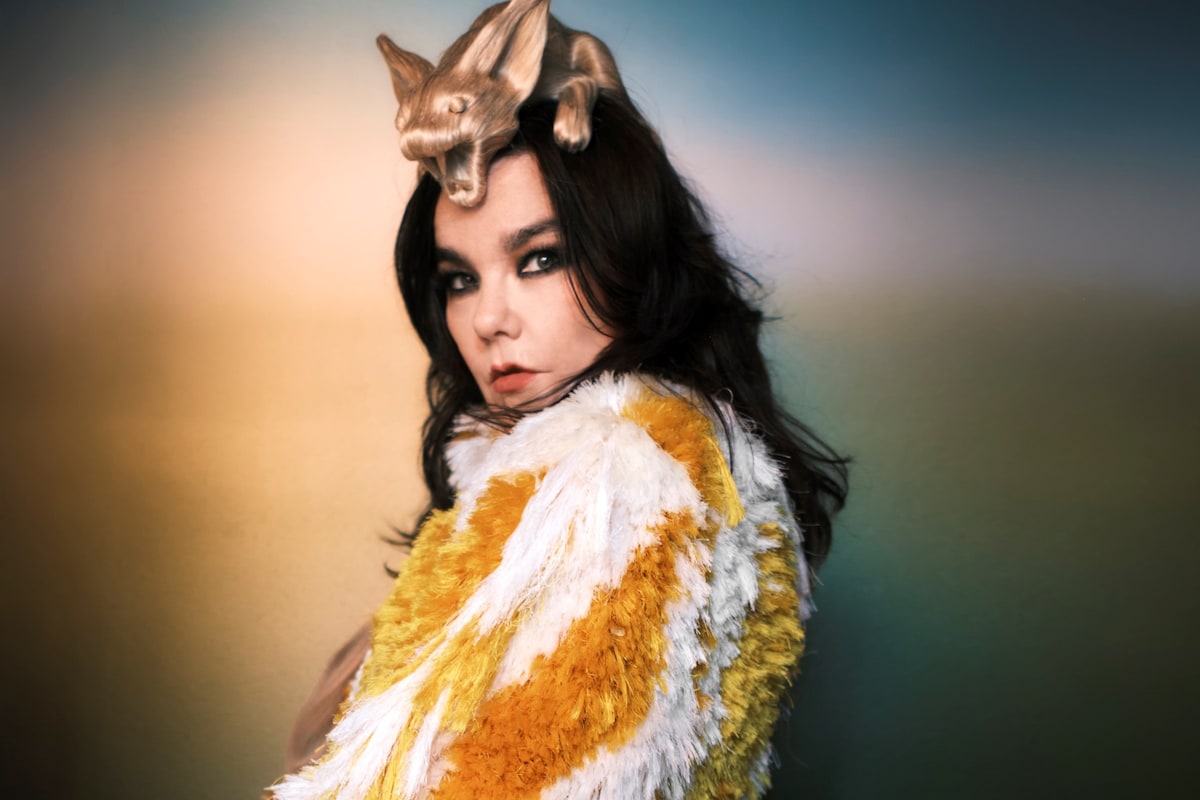
Between hosting a new exhibition at the National Gallery of Iceland and building her long-awaited 11th studio album, Björk calls in to dispel a misconception about her work
Icelandic icon Björk is challenging perceptions around her artistic identity as she simultaneously debuts a new multimedia exhibition and advances work on her 11th studio album. Currently based in the Icelandic wilderness, she spoke with Dazed to address misunderstandings stemming from her latest project, Echolalia, at the National Gallery of Iceland.
The exhibition merges digital and physical mediums to reinterpret three of her songs—two previous compositions and one new track—featuring extensive visual elements including collaborative masks crafted with longtime partner James Merry. Despite public framing of this work as a transition into the visual arts, Björk emphasizes that she remains fundamentally a musician. She prefers the titles "creative director" and "worldbuilder," roles that better encapsulate her approach to music-making and the broader creative process.
Related stories
Selena Gomez Celebrates ‘Ups & Downs’ With Demi Lovato: ‘I’m Proud of What We’ve Been Through’
This shift in terminology partly responds to gallery conventions that require explicit crediting of contributors, a practice less common in the music industry. Björk notes that these roles have always been part of her creative workflow, even if unlabelled, and cites contemporaries such as FKA twigs, Eartheater, and Rosalía, who have embraced similar multifaceted creative identities. The evolution underscores how musicians today often blend sonic and visual storytelling into cohesive artistic worlds.
Björk, now 60 and with a four-decade career spanning ten albums, describes her work as deeply conceptual. Each record is anchored by a distinct palette of themes and imagery. For example, her latest album Fossora conjured a nocturnal, earthy atmosphere inspired by dark mushrooms and winter landscapes. She refers to this practice as “sonic symbolism,” where visual elements emerge organically from the soundscape itself.
The Echolalia exhibition further materializes this concept by transforming musical scores into physical forms, including textiles over 40 meters long that represent arrangements from Fossora tracks such as "Ancestress" and "Sorrowful Soil." Despite the exhibition’s innovative nature, Björk reveals she has already shifted focus back to music production, with her upcoming album about halfway complete. Details on this project remain sparse, but a reworked version of a new song titled "Nerve Bloom" is part of the installation.
Musically, Björk continues to embrace complexity and irregularity. Her early experience in Iceland’s jazz-punk scene, where conventional time signatures were eschewed in favor of prime numbers, laid the foundation for her enduring affinity for unconventional rhythms. Leveraging digital tools like the notation software Sibelius, which she has used for over 25 years, she meticulously crafts intricate arrangements that reflect the natural world's unpredictable patterns.
Her creative philosophy also extends to the integration of technology and nature, two realms often perceived as at odds today. Björk advocates for using digital tools not as replacements for organic experience but as extensions of human expression. This ethos is evident in the exhibition’s AI-generated visuals, developed in collaboration with painter Natalia Kleszczewska and programmer Natalie Liu. The process was deliberate and painstaking, rejecting quick automated outputs in favor of carefully shaped artistic input over eight months.
Björk’s perspective acknowledges the ethical and philosophical challenges posed by emerging technologies such as AI, emphasizing the necessity of imbuing digital creations with intentionality and soul. She argues against fatalistic views that technology will render human creativity obsolete, instead proposing a future where meaning is continuously negotiated between tool and user.
Rooted deeply in her Icelandic upbringing, Björk finds solace and hope in nature, which remains a vital counterbalance to modern life’s digital saturation and social isolation. Regular walks along Reykjavik’s coastline offer her a grounding ritual that alleviates the psychological strains of contemporary existence. This connection to the natural world informs both her music and her broader artistic worldview.
With Echolalia running through September 20 at the National Gallery of Iceland and her next album in progress, Björk exemplifies an artist who defies easy categorization. Her trajectory defies a simple division between music and visual art, instead presenting a holistic creative practice that bridges sonic innovation, technological experimentation, and an unwavering bond with nature.
Full story & global impact
This article was synthesized and rewritten by MusicTop Editorial from reporting published by dazeddigital.com. Read the publisher's report for the complete source context.
Read original source: dazeddigital.com