The Piano: how the viral appeal of pianists in public spaces is not so different from 19th-century music salons
Published July 24, 2026 · JAZZ
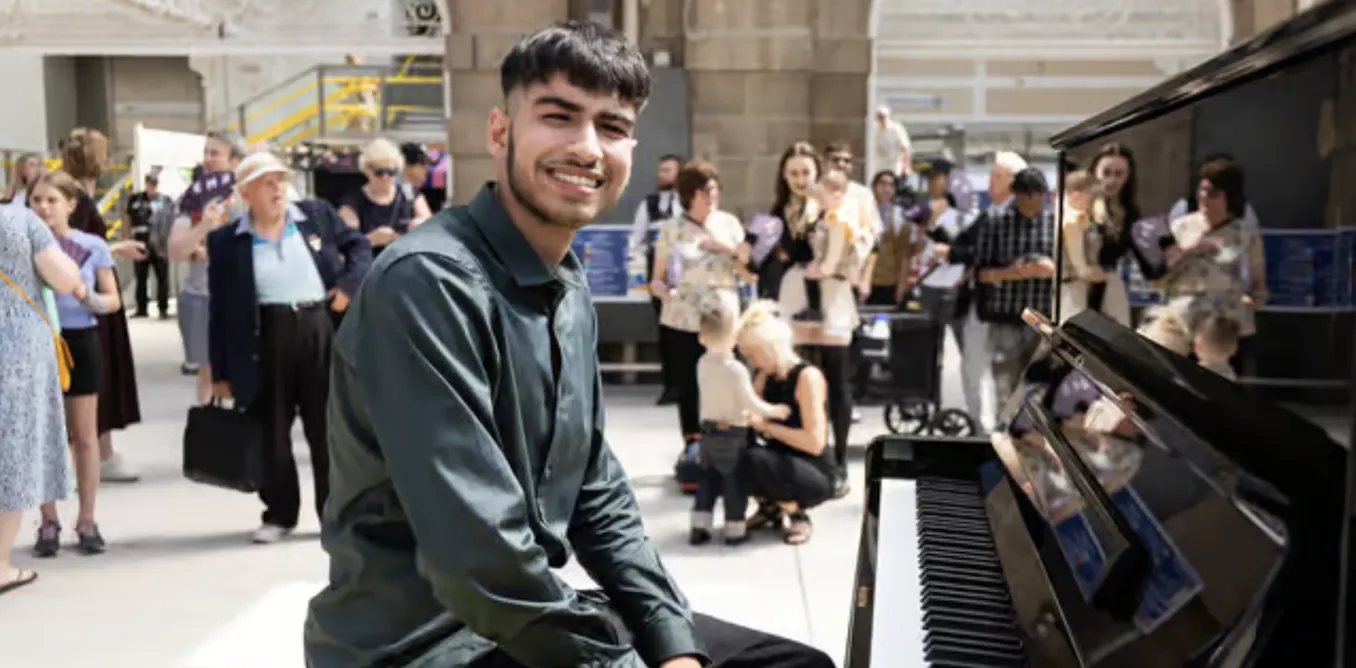
In the 19th century, musical reputations travelled through invitations, conversation, print and gossip.
The resurgence of piano performances in public venues such as train stations, shopping centers, and airports has ushered in a compelling cultural phenomenon that echoes the intimate musical gatherings of the 19th century. These spontaneous concerts, often captured and shared on social media platforms like TikTok, reveal how the piano continues to bridge the divide between high art and everyday life.
In today’s urban transit hubs, pianists transform mundane environments into impromptu stages where passersby pause to experience moments of musical artistry. This dynamic interaction disrupts routine and creates an immediate sense of shared presence. The phenomenon has been notably exemplified by German pianist Umut Cetin, known online as @umutpiano, whose videos showcase not only technical skill but also the responsive engagement of his audience. His content, amassing millions of likes and tens of thousands of followers, illustrates how digital platforms amplify these ephemeral performances to global audiences.
Related stories


This modern accessibility and viral potential bear striking resemblance to the social dynamics of 19th-century music salons. Historically, these salons were aristocratic spaces where musical innovation and personal expression intersected with social networking. Reputation and influence spread through invitations, conversation, and print, much as today’s performances gain momentum through online sharing and algorithms.
The British TV series "The Piano," now in its fourth series, has brought this concept to a broader audience by showcasing self-taught and emerging pianists performing in public railway stations. The show blends talent discovery with personal storytelling, offering viewers insight into the diverse motivations behind musical creation. Hosted by Claudia Winkleman, with judges including pop artist Mika, classical pianist Tiffany Poon, and jazz musician Jamie Cullum, the program highlights a range of musical perspectives and styles.
Episodes filmed at locations like Birmingham New Street and Liverpool Lime Street stations have featured performances that emphasize both technical proficiency and emotional narrative. For instance, an amateur pianist named Ollie impressed mentors with his rendition of Chopin’s Ballade No. 2, demonstrating the balance between virtuosic technique and personal interpretation. Another contestant, Calien, reimagined a traditional Scottish bagpipe melody, underscoring the ongoing tradition of creative adaptation within piano performance.
This spirit of individual expression aligns with the practices of 19th-century virtuosos who were expected to imbue compositions with improvisation and embellishment. The cultural lineage extends to the nocturne genre, which originated in the early 1800s with Irish composer John Field. His lyrical, contemplative pieces fostered an atmosphere of intimacy and reflection suited to salon settings. Later composers like Chopin and Debussy further developed the nocturne, reinforcing its emotional depth.
A poignant example from the contemporary series is a pianist named Paul, who, despite losing the use of his right hand due to brain surgery, delivered a powerful performance of Scriabin’s Nocturne for the Left Hand. This work, composed by Scriabin after a similar injury, echoes the nocturne tradition’s emphasis on poetic expression over sheer technical display.
Beyond interpretations of classical repertoire, some participants in "The Piano" present original compositions. This practice mirrors the historical role of salons as venues for debuting new works and gauging audience response. The public spaces where these performances occur today function similarly, offering an unexpected platform for musicians to introduce fresh material to diverse listeners.
The impact of these public piano performances lies not only in their artistic merit but also in their ability to create a momentary communal experience. Without formal staging or audience expectations, the choice to stop and listen becomes a shared act of appreciation, bridging performer and listener in a direct and unmediated way.
While the mechanisms of dissemination have evolved—from whispered word-of-mouth and printed reviews to viral videos and social media metrics—the essential emotional exchange remains consistent across centuries. The piano’s capacity to captivate audiences in both aristocratic salons and bustling modern venues highlights its enduring role as an instrument of connection and expression.
In sum, the revival of public piano performances and their online proliferation illustrate a continuity of musical culture that transcends time and place. They reaffirm how moments of unexpected artistry in everyday settings continue to resonate deeply, transforming transient encounters into lasting shared experiences.
Full story & global impact
This article was synthesized and rewritten by MusicTop Editorial from reporting published by theconversation.com. Read the publisher's report for the complete source context.
Read original source: theconversation.com