Tyla addresses backlash after being accused of 'sparking a culture war' by describing herself as a 'coloured South African'
Published July 26, 2026 · JAZZ

The Water singer, 24, hails from Johannesburg, South Africa , and has made history as the youngest African artist in history to win a Grammy Award.
South African singer Tyla, known for her breakthrough hit "Water" and historic Grammy wins, has addressed the controversy sparked by her self-identification as "coloured," a term that carries distinct meanings across regions. The 24-year-old artist, who comes from Johannesburg and boasts a mixed ethnic background including Indian, Mauritian, Irish, and Zulu roots, found herself at the center of a cultural debate after a TikTok clip from 2020 resurfaced in 2023.
In the clip, Tyla referred to herself as a "coloured South African," a descriptor commonly used in South Africa to denote people of mixed race—a classification with deep historical roots dating back to apartheid-era racial categories. However, in the United States, where much of her growing fanbase resides, the term "coloured" is widely regarded as offensive due to its association with segregation and systemic racism during the Jim Crow era.
Related stories

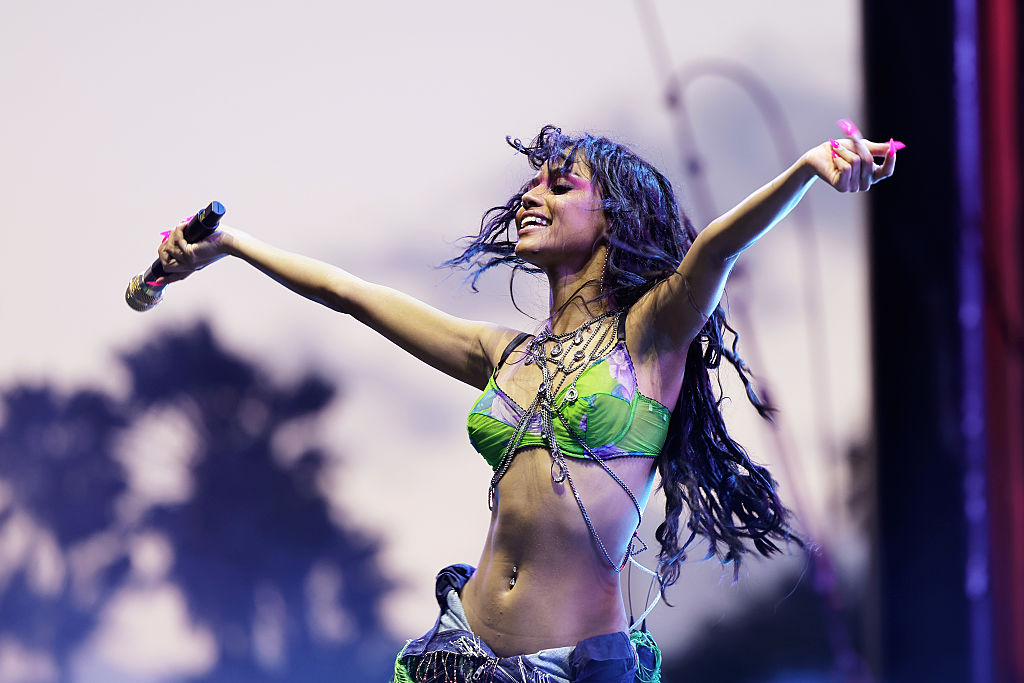
The viral resurgence of the video led to significant backlash from some American listeners who called for boycotts, arguing that the term was inappropriate in that context. Tyla, who had not anticipated the controversy, reflected on the experience in interviews, explaining that her use of the term was shaped by her South African upbringing where racial identity categories remain a complex and sensitive part of society.
She elaborated on how her understanding evolved after traveling internationally and encountering different cultural interpretations of racial terminology. Tyla acknowledged the challenges in navigating these divergent perspectives, emphasizing that while "coloured" is a source of cultural pride within her community, it can evoke discomfort or misunderstanding elsewhere.
The singer also connected the term to the painful history of apartheid in South Africa, highlighting that it was imposed during a time of enforced racial segregation and has since become intertwined with cultural identity among many South Africans. She expressed hope that the dialogue prompted by the controversy could lead to increased awareness and mutual understanding across diverse audiences.
Tyla’s music career, which began with her independently released single "Getting Late" in 2019, has rapidly ascended since then. Her single "Water" achieved top 10 positions in multiple countries, propelled in part by a viral TikTok dance challenge. The track earned her the distinction of becoming the youngest African artist to win a Grammy Award, receiving the inaugural Best African Music Performance accolade.
In her acceptance speech, Tyla emphasized the diversity within African music genres, distinguishing her style of Amapiano—a South African fusion of house, jazz, and kwaito—from the broader Afrobeats category often attributed to African artists internationally. Her success not only marks personal milestones but also shines a light on the global potential and richness of African music.
Following the initial Grammy win, Tyla continued to garner acclaim, securing another Grammy with the track "Push 2 Start" and releasing her second studio album, "A*Pop." Despite the hurdles faced in discussions of identity and terminology, she remains a prominent figure representing South African culture on the world stage.
The incident underscores the complexities artists face when their cultural expressions intersect with global audiences that interpret language and identity through vastly different historical and social lenses. Tyla’s experience illustrates the ongoing negotiation between personal heritage and international perception, a dynamic increasingly common in the era of global digital media.
While the debate surrounding the term "coloured" may persist, Tyla’s openness to dialogue and education highlights the importance of context and empathy in cross-cultural exchanges. As her career progresses, she continues to engage with these challenging conversations, contributing to broader discussions about race, identity, and representation in music and beyond.
Full story & global impact
This article was synthesized and rewritten by MusicTop Editorial from reporting published by dailymail.com. Read the publisher's report for the complete source context.
Read original source: dailymail.com