From Ottoman war tool to pulse of global music
Published August 7, 2026 · JAZZ
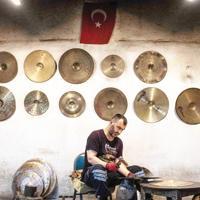
From Ottoman military bands to modern jazz stages, Istanbul’s handcrafted cymbals have preserved a 400-year-old tradition that continues to attract musicians seeking a distinctive sound
For over 400 years, Istanbul has been a vital center for the creation of hand-hammered bronze cymbals, an artisanal craft that originated during the Ottoman Empire. These cymbals, once used as instruments of psychological warfare by Ottoman military bands, have evolved into highly valued musical tools that influence global jazz performances today.
The transformation of cymbals from war implements to prized musical instruments traces back to the early 17th century and the expertise of an Armenian alchemist named Avedis Zildjian. His development of a specialized alloy and metal treatment process produced cymbals with enhanced durability and tonal qualities. This innovation earned the endorsement of the Ottoman sultan in 1623 and allowed Zildjian to establish a dedicated workshop in Istanbul.
Related stories
“Viola Concertos from Berlin”, par l’ensemble Diderot : un généreux florilège de pièces rares pour alto
 Charli XCX dresses up as sexy secretary Lee Holloway from the erotic Noughties film for Kendall Jenner's star-studded Halloween bash (but the host keeps her look under wraps!)
While cymbals existed prior to Zildjian’s contributions, his unique methods marked a turning point that caught the attention of European classical composers and later helped shape the jazz genre’s distinctive percussion sounds. The secret formula, passed down through generations, remains closely guarded and continues to define the character and consistency of these instruments.
Despite the original Zildjian company’s relocation to the United States during the final years of the Ottoman Empire, Istanbul has maintained its reputation as a hub for cymbal craftsmanship. Today, a small number of workshops persist in producing cymbals entirely by hand, employing traditional techniques that involve manually hammering bronze discs over a week-long process.
At Bosphorus Cymbals, located on the outskirts of Istanbul, craftsmen utilize age-old methods powered exclusively by coal and wood fires, eschewing modern electricity or gas. The production begins with casting a precise alloy of copper, tin, and a proprietary ingredient that subtly influences the instrument’s sonic properties. The metal discs undergo multiple cycles of heating, rolling, and water tempering to achieve the desired thickness and resilience.
Master cymbal maker Hasan Şeker, co-founder of Bosphorus Cymbals, emphasizes that the hammering stage is crucial not only for shaping but also for infusing the cymbal with unique tonal variations. Each strike is carefully controlled and reflects the craftsman’s emotional state, which creates subtle surface tensions and irregularities that contribute to the cymbal’s distinct voice.
This artisanal approach results in instruments that are inherently unique—even cymbals produced within the same series and specifications differ slightly in sound. Such individuality appeals particularly to jazz musicians, who prize the ability to find a personal and exclusive tone. Drummer Derin Bayhan, who regularly performs at Istanbul’s Nardis Jazz Club, prefers Istanbul-made cymbals precisely because of the handcrafted uniqueness each cymbal carries.
Jazz historian Berk Ozler notes that the continuation of these handcrafting traditions in Istanbul contrasts with the mass production of cymbals following the Zildjian family’s move to America. The pursuit of one-of-a-kind sounds drives jazz artists to seek out Turkish-made cymbals, which embody centuries of cultural heritage and artisanal mastery.
The workshop walls adorned with vintage jazz posters illustrate the deep connection between Istanbul’s cymbal makers and the international music community. Musicians often visit these studios as a form of pilgrimage, underscoring the enduring global significance of a craft rooted in Ottoman history but sustained by modern artisans.
While details of the trade secret remain closely guarded, the ongoing dedication to historic production methods ensures Istanbul’s cymbals continue to resonate with rich, complex tones favored by musicians around the world. This legacy of craftsmanship not only preserves a unique cultural artifact but also actively shapes contemporary music’s rhythmic landscape.
Full story & global impact
This article was synthesized and rewritten by MusicTop Editorial from reporting published by hurriyetdailynews.com. Read the publisher's report for the complete source context.
Read original source: hurriyetdailynews.com