Making music is magic. Understanding it is even better.
Published October 19, 2026 · JAZZ
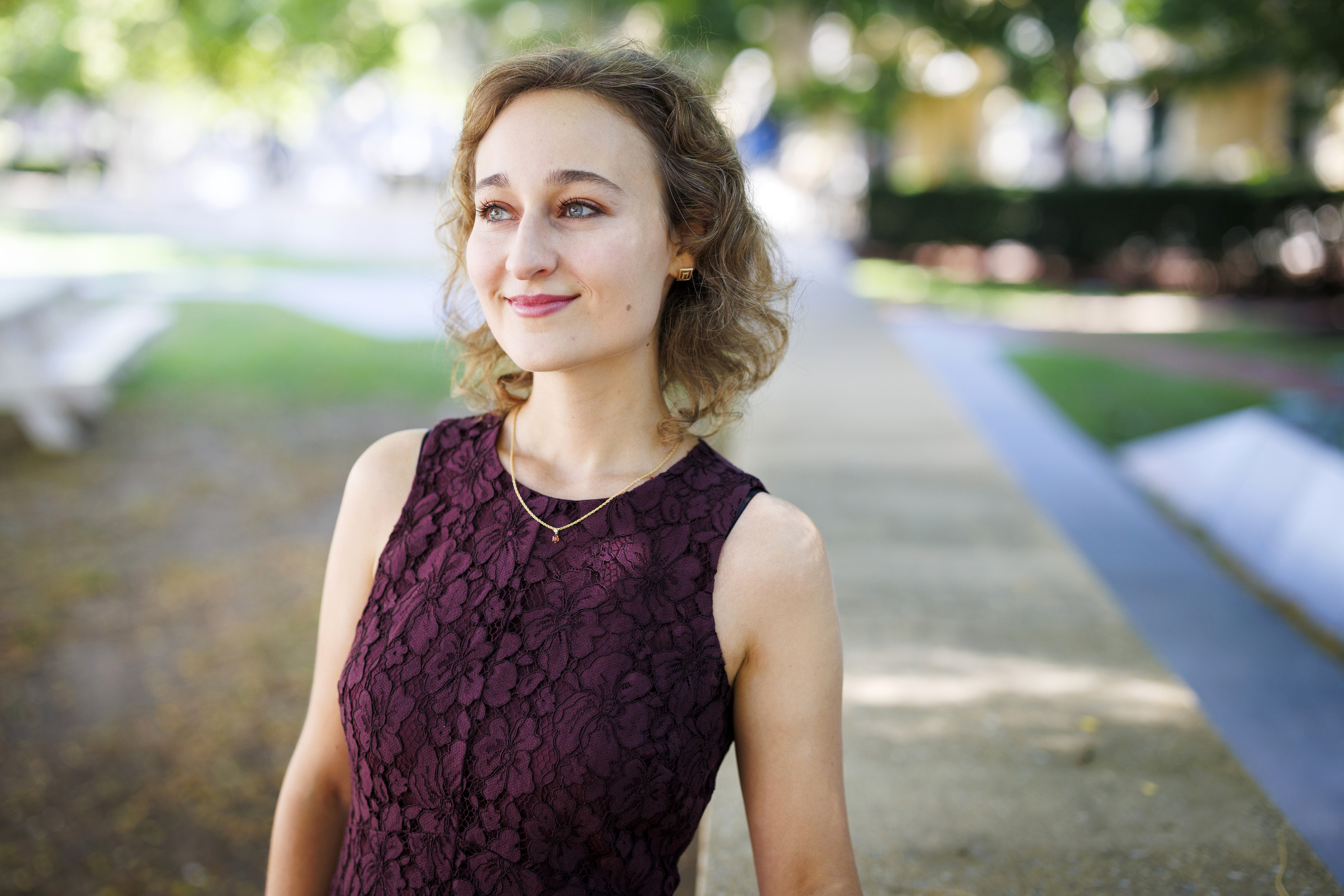
Why Sophia Zervas traded a career in the arts for academia.
Sophia Zervas’s journey from classical musician to ethnomusicologist illustrates the compelling intersection of artistic practice and academic inquiry. Initially trained as a pianist and vocalist, Zervas’s career trajectory shifted during her undergraduate studies at the University of Colorado, Boulder, when an ethnomusicology course opened new perspectives on music’s broader cultural significance. This discipline, focusing on music within its social and political environments, captivated her and redirected her ambitions from performance to research.
Now a doctoral candidate at Harvard University’s Department of Music, Zervas represents a unique blend of scholarly rigor and artistic expertise. Her classical training informs her academic work, allowing her to approach music not merely as a sonic object but as a dynamic cultural phenomenon. This dual perspective enriches her research and underscores the complexity of music as both an ephemeral art and a subject of enduring study.
Related stories
Slipknot’s Eloy Casagrande on new album: “We are making real music, we are not thinking about business”
Zervas remains connected to performance, occasionally engaging audiences, yet her primary focus lies in exploring how music functions within societies. Her research centers on contemporary Turkey, a nation where cultural identity and politics intertwine deeply. Over six years, she has studied Turkish music and cultural institutions, motivated partly by her Mediterranean heritage and an interest in the political dimensions influencing artistic expression.
Related music video
Selected for this story · Published within the last two years
Her fieldwork has been supported by prestigious fellowships, including a traveling fellowship from Harvard and a doctoral scholarship at the Orient-Institut Istanbul. Zervas’s proficiency in Turkish, acquired during studies at Boğaziçi University in Istanbul, has facilitated immersive ethnographic research, enabling her to analyze the evolving role of music under President Recep Tayyip Erdoğan’s administration.
Zervas’s findings highlight shifts in the country’s cultural policies from the 1990s onward. Early in Erdoğan’s political rise, traditional music and innovative fusions, such as Janissary military bands blending with jazz, gained prominence. The early 2000s saw a flourishing of multicultural musical expressions coinciding with Turkey’s European Union accession efforts. However, she notes a subsequent period marked by increased censorship and cultural repression in the mid-2010s, reflecting broader sociopolitical tensions.
Her dissertation, guided by Kay Kaufman Shelemay, a leading figure in music and African studies at Harvard, addresses the sensitive interplay between music and authoritarian governance. This research is particularly relevant amid global concerns about state control over artistic freedoms. Zervas’s approach offers insights into how political regimes manipulate cultural narratives through music to consolidate power and influence public discourse.

Despite the demanding nature of performance, which Zervas describes as intellectually, emotionally, and physically challenging, her passion for music remains undiminished. She appreciates the unique experience of bringing compositions to life, a process distinct from scholarly production. Yet, she finds lasting value in academic contributions, which preserve and analyze musical phenomena beyond transient artistic moments.
Looking ahead, Zervas intends to pursue an academic career while remaining open to performance opportunities. Her recent concert at the Orient-Institut Istanbul, featuring works by Monteverdi, Mendelssohn, and Brahms, was a gratifying return to live music-making, performed for a knowledgeable and appreciative audience rather than evaluative panels.
Zervas’s career path exemplifies how deep musical understanding can extend beyond the stage into the study of cultural identity and political dynamics. Her work sheds light on the powerful symbolic role music plays in societies undergoing transformation and highlights the enduring dialogue between art and scholarship.
Full story & global impact
This article was synthesized and rewritten by MusicTop Editorial from reporting published by news.harvard.edu. Read the publisher's report for the complete source context.
Read original source: news.harvard.edu