Wuxi Symphony Hall Complex by Perkins Eastman
Published November 20, 2026 · JAZZ
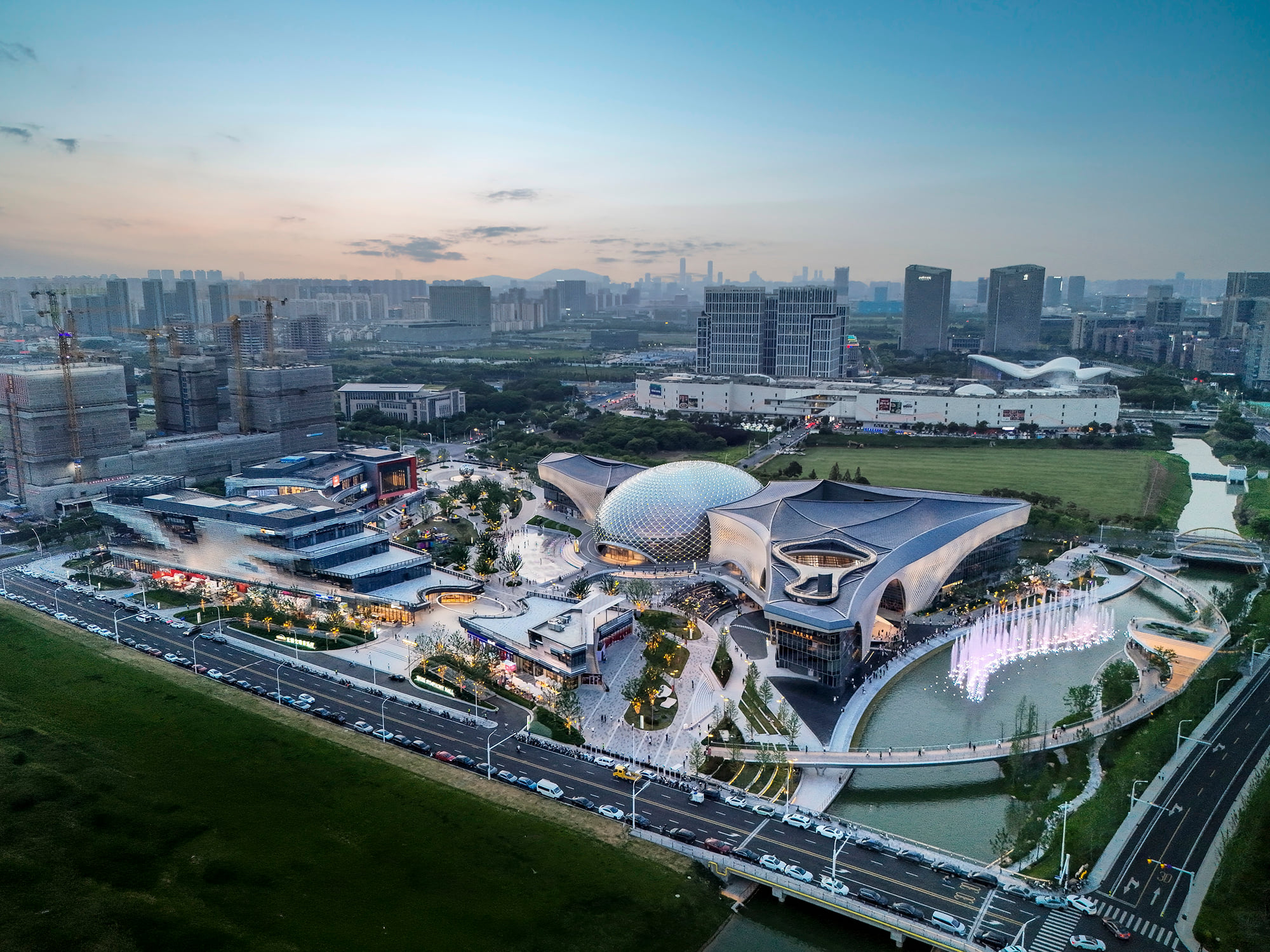
Wuxi Symphony Hall Complex from Perkins Eastman on Archinect. Perkins Eastman is a global design practice founded on the belief that design has the power to enhance people’s lives and safeguard the environment. With…
The Wuxi Symphony Hall Complex, designed by Perkins Eastman, has been completed near Shanghai, China, establishing a sprawling cultural hub that integrates music, public space, and commerce within a single destination. Occupying a 20-acre site with approximately one million square feet of interior space, the complex functions as a catalyst for the city’s cultural and economic development.
Central to the development is the Symphony Hall, a distinctive 1,500-seat venue arranged in a vineyard-style layout with the stage at its center. This arrangement is complemented by a dramatic, abstract flower canopy and a bespoke pipe organ, noted as the first of its kind in China. These design elements emphasize the hall’s role as a world-class venue for classical music performances.
Related stories


The complex also includes the Art Exchange, situated to the south of the site. This multifaceted component houses additional performance spaces, including jazz and comedy clubs, alongside retail outlets, dining options, art galleries, and studios. Together with an outdoor amphitheater and a Music Museum, these facilities frame the Grand Piazza, an interconnected system of green spaces and interactive water features that extend to a Riverwalk along the site’s eastern edge.
The entire project is unified by the symbolic motif of "Moonrise," inspired by the moon’s representation of beauty, emotion, and human yearning. This theme is expressed architecturally through features such as the Moon Gate entrance, which separates the bustling street from the tranquility within by means of a water curtain and a contemporary colonnade.
Sustainability is embedded throughout the complex’s design. The Symphony Hall’s elliptical glass envelope is engineered to facilitate natural airflow circulation, reducing reliance on mechanical ventilation. The roof incorporates an array of building-integrated photovoltaic panels, enhancing energy efficiency. Additionally, architectural veils on the buildings help mitigate interior solar heat gain, while the landscaping manages stormwater runoff, channeling it toward the nearby river.
The design process benefited from collaboration with several specialized firms, including Nagata Acoustics, Aura Landscape Architecture, and Arup Lighting, which contributed to the project’s acoustic performance, environmental integration, and illumination respectively.
By combining diverse cultural amenities with sustainable architectural strategies, the Wuxi Symphony Hall Complex aims to enrich communal life and serve as a landmark for the city’s artistic identity. Its multifunctional approach is expected to attract a wide range of visitors, from classical music enthusiasts to patrons of other art forms and social activities.
The site’s location near Shanghai places it within a major metropolitan context, allowing it to contribute to the region’s reputation as a vibrant center for the arts. The inclusion of retail and dining options alongside performance venues reflects a modern trend in cultural developments to integrate lifestyle and entertainment elements.
This complex stands out for its ambitious scale, blending nearly one million square feet of indoor space with outdoor public realms designed for interaction and relaxation. The Grand Piazza, with its water features and green spaces, offers a community gathering area that complements the formal performance venues.
The project’s emphasis on acoustics and architectural innovation underlines the evolving expectations for modern symphony halls, where audience experience extends beyond sound quality to include visual and environmental comfort.
The Wuxi Symphony Hall Cultural Arts Center represents a significant investment in the city’s cultural infrastructure, suggesting a strategic effort to leverage the arts for broader social and economic benefits. Its completion marks a new chapter in the region’s cultural offerings.
Future programming and management of the complex will determine its long-term impact and ability to sustain high levels of public engagement. The integration of diverse artistic genres and community uses positions the center as a flexible venue adaptable to changing cultural trends.
By embedding sustainability in both design and operation, the complex aligns with global movements toward environmentally responsible architecture in large-scale public projects. This aspect may influence future developments in the performing arts sector within China and beyond.
Full story & global impact
This article was synthesized and rewritten by MusicTop Editorial from reporting published by archinect.com. Read the publisher's report for the complete source context.
Read original source: archinect.com