The World Cup’s Other Final: Platforms, Pizzas and a Planet Hitting ‘Buy Now’
Published July 25, 2026 · LATINO
Spain took home the trophy. The digital economy took everything else: our attention, our sleep, our snack budgets and, apparently, our remaining sense of distance. Uber data supplied to PYMNTS says one fan treated a 266-mile ride from Arlington to Houston as …
The 2026 FIFA World Cup concluded with Spain securing a 1-0 victory over Argentina in extra time, but the tournament’s impact extended far beyond the final scoreline. Over its 39 days and 104 matches, the event acted as a global catalyst for digital engagement, commerce, and consumer behavior, revealing new dimensions of fan interaction in the modern era.
FIFA reported that by the time the Round of 16 concluded, approximately 5.2 billion individuals worldwide had engaged with the tournament across various platforms. These interactions generated a staggering 34 billion digital impressions and two billion engagements by the quarterfinal stage alone, underscoring the event’s unprecedented reach and influence on the digital economy.
Related stories

Video content proved particularly dominant, with 11 billion views recorded during the group stage. Social media channels saw exponential growth, exemplified by the surge of 39 million new followers for FIFA’s accounts. Highlight moments, such as Lionel Messi’s goal against Algeria, attracted 53 million views on TikTok, while the opening ceremony featuring Shakira and Burna Boy amassed over 170 million views across Instagram and YouTube.
This multi-platform consumption pattern reflected a shift from traditional television viewing to a fragmented but highly engaged digital audience. Broadcasters and streaming services reported record viewership figures. For instance, Brazil's match against Haiti reached more than 51 million viewers across Globo’s platforms, and Mexico’s second game broke national viewership records with 25.5 million linear viewers. In the UK, the BBC’s broadcast of the final peaked at 13.6 million viewers, while its new football-focused YouTube channel garnered 100 million views, demonstrating the complementary roles of linear and digital media.
The commercial effects were equally notable. Nike’s national team apparel sales surged to 2.5 times the volume seen at the same point in the 2022 World Cup cycle. Adidas, outfitting the finalists, recorded roughly €250 million in World Cup-related product revenue during the first quarter of the year, anticipating similar performance in the following quarter. These figures highlight the enduring appeal of physical merchandise as a tangible expression of fandom, even amidst a highly digital consumption environment.
Travel patterns also mirrored the tournament’s emotional and economic impact. Following Argentina’s progression to the final, searches for flights from Buenos Aires to New York spiked by an astonishing 6,000%. Exclusive, high-priced flights between the two cities sold out rapidly, reflecting a willingness among fans to invest heavily in travel related to the tournament’s narrative.
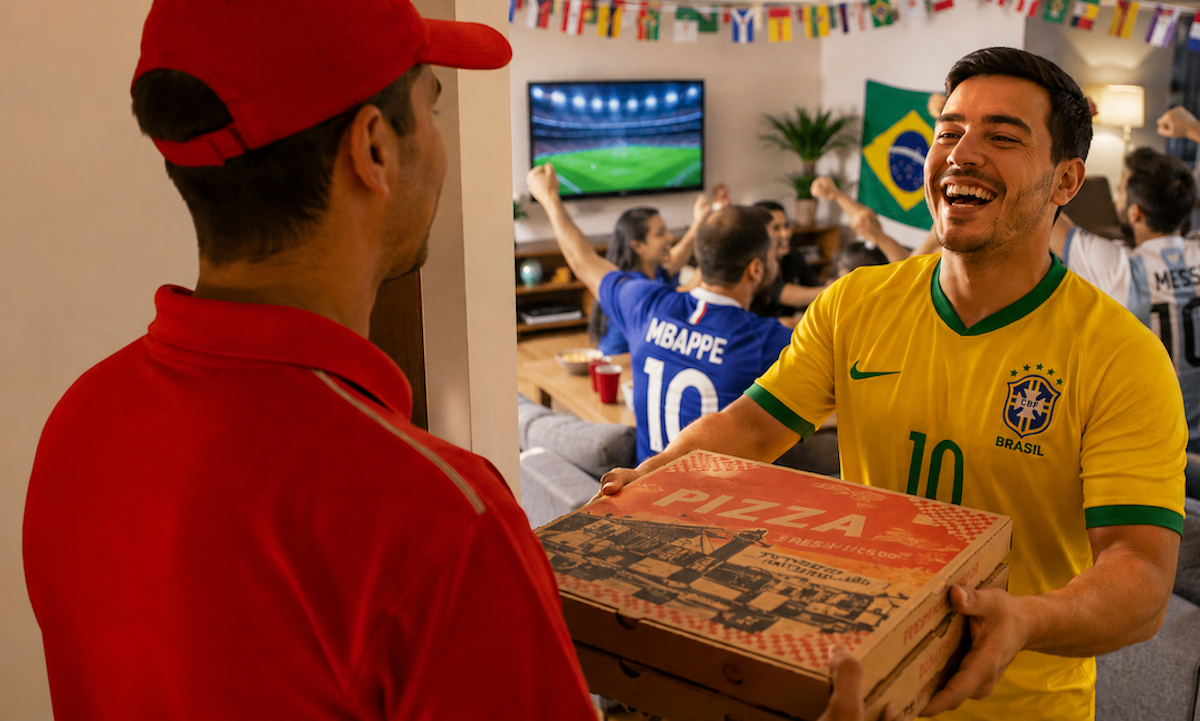
The event also significantly influenced food delivery and local commerce in host and participating countries. In India, late-night matches led to an upsurge in orders for pizzas, burgers, and snacks, including an extraordinary single order totaling approximately $140. Israeli food delivery services reported increases in orders during match hours, particularly for family-sized pizzas and ice cream. Globally, Uber recorded over 10 million orders for ranch dressing, alongside a rise in convenience store purchases of hydration and pain relief products, illustrating fans’ preparation for extended viewing sessions.
Mobility and transportation services experienced similarly heightened demand. Fans from 122 countries utilized Uber during the tournament, with a Dallas driver completing over 70 stadium trips, and shuttle services accommodating 35,000 riders. Los Angeles emerged as a hotspot for lost-and-found incidents, while local businesses, such as Bass Pro Shops, reported a 20% increase in tourism activity during the event. These data points underscore the extensive logistical footprint of the World Cup beyond the stadiums and screens.
Collectively, these trends demonstrate that the 2026 World Cup functioned as a global behavioral experiment, illustrating how a singular emotional event can synchronize billions of individuals into a shared consumption and engagement pattern. The convergence of digital platforms, merchandise sales, travel demand, and localized commerce around the tournament reveals the evolving nature of sports fandom in the digital age.
While Spain earned the sporting accolade, the broader narrative of the World Cup will be remembered for how it reshaped fan interaction and commercial dynamics on a planetary scale. The tournament’s digital explosion offers valuable insights for brands, platforms, and service providers seeking to harness the power of global sporting events in an increasingly connected world.
Full story & global impact
This article was synthesized and rewritten by MusicTop Editorial from reporting published by pymnts.com. Read the publisher's report for the complete source context.
Read original source: pymnts.com