Hispanic Heritage identity; Bilingual singer-songwriter; SD Italian Film Festival
Published September 24, 2026 · LATINO
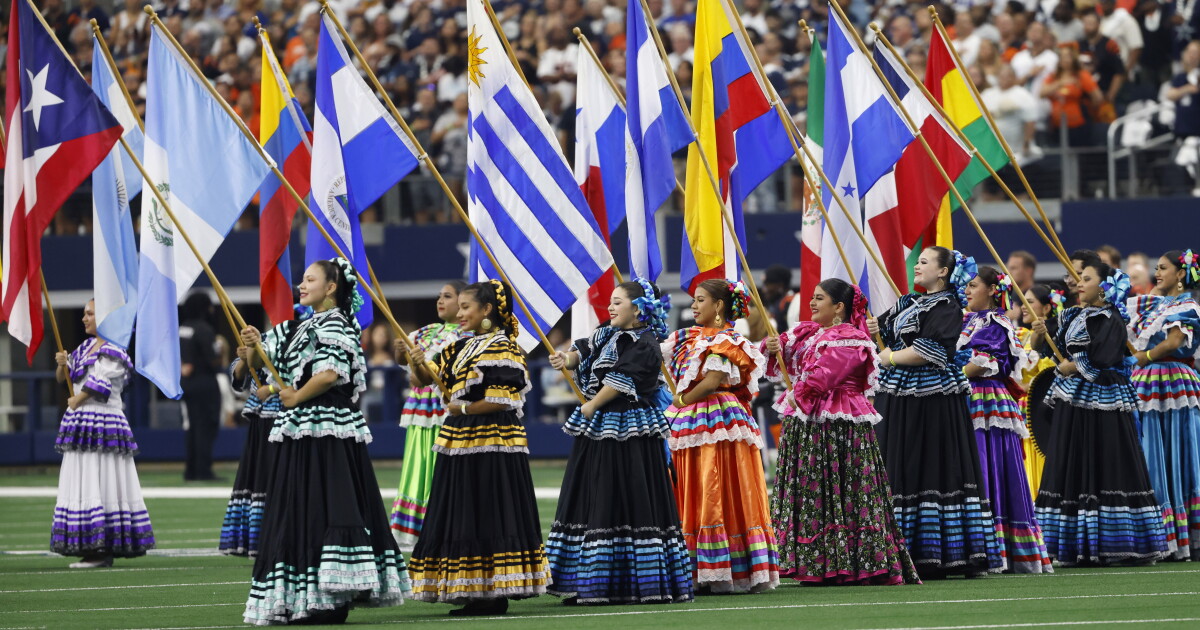
Hispanic Heritage Month celebrates the diversity and lived experiences of Hispanic and Latino communities in the United States. But which groups were left out of the conversation? On KPBS Midday Edition, we bring you a conversation from our archives about ide…
Hispanic Heritage Month offers an annual opportunity to honor the rich mosaic of Hispanic and Latino cultures across the United States. However, the observance often overlooks the full spectrum of identities within these communities, particularly those of Afro-Latinos. According to research highlighted by kpbs.org, Afro-Latinos represent roughly 12% of the Latino population in the U.S., yet their unique cultural and social experiences remain underrepresented.
The terminology surrounding Latino identity is complex and deeply rooted in historical and regional contexts. Terms such as Hispanic, Latino, and Chicano have distinct origins and carry different connotations. "Latino" emerged in the late 19th and early 20th centuries primarily among Cuban and Puerto Rican migrants on the East Coast, reflecting ties to Latin American nations. Conversely, in the American Southwest, "Mexican" has been a prevalent identifier, a legacy of territorial changes following the annexation of Mexico’s northern regions.
Related stories


The label "Chicano" arose in the 1960s as a reclamation by Mexican American youth, transforming a once derogatory term into a symbol of cultural pride with an emphasis on mestizo and mixed-race heritage. The designation "Hispanic," in contrast, was institutionalized in the 1970s by the U.S. Census Bureau to categorize Spanish speakers, but it has faced criticism for its association with colonial legacies and perceived elitism, particularly in New Mexico.
Colorism remains a persistent and complicated issue within Latino communities, rooted in colonial caste systems that stratified individuals by skin color and ancestry. These racial hierarchies, established during Spanish and Portuguese colonial rule, persist today in various social and economic disparities. Efforts to assert that race should not dictate privilege have often been undermined by entrenched class and color biases, even in nations that have undergone profound social revolutions.
Afro-Latinos live at the intersection of black and Latino identities, a dual heritage that has historically been marginalized or rendered invisible. The Afro-Latino experience challenges the misconception that blackness and Latinidad are mutually exclusive. In reality, black Spanish-speaking populations have existed in the Americas since the early colonial period, with a majority of enslaved Africans brought during the transatlantic slave trade arriving in Latin America and the Caribbean rather than the present-day United States.
Despite their significant numbers and contributions, Afro-Latinos often encounter marginalization within both broader black and Latino social movements. Their efforts to advocate for racial justice and cultural recognition frequently receive insufficient acknowledgment or solidarity. This dynamic underscores a broader issue of intersectional invisibility and the need for more inclusive representation.
In recent decades, the term "Afro-Latino" has gained prominence as a means to assert visibility and address the intersecting challenges of race, language, immigration status, and cultural identity. This self-identification aims to correct historical neglect and foster a more nuanced understanding of the diverse experiences within Latino communities.
Conversations around solidarity between black and brown communities reveal both historical collaboration and ongoing tensions. While grassroots organizations often unite to address shared concerns, anti-blackness and intra-community discrimination persist as barriers. These divisions reflect broader systemic efforts to fragment marginalized groups, complicating efforts to build unified social justice movements.
The cultural landscape of San Diego also reflects this diversity in identity and expression. Notably, bilingual singer-songwriter Nicole Hernandez, who grew up in Tijuana with Cuban and Mexican heritage, embodies this hybridity through her music. Her debut album, featuring lyrics in both English and Spanish, integrates Afro-Cuban rhythms, Latin jazz, and contemporary genres, highlighting the dynamic fusion of influences that characterize modern Latino artistry.
Hernandez’s band, composed entirely of women musicians, has gained recognition for their vibrant performances, including a notable appearance at the KPBS San Diego Book Festival. Their work illustrates the creative vitality emerging from communities that embrace multifaceted identities and challenge monolithic representations.
As Hispanic Heritage Month continues to evolve, it serves as a critical platform to broaden the narrative beyond conventional labels. Elevating Afro-Latino voices and critically examining the historical underpinnings of identity terms encourage a more inclusive celebration of Latino heritage that acknowledges its complexity and diversity.
Full story & global impact
This article was synthesized and rewritten by MusicTop Editorial from reporting published by kpbs.org. Read the publisher's report for the complete source context.
Read original source: kpbs.org