Photos of the feral fashion at WHOLE Festival’s Uhaul Dyke bar
Published July 23, 2026 · UK
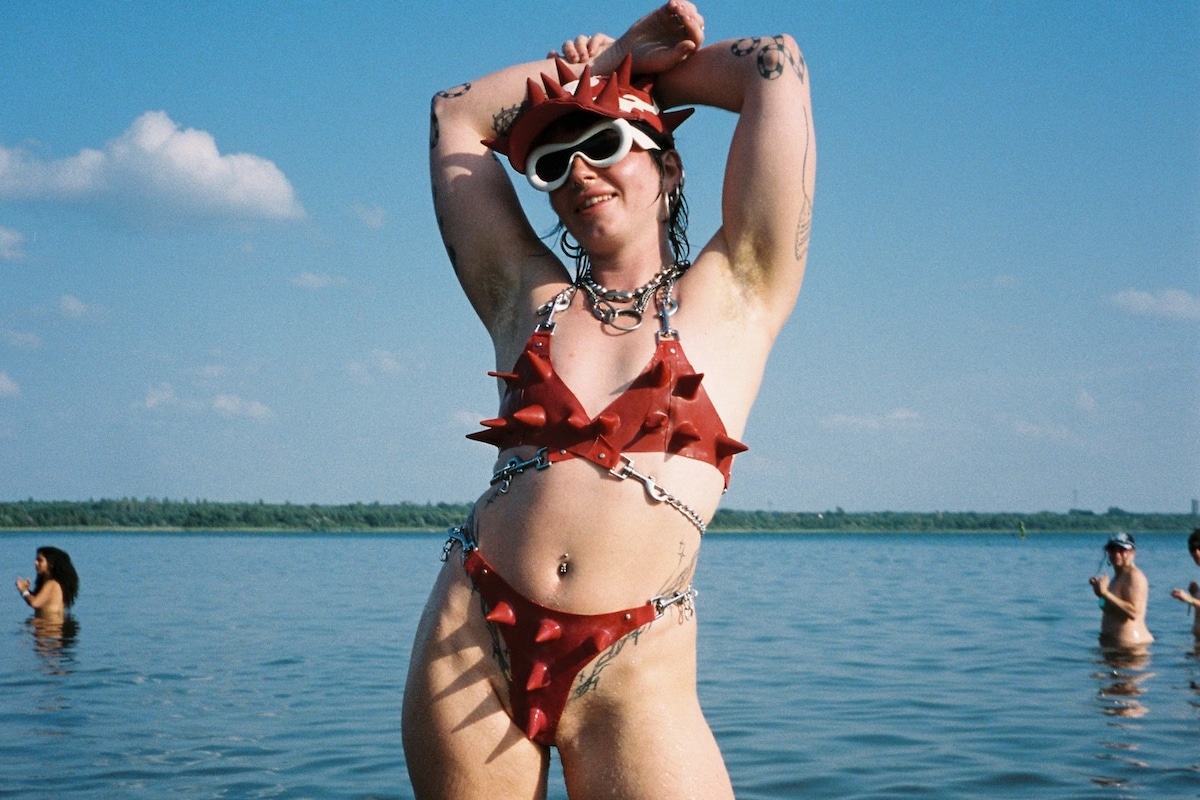
Photographer Lauren Corelli captured the ‘sexy and silly’ looks among WHOLE festival’s FLINTA crowd, as they claimed their own space away from the muscle gays
Berlin’s WHOLE Festival, renowned for its vibrant alt muscle gay scene, witnessed a distinct cultural assertion in its 2026 edition when Uhaul Dyke Rescue set up a dedicated space catering specifically to the FLINTA community. This initiative emerged as a response to the challenges FLINTA individuals face in finding representation within predominantly muscle gay-dominated queer spaces.
The concept of Uhaul Dyke Rescue originated in 2023, inspired by concerns over potential setbacks in queer rights and the need for visible, autonomous spaces for lesbian and FLINTA identities. Conceived as an emergency support service run by lesbians to respond to various queer ‘emergencies,’ the project materialized into a literal mobile bar housed inside a retrofitted Luton van. This mobile venue has since toured several major events, including Glastonbury, Field Maneuvers, Mighty Hoopla, and even exhibitions at the Victoria & Albert Museum.
Related stories

The 2026 WHOLE Festival marked a significant milestone for Uhaul Dyke Rescue. Having previously contributed through a temporary takeover of the festival’s Lemonaid truck, the team successfully secured a permanent spot this year. They transformed their area into an immersive environment reminiscent of a used car showroom, complete with amphitheater-style seating fashioned from tires and a stage that hosted unconventional competitions like arm and oil wrestling. This immersive setting aimed to foster a sense of community and playful interaction within the FLINTA crowd.
Fashion and self-expression were central to the event’s atmosphere. The attendees embraced an eclectic mix of styles that balanced irreverence with empowerment. Rather than enforcing a dress code, the organizers encouraged individuals to present themselves authentically—whether that meant donning high-cut bikinis, baggy basketball shorts, latex hot pants emblazoned with cheeky slogans, or playful costumes such as Beaver Scouts. The prevailing aesthetic drew heavily on automotive and DIY culture, reflecting the Uhaul theme and the punk ethos underpinning the project.
Photographer Lauren Corelli documented these moments, capturing the blend of humor, sensuality, and defiance that characterized the festival’s FLINTA contingent. Her images highlight the community’s determination to carve out a space free from the traditional gaze and expectations often imposed by mainstream queer and cisgender male cultures.
Lucy Nurnberg and Ali Wagner, the architects behind Uhaul Dyke Rescue, were instrumental in realizing this vision. Their collaborative effort not only built the physical van but also shaped the cultural framework that allowed the community to flourish. They emphasized inclusivity and the celebration of diverse dyke identities, fostering an environment where sexuality and style could be explored without restraint.
The presence of Uhaul Dyke Rescue at WHOLE Festival 2026 underscores a broader trend within queer festivals and communities: the pursuit of distinct spaces that acknowledge and uplift minority groups within the LGBTQ+ spectrum. By establishing a dedicated FLINTA zone, Uhaul Dyke Rescue challenges the dominance of muscle gay aesthetics and offers alternative narratives that honor punk roots, humor, and multifaceted queer identities.
Details about the event’s programming and the full range of participants remain limited, but the visible enthusiasm and creative energy documented affirm the significance of such initiatives. As queer culture continues to evolve, the emergence of mobile, adaptable venues like the Uhaul Dyke Rescue van signal new possibilities for inclusion and self-determination.
In conclusion, the Uhaul Dyke Rescue’s intervention at the WHOLE Festival 2026 illustrates how grassroots queer projects can reshape festival landscapes. By providing a platform tailored to FLINTA individuals, the project not only reinforces community bonds but also enriches the cultural tapestry of queer events. This approach offers a blueprint for future endeavors aiming to address the nuances within LGBTQ+ representation and celebration.
Full story & global impact
This article was synthesized and rewritten by MusicTop Editorial from reporting published by dazeddigital.com. Read the publisher's report for the complete source context.
Read original source: dazeddigital.com