Bob Vylan Frontman Deported From Germany for Chanting “Death to IDF” at Glastonbury
Published July 30, 2026 · UK
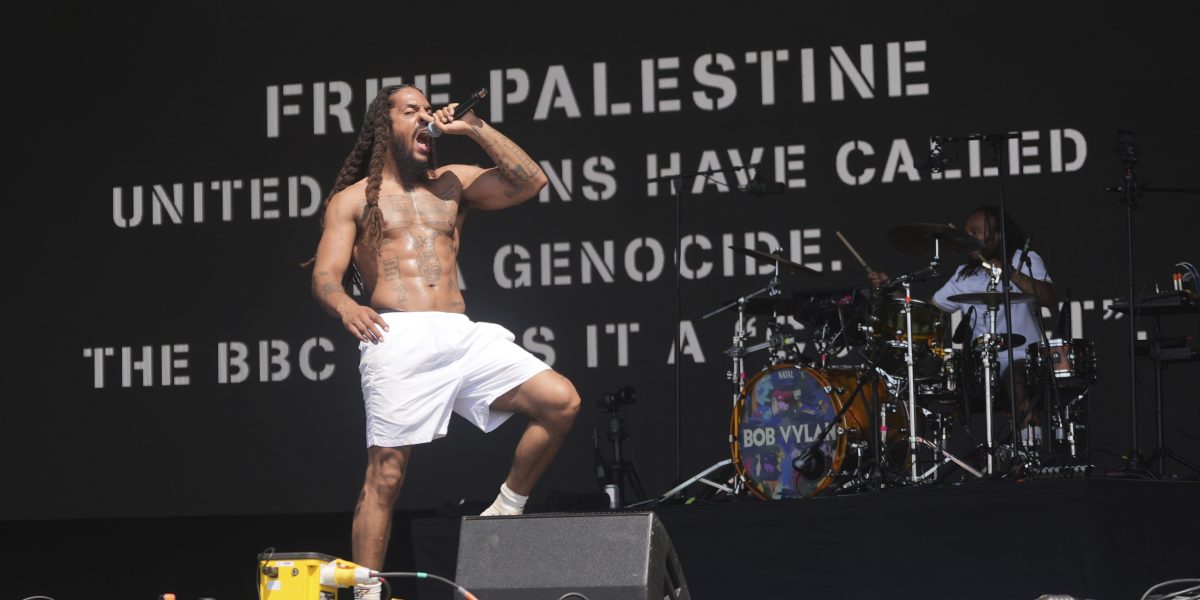
Allowing the musician into Germany could “radicalise certain segments of the [German] population,” authorities warned. The post Bob Vylan Frontman Deported From Germany for Chanting “Death to IDF” at Glastonbury appeared first on The Intercept.
Pascal Robinson-Foster, the lead vocalist of the British punk rap band Bob Vylan, was denied entry into Germany in June and deported back to the UK due to his politically charged statements supporting Palestine. German federal authorities cited public security concerns linked to his conduct during a 2025 Glastonbury Festival performance, where he led the crowd in chanting "Death to the IDF," referencing the Israel Defense Forces.
This incident marked the first known case of a European country officially barring a member of Bob Vylan from entering its borders. German police described Robinson-Foster as a potential catalyst for radicalization within segments of the German population and accused him of spreading antisemitic narratives and propaganda that could potentially justify violence. These assessments were documented in a police file reviewed by theintercept.com, which formed the basis for the entry ban.
Related stories


Despite the severity of the initial decision, Germany revoked the entry prohibition in late July without providing an explanation or clarifying the rationale behind either the initial ban or its subsequent lifting. The Federal Police declined to comment on the specifics of the case or the internal processes involved, citing concerns over public security and data protection.
Robinson-Foster expressed strong disagreement with the authorities' characterization of him as a threat. He denied any affiliation with proscribed organizations or the dissemination of propaganda on their behalf. His legal representative emphasized the importance of transparency, arguing that Robinson-Foster has a constitutional right to access the evidence and reasoning behind such a significant restriction, especially since the statements in question were political expressions that did not constitute criminal offenses under German or UK law.
The controversy around Bob Vylan’s Glastonbury appearance, which occurred amid heightened international scrutiny of Israeli actions in Gaza, had already drawn criticism from political figures and Jewish organizations in the UK. Germany’s antisemitism commissioner publicly condemned the performance as incitement and urged event organizers to reconsider hosting the band. Following this, Robinson-Foster and his bandmate had their US visas revoked, signaling a broader international response to their activism.
The legal proceedings and actions by German authorities have raised concerns about the expanding use of immigration law as a tool to suppress political dissent, particularly voices critical of Israel. Observers and legal experts note a trend wherein migration policies are being employed to exclude or silence activists under the pretext of maintaining public order and security.
Robinson-Foster had intended to visit Germany privately to engage with friends and artistic collaborators ahead of new music projects. The deportation and subsequent travel restrictions have complicated his ability to tour and connect with supporters in Germany, a country where Bob Vylan has performed regularly over recent years. The incident has also led to increased scrutiny at other European borders, affecting the band’s broader travel plans.
The case highlights the tension between free artistic expression and governmental security measures in a politically charged climate. It raises critical questions about the boundaries of political speech, the transparency of administrative decisions affecting mobility, and the implications of using immigration controls to address perceived ideological threats. Details on the internal deliberations behind Germany’s initial ban and its revocation remain limited, leaving many aspects of the case unresolved.
As the band and its lead singer navigate these challenges, their experience underscores the complexities artists face when their work intersects with contentious geopolitical issues. The ongoing situation serves as a focal point for discussions on civil liberties, freedom of expression, and the balance between security and human rights in contemporary Europe.
Full story & global impact
This article was synthesized and rewritten by MusicTop Editorial from reporting published by theintercept.com. Read the publisher's report for the complete source context.
Read original source: theintercept.com