Multipolarity As World Government 3.0 & Its Pied Pipers
Published April 5, 2026 · UK
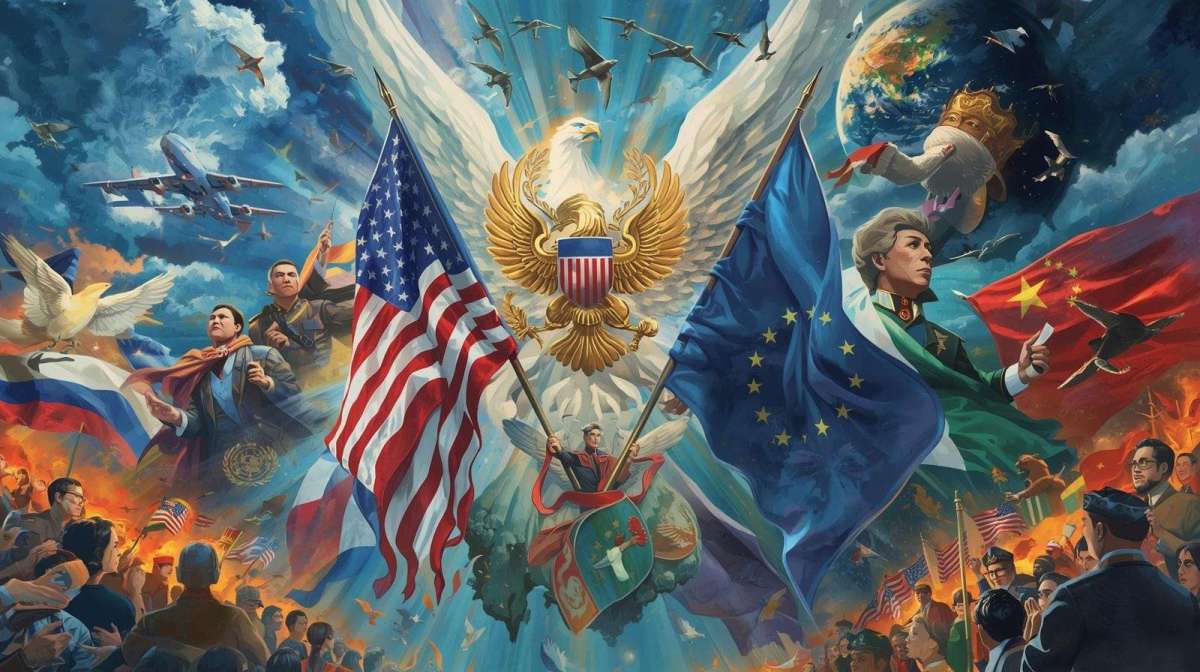
“BRICS” has been around for over a decade. The term “multipolarity” on the other hand, has been bandied about for at least over half a century. “BRICS multipolarity” is sold as a counter-weight and dialectical response or solution to Western imperial globalis…
The geopolitical landscape has been witnessing a gradual transformation over the past decade, prominently marked by the emergence and consolidation of the BRICS alliance. Comprising Brazil, Russia, India, China, and South Africa, this coalition has come to symbolize a significant shift in global power dynamics.
While the term 'BRICS' has become familiar in international discussions for over ten years, the concept of multipolarity it embodies has deeper historical roots. Multipolarity, referring to a global order with multiple centers of power rather than dominance by a single superpower, has been a subject of political discourse for more than fifty years.
In recent times, the phrase 'BRICS multipolarity' has gained prominence as a framework that challenges the traditionally Western-led global order. This notion positions the BRICS nations not merely as individual actors but as a collective force aiming to provide an alternative governance model on the world stage.
The significance of BRICS lies in its potential to redefine international relations by promoting a more balanced distribution of influence among global players. This multipolar approach contrasts with the unipolar or bipolar paradigms that have characterized past geopolitical eras, where Western powers, particularly the United States and its allies, maintained predominant control.
BRICS countries advocate for reforms in global institutions and economic systems that have historically favored Western interests. Their collaboration is often interpreted as an effort to create a more equitable international framework, reflecting the interests and aspirations of emerging economies.
However, the practical implementation and cohesion within BRICS remain complex. Diverse political systems, economic priorities, and regional interests among member states pose challenges to their unified vision of multipolarity. Despite these hurdles, their ongoing dialogue and initiatives signal a collective intent to influence global governance.
The notion of multipolarity as promoted by BRICS also resonates with broader debates about sovereignty, economic independence, and cultural identity in a globalized world. It suggests a paradigm where no single entity dictates the rules but rather multiple influential actors coexist and negotiate power.
While the discourse surrounding BRICS and multipolarity continues to evolve, specifics about their strategic plans and long-term impact remain limited in public analysis. Observers and analysts await further developments to better understand how this coalition may reshape future international relations.
In summary, BRICS represents more than a geopolitical grouping; it embodies a shift towards a multipolar world order that challenges existing Western-centric systems. This transformation, building on decades-old ideas of global balance, highlights the changing nature of power and cooperation in the 21st century.
Full story & global impact
This article was synthesized and rewritten by MusicTop Editorial from reporting published by NewsAPI (original source unavailable). Read the publisher's report for the complete source context.
Original source link unavailable · Source: NewsAPI (original source unavailable)