Surface, Echo & Sound review: Editors make unconvincing return to postpunk that made them stars
Published November 5, 2026 · UK
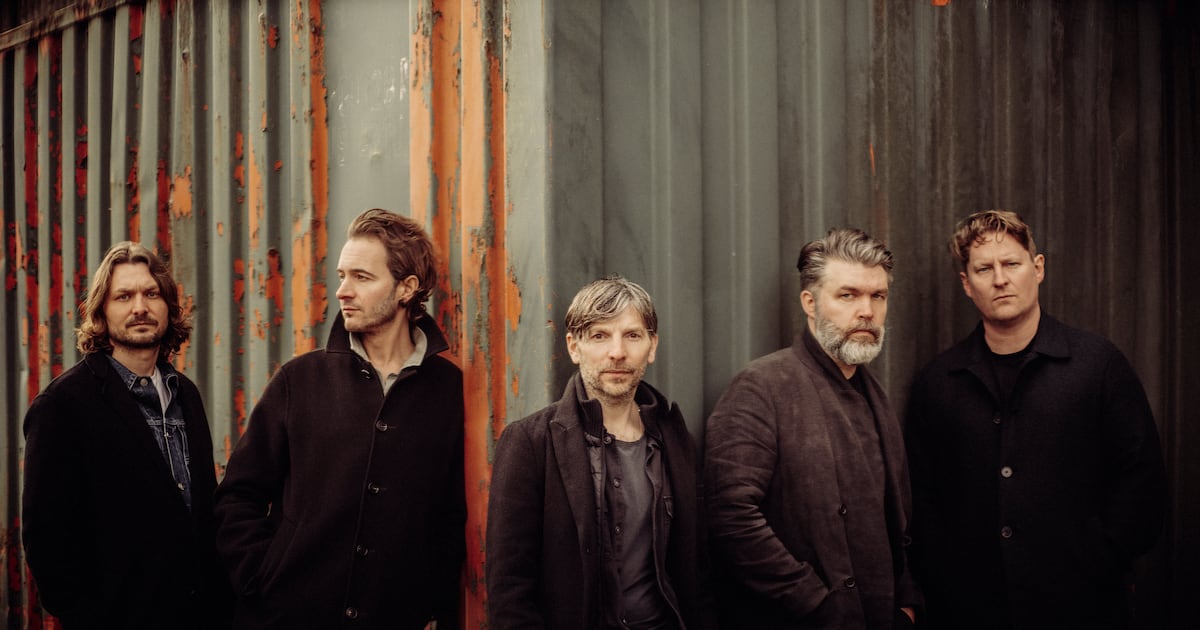
The English indie band were smart enough always to keep pushing forward. Now they’re going backwards – to underwhelming effect
Emerging from the early 2000s British indie scene, Editors carved out a distinctive niche by blending postpunk influences with evolving musical experimentation. Their debut album, The Back Room, introduced audiences to a sound steeped in the dark, driving aesthetics reminiscent of Joy Division, a band whose legacy was already foundational to postpunk but not yet fully canonized. Over time, Editors distinguished themselves from their contemporaries, many of whom were later dismissed under the derisive label “landfill indie,” by continuously reinventing their style.
Following their initial success, Editors’ trajectory included notable shifts in sound and mood. After the departure of guitarist Chris Urbanowicz in 2012, the band ventured into more expansive territory with The Weight of Your Love, an album that exhibited a somber, atmospheric quality likened to a darker interpretation of Coldplay. This evolution continued with 2022’s EBM, which embraced electronic textures and industrial tones, marking a bold departure from their guitar-driven roots.
Related stories


However, their latest release, Surface, Echo & Sound, represents a conscious return to the postpunk framework that initially launched their career. This decision to circle back to their origins has generated mixed reactions, with critics noting that the album struggles to transcend the stylistic tropes that once energized the band’s sound. The record’s atmosphere often feels derivative, drawing heavily from the genre’s established motifs without introducing the inventive spark Editors previously demonstrated.
The album opens with its title track, a subdued, melodic piece that hints at indie balladry and bears a resemblance to the softer side of British alternative music. Yet, this brief calm quickly gives way to more aggressive, riff-driven tracks such as Call It In and Real, which evoke the early 2000s postpunk revival scene. These songs revisit the minimalist, urgent guitar lines and brooding vocals that defined the band’s debut era but without the same vitality or originality.
Editors do attempt to diversify the sonic palette across Surface, Echo & Sound. For example, The Rush incorporates mandolin textures that recall elements of R.E.M.’s folk-rock sensibilities, while Butterfly Wings channels anthemic, open-mic style influences reminiscent of artists like David Gray. Despite these moments, the album largely remains tethered to familiar territory.
The band’s decision to revisit their foundational style after nearly two decades reflects a broader question about artistic direction and audience expectations. Editors once thrived on their ability to evolve beyond the confines of their genre, distinguishing themselves from the flood of contemporaries who failed to adapt. Their early work balanced homage and innovation, creating music that was both referential and forward-looking.
By contrast, Surface, Echo & Sound suggests a retreat into past formulas, which may disappoint listeners who appreciated the band’s willingness to explore new sonic landscapes on previous albums. This move raises concerns about whether revisiting one’s origins can always yield creative renewal or if it risks stagnation.
The context of the British indie scene is also crucial to understanding this album’s reception. The early 2000s postpunk resurgence, while influential, was soon overshadowed by a slew of bands that critics and audiences later disparaged as “landfill indie” for their perceived lack of innovation. Editors managed to avoid this fate by continuously pushing musical boundaries, but their latest work re-engages with a style that some have come to view as creatively exhausted.
While Surface, Echo & Sound offers moments of earnest musicianship and occasional stylistic variety, it ultimately falls short of recapturing the compelling essence of Editors’ early promise. The album serves as a reminder that revisiting foundational influences can be a double-edged sword—providing familiarity but also risking artistic redundancy.
In sum, Editors’ new album marks a significant stylistic pivot back to their postpunk roots but struggles to inject fresh energy into a sound that once defined a vibrant phase of their career. As reported by irishtimes.com, this release highlights the difficulties veteran bands face when balancing reverence for their origins with the imperative to innovate in a changing musical landscape.
Full story & global impact
This article was synthesized and rewritten by MusicTop Editorial from reporting published by irishtimes.com. Read the publisher's report for the complete source context.
Read original source: irishtimes.com