American Classical Music at 250 — Take Three: The Orchestra Gap: Europe vs. the US
Published July 27, 2026 · US
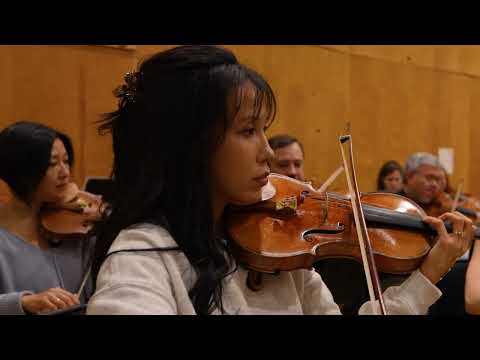
The Metropolitan Opera Orchestra going through the motions of Wagner’s “Liebestod” – “diminished motivation: as if the music fails to impel a commanding physical and emotional response.” To access a pertinent podcast conversation between Joseph Horowitz and c…
Over recent decades, a noticeable schism has emerged between leading European orchestras and their American counterparts, drawing attention to broader cultural and artistic shifts in classical music. While historically the United States boasted orchestras celebrated for their vitality and distinctive styles, contemporary assessments suggest a decline in the emotional engagement and stylistic identity of many American ensembles.
In the early to mid-20th century, orchestras such as the Boston Symphony, New York Philharmonic, Philadelphia Orchestra, and the Metropolitan Opera Orchestra flourished under the leadership of immigrant conductors who brought diverse European traditions. Serge Koussevitzky’s Boston Symphony, with its Russian-influenced string section and French winds, exemplified a robust and passionate approach to repertoire like Tchaikovsky’s. Meanwhile, Arturo Toscanini’s tenure with the New York Philharmonic was marked by a blend of precision and lyrical intensity, particularly in Italianate works. The Metropolitan Opera Orchestra, similarly, carried a strong Italianate flavor, excelling in Verdi under conductors such as Ettore Panizza.
Related stories


These orchestras thrived on a connection to the musical traditions of their time, often reflecting the cultural backgrounds of their players and conductors. Their performances were imbued with a palpable energy and stylistic authenticity, even when interpreting works outside their native idioms. For instance, under Artur Bodanzky, the Metropolitan Opera Orchestra delivered an electrifying rendition of Wagner’s Siegfried, despite Wagner’s Germanic style not aligning naturally with the ensemble’s Italianate roots.
Philadelphia’s orchestra, shaped significantly by Leopold Stokowski, distinguished itself through an expansive, innovative sound that captivated composers like Rachmaninoff. This period marked a golden age when American orchestras could claim distinctive identities and a deep connection to the repertoire, fueled by a generation of musicians engaged with their art on a profound level.
Contrastingly, in Europe, orchestras such as the Leningrad Philharmonic under Yevgeny Mravinsky maintained rigorous traditions and stylistic coherence, often encapsulating the essence of their national musical heritage. Mravinsky’s interpretation of Tchaikovsky’s symphonies, for example, revealed nuances and sonic signatures that have remained unmatched.
However, the United States has struggled to cultivate a comparable indigenous musical identity. While composers like Charles Ives and George Gershwin offered potential foundations for a uniquely American classical tradition, their influence was limited during their lifetimes. Gershwin’s fusion of jazz and classical idioms hinted at a vibrant future trajectory, yet this direction was not fully embraced within the classical establishment.
The mid-to-late 20th century witnessed a gradual erosion of the cultural and artistic momentum that had characterized earlier American orchestras. The decline of prominent immigrant conductors, changing audience demographics, and shifting cultural priorities all played roles in this transformation. Consequently, the emotional intensity and stylistic distinctiveness that once defined many American orchestras have diminished, leading to performances that some critics perceive as lacking in motivation or authentic connection to the music.
Today, the Berlin Philharmonic and the Vienna Philharmonic stand as bastions of tradition and stylistic clarity, maintaining distinctive sound worlds shaped by decades of cultural continuity. European ensembles often demonstrate a commitment to preserving and evolving their historical styles, supported by educational institutions and conductors dedicated to these traditions. This contrasts with American orchestras, which face challenges including reduced public engagement, diminished stylistic coherence, and a repertoire that struggles to integrate the diverse musical influences emblematic of contemporary American life.
The role of jazz and other popular music forms in shaping classical performance has also diverged across the Atlantic. European musicians have historically been more open to incorporating jazz elements, as seen in interwar receptivity to Gershwin’s works, while American classical institutions have often marginalized these influences. This reluctance has arguably hindered the development of a genuinely American classical idiom that reflects the country’s rich musical mosaic.
Concerns have been raised about the future viability of American orchestras amid these trends. Factors such as shrinking audiences, the scarcity of African-American musicians in major orchestras, reliance on foreign-trained players, and a lack of interest by top European conductors to lead American ensembles suggest systemic issues. While moments of excellence persist—such as Daniele Gatti’s acclaimed 2013 performance of Parsifal with the Metropolitan Opera Orchestra—the broader picture points to a potential reckoning for classical music in the United States.
In conclusion, the widening gulf between European and American orchestras underscores deep cultural and structural differences. European institutions benefit from entrenched traditions and a sustained stylistic lineage, while American orchestras confront questions about identity, motivation, and relevance in a rapidly evolving musical landscape. The challenge remains for the United States to forge a new classical music culture that embraces its diverse heritage and reinvigorates its orchestral art form for future generations.
Full story & global impact
This article was synthesized and rewritten by MusicTop Editorial from reporting published by artsjournal.com. Read the publisher's report for the complete source context.
Read original source: artsjournal.com