A Perfect Album for a Frustrating Decade
Published August 13, 2026 · US
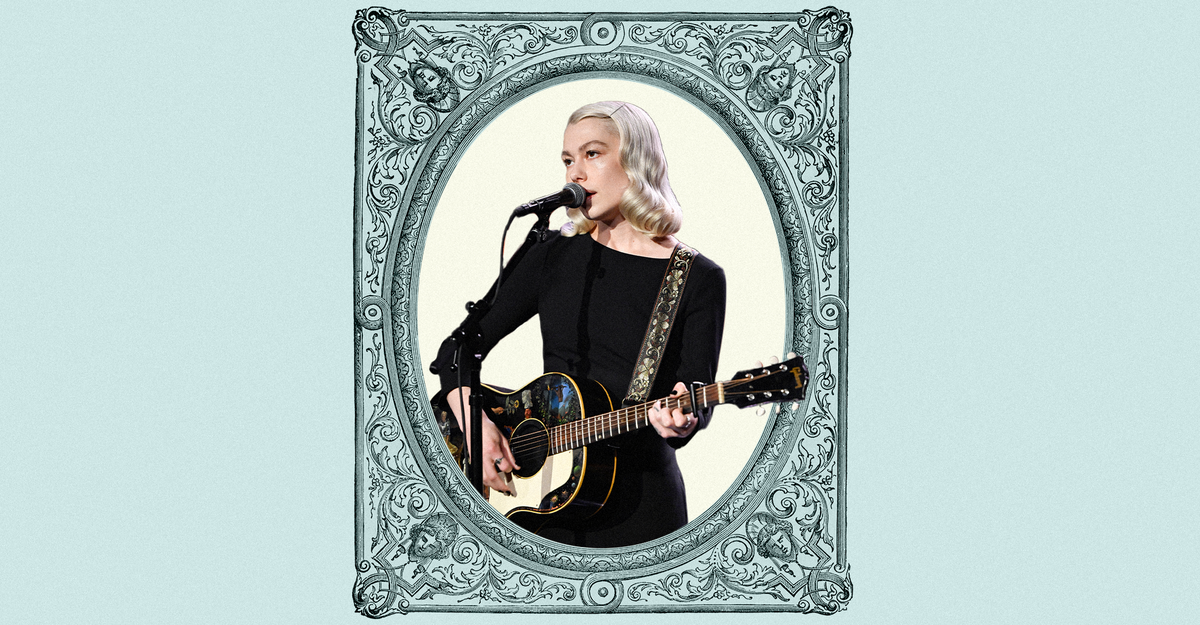
Phoebe Bridgers’s new record is heavy with post-pandemic disappointment.
Phoebe Bridgers returns with her third full-length album, Lost Weekend, a work that captures the complex emotional aftermath of a world emerging from pandemic isolation. Known for her introspective songwriting and melancholic folk sound, Bridgers explores themes of alienation, fame, and personal healing amid a fragmented cultural landscape.
Following the critical acclaim of Punisher in 2020, an album that established her as a key figure in contemporary American songwriting, Bridgers has since collaborated with high-profile artists such as Paul McCartney, SZA, and Taylor Swift. Despite these ventures, Lost Weekend marks a renewed focus on her solo artistry, underscored by her decision to restrict phone use during her early 2024 tour to foster a more intimate connection with audiences.
Related stories

The album assembles an impressive roster of collaborators, including producer Jack Antonoff, composer Caroline Shaw, indie multi-instrumentalist Alex G, mandolin virtuoso Chris Thile, and likely Geese’s Cameron Winter under a pseudonym. This collective contributes to a sonically diverse palette blending drum machines, electric guitars, and country-inspired instrumentation, reflecting Bridgers’ evolving musical ambitions.
Lost Weekend opens with “The Outside,” a track notable for its shifting tempos and vocal effects that evoke a sense of detachment and fluid identity. The subsequent songs “Lost Boys” and “Kill Me” juxtapose energetic melodies with underlying feelings of discomfort and dissociation, capturing Bridgers’ complex relationship with success and public life.
Despite moments of vibrant instrumentation and lyrical insight, much of the album conveys a sense of creative struggle. Several tracks feature abrupt transitions and experimental folk-electronica elements that at times lack cohesion, signaling Bridgers’ tentative navigation of new artistic territory. This unevenness highlights the challenges artists face in reconciling personal expression with audience expectations in a post-pandemic era.
A recurring theme throughout Lost Weekend is Bridgers’ grappling with familial trauma and legacy. The song “Still Standing” addresses the abuse suffered by her mother from her late father, reflecting on the complicated inheritance of pain and resilience. Additionally, the title track reveals her contemplation of the pressures and dangers of fame, painting a portrait of an artist caught between vulnerability and survival.
Amid the album’s pervasive melancholy, Bridgers introduces moments of hope and connection. The song “Bobby,” referencing her partner, comedian Bo Burnham, offers a glimpse into a tender, grounding relationship. Their bond, forged partly through shared experiences of pandemic-induced isolation and creative introspection, signals a potential pathway out of solitude and disillusionment.
By weaving personal narratives with broader cultural anxieties, Lost Weekend positions itself as a document of its time—capturing the tension between retreat and engagement, frustration and aspiration. While Bridgers’ songwriting occasionally hesitates in fully embracing its subjects, the album’s emotional candor and sonic experimentation attest to her ongoing evolution as an artist confronting the complexities of the 2020s.
Overall, Lost Weekend stands as a nuanced reflection on the toll of the past several years, both for Bridgers personally and for a music industry adjusting to new realities. It underscores the enduring challenge of sustaining creative ambition amid uncertainty and the search for meaningful connection beyond screens and stages.
Full story & global impact
This article was synthesized and rewritten by MusicTop Editorial from reporting published by theatlantic.com. Read the publisher's report for the complete source context.
Read original source: theatlantic.com