Of the 27 songs NASA sent into space aboard the Voyager Golden Record in 1977, one is a Georgian song called Chakrulo, sung by two soloists over a full choir in harmonies tuned to intervals that don’t exist on a piano — and this November, the spacecraft carrying it becomes the first human-made object ever to travel a full light-day from Earth
Published August 13, 2026 · US
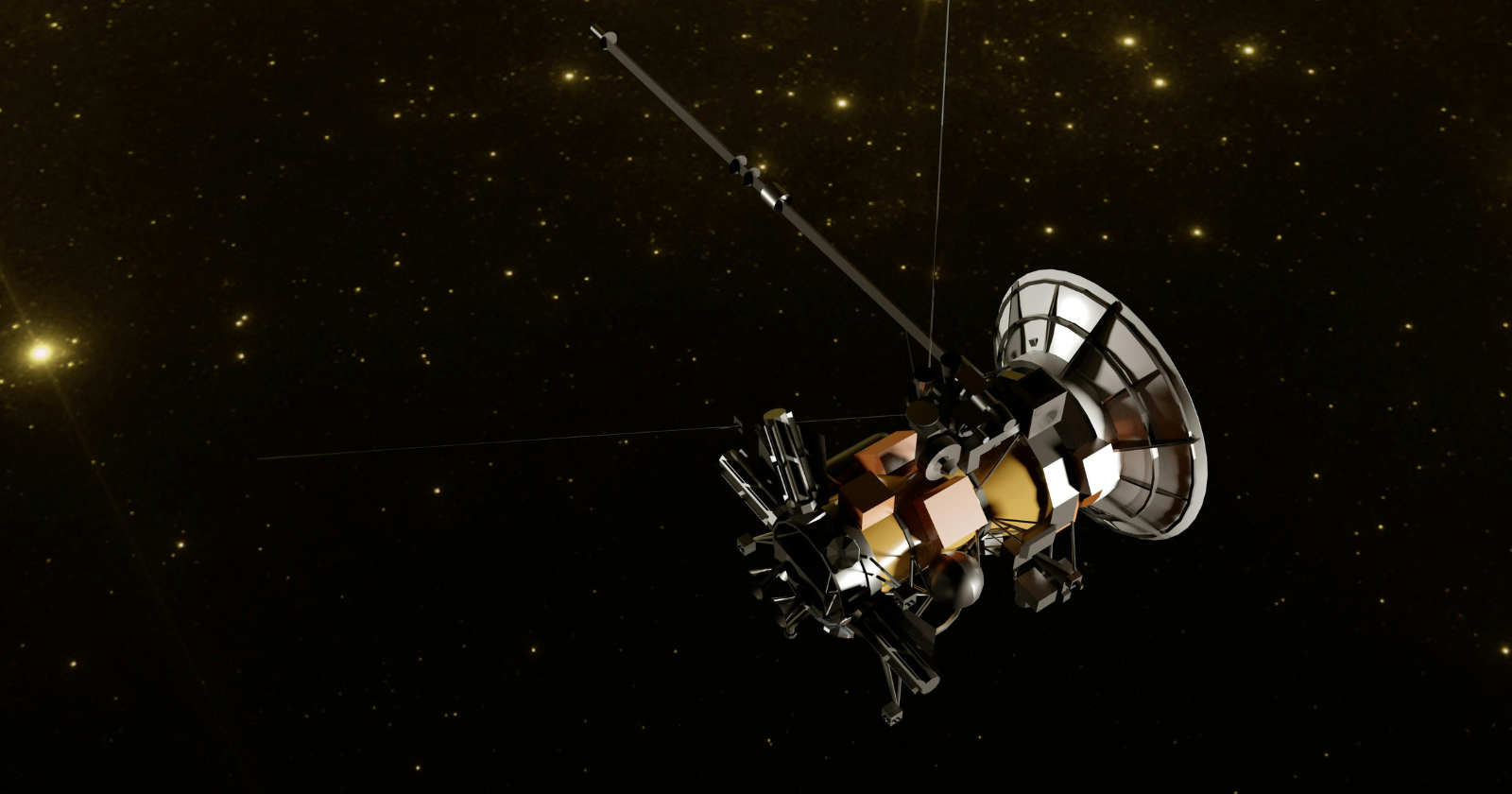
A Georgian polyphonic song travels farther from Earth than any human creation, carrying a nation's voice into the cosmos—and its journey raises ancient questions about what humanity chooses to remember. The post Of the 27 songs NASA sent into space aboard the…
In a remarkable intersection of culture and space exploration, the Georgian folk song Chakrulo is currently traveling farther from Earth than any other human creation. This November, the Voyager 1 spacecraft, which carries the song as part of the Voyager Golden Record, is set to reach a distance of one light-day from our planet, marking an unprecedented milestone in human space history.
Voyager 1 was launched by NASA in September 1977, carrying a gold-plated phonograph record compiled to represent the diversity of Earth's sounds and music. Among the 27 musical selections preserved on the record is Chakrulo, a traditional three-part polyphonic song originating from the Kakheti region of eastern Georgia. This piece was chosen to illustrate the unique musical heritage of humanity alongside works by composers such as Bach and Beethoven and American rock and roll.
Related stories
Watch Gracie Abrams channel ‘Romeo + Juliet’ for performances of ‘Hit The Wall’ and ‘Here You Come, There You Go’ on ‘SNL’
Chakrulo is distinguished by its intricate vocal texture, featuring two soloists weaving ornamented melodies atop a robust choral foundation. This arrangement yields a harmonic structure that departs significantly from Western musical norms. Unlike the standard twelve-tone equal temperament system used in most Western music instruments, Chakrulo employs intervals that are not reproducible on conventional pianos. These include subtly compressed and stretched intervals that give the song its characteristic sound, highlighting a musical tradition recognized by UNESCO in 2001 as a masterpiece of the intangible cultural heritage of humanity.
Despite its inclusion in such a prestigious collection, the artists who recorded Chakrulo were initially unaware of the song’s extraordinary journey. The two soloists only learned about their voices being part of the Voyager mission weeks after the spacecraft’s launch, upon arriving in the United States for a concert tour. One of these singers, Rostom Saginashvili, later participated in a commemorative event in Tbilisi in 2017, marking the 40th anniversary of the recording’s space voyage.
Voyager 1’s ongoing voyage has taken it beyond the outer boundaries of the solar system, traveling at a speed of approximately 128,700 kilometers per hour. By November 18, 2026, NASA projects that the spacecraft will be roughly 25.9 billion kilometers from Earth — a distance light requires an entire day to traverse. This achievement will make Voyager 1 the first human-made object to reach a full light-day distance from our planet, symbolizing humanity’s farthest physical reach into the cosmos.
The presence of Chakrulo on the Voyager Golden Record serves as a testament not only to the technological achievements of the 20th century but also to the enduring cultural expressions that define human identity. The song, encoded in gold and traveling silently through interstellar space, embodies a distinctly Georgian voice that transcends geopolitical histories, such as its Cold War-era labeling as “Georgian S.S.R., chorus,” which obscured its unique ethnic and linguistic origins.
As Voyager 1 continues its silent journey, Chakrulo remains a sonic ambassador of Georgia’s rich polyphonic tradition, carrying harmonic complexities that challenge Western musical conventions. Its selection for the Voyager record underscores an acknowledgment of diverse musical systems and their value as cultural artifacts representative of Earth’s multifaceted heritage.
Despite decades of travel through the void of space, the music of Chakrulo has not been played beyond the confines of Earth since its recording. Its continued presence aboard Voyager 1 invites reflection on the choices humanity makes in defining what is worth preserving and sharing beyond our world. More than a mere symbol of national pride, the song’s interstellar voyage represents a profound gesture of cultural transmission that extends far beyond terrestrial boundaries.
The story of Chakrulo on Voyager 1 exemplifies how music can serve as a bridge between the intimate and the cosmic, the local and the universal. As the spacecraft approaches a historic distance milestone, this Georgian polyphonic song remains an enduring emblem of human creativity cast into the vastness of space, carrying with it the heritage of a people and the complexities of their musical language to the farthest reaches of the universe.
Full story & global impact
This article was synthesized and rewritten by MusicTop Editorial from reporting published by spacedaily.com. Read the publisher's report for the complete source context.
Read original source: spacedaily.com