She’s Gone From Indie Rocker to Unlikely Pop Star. Now She’s Back With Her First Album Since the Big Change.
Published August 14, 2026 · US
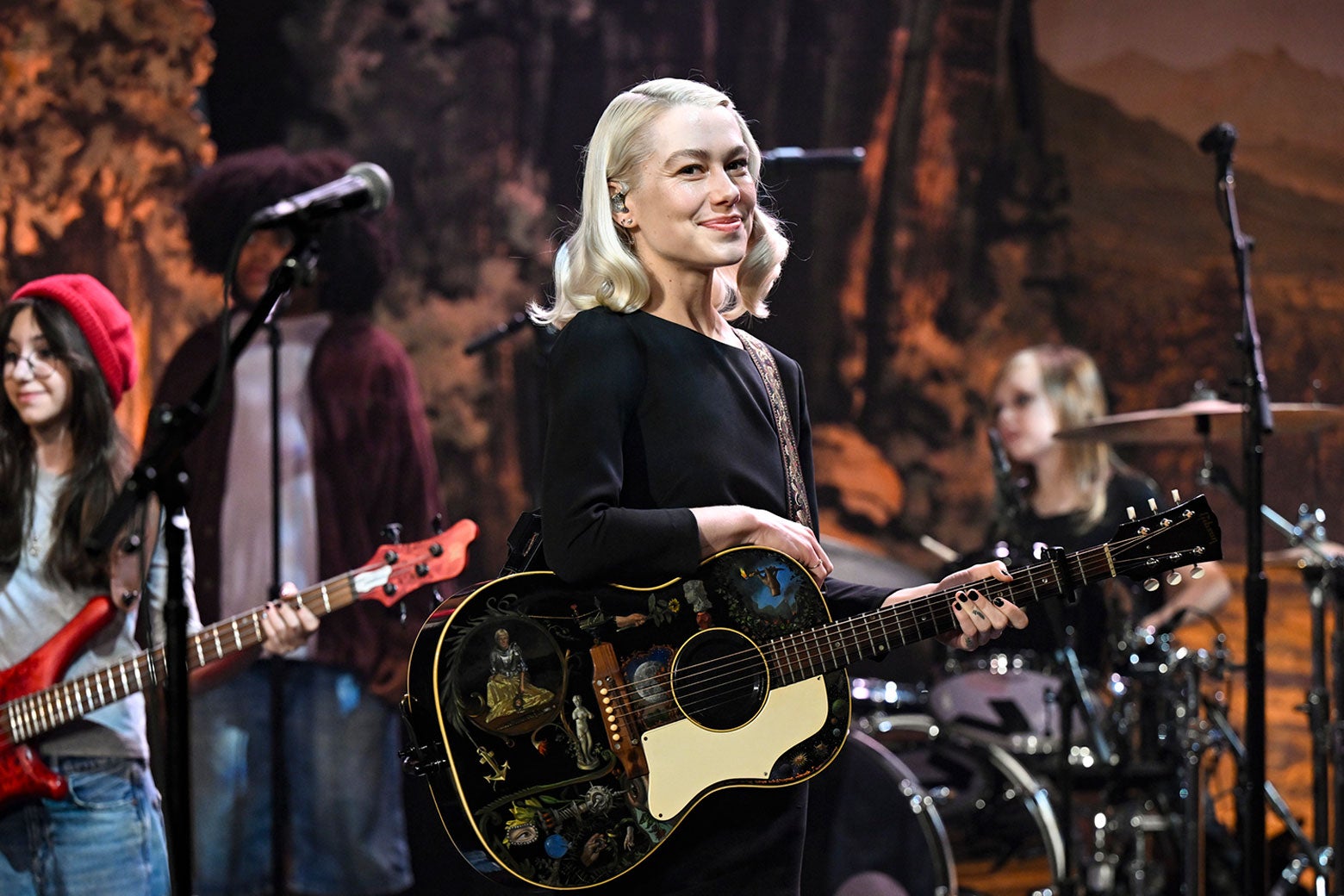
On her first solo record in six years, Phoebe Bridgers confronts grief, new love, and sudden fame.
Phoebe Bridgers has unveiled her first solo album in six years, titled "Lost Weekend," a project that reflects a profound personal and artistic transformation. Bridgers, who rose to prominence with her 2017 album "Punisher," now confronts themes of loss, love, and the complexities of sudden fame with renewed musical ambition and emotional candor.
The album opens with "The Outside," a track notable for its unconventional use of a vocoder—a device that filters the voice into a neutral, almost robotic sound. This artistic choice sets a tone of emotional detachment and introspection, deviating from the expected raw vocal expressions typically associated with mourning. The track alludes to Bridgers’ recent bereavement following the death of her father in late 2022, a subject she has grappled with in her earlier songwriting.
Related stories
 Rita Ora transforms into country icon Dolly Parton with a huge blonde wig and low-cut crop top as she heads to a New York Halloween bash
Mariah Carey Shares ‘Hint’ on When Her Shelved Grunge Album Is Coming: ‘I Get Asked This About Once a Week’
Bridgers’ decision to incorporate processed vocals alongside her natural soprano voice creates a layered narrative of observation and memory. The song references personal and public rituals, including a poignant moment when she stage-dived at a concert witnessed by her father, underscoring the interplay between vulnerability and performance.
"Lost Weekend" is not solely an album of grief; it also explores new romantic experiences, capturing the dual forces that can overwhelm and redefine an artist’s life. Bridgers, who turned 32 recently, has described this work as emerging from a place of perseverance amid emotional upheaval.
Her retreat from the public eye followed a period marked by intense scrutiny and invasive fan interactions, especially around the time of her father’s funeral. Since the release of "Punisher," Bridgers’ profile has skyrocketed, expanding from an indie darling to a mainstream figure embraced by a diverse audience. Highlights of her rise include collaborations with her supergroup Boygenius, appearances on major television programs, touring with Taylor Swift, and gracing the cover of Rolling Stone alongside fellow songwriters Julien Baker and Lucy Dacus.
Despite this success, Bridgers has wrestled with the pressures of maintaining her artistic identity amid widespread acclaim and imitation. Her style, often characterized by its understated vocal delivery and melancholic lyricism, has become both a signature and a potential trap. The singer acknowledges the challenge of evolving beyond the "sad girl" persona without alienating her core fanbase.
Musically, "Lost Weekend" demonstrates Bridgers’ willingness to experiment and expand her sonic palette. Collaborating with contemporary composer Caroline Shaw, a Pulitzer Prize winner known for her innovative vocal arrangements, Bridgers integrates complex harmonies and layered textures that enrich the album’s emotional depth. The inclusion of diverse musical voices and instrumentalists across genres further broadens the album’s soundscape.
The album also features moments of stark contrast, including punk-inflected shouts and metal-inspired screams that punctuate the otherwise delicate compositions. These dynamic shifts not only disrupt listener expectations but also reflect Bridgers’ multifaceted approach to expressing vulnerability and strength.
Bridgers’ renewed control over her music and audience relationship is evident in the album's rollout strategy. She staged intimate pop-up performances where audiences were encouraged to disconnect from their phones, fostering a more immersive and confidential listening experience. These events, including surprise shows and planetarium listening parties, underscore her desire to cultivate a thoughtful connection with her listeners.
Thematically, "Lost Weekend" navigates the tension between public persona and private reality, exploring how fame can simultaneously fulfill and complicate an artist’s dreams. Bridgers’ nuanced vocal performances and eclectic arrangements indicate a deliberate move toward authenticity and complexity, challenging reductive categorizations of female artists in indie and pop music.
While some lyrical references and musical choices invite speculation—such as cryptic samples and allusions to historical events—full interpretations remain open, adding layers of intrigue to the album. Overall, "Lost Weekend" marks a significant chapter in Phoebe Bridgers’ career, showcasing her growth as a songwriter and performer willing to confront personal turmoil and industry expectations with resilience and innovation.
Full story & global impact
This article was synthesized and rewritten by MusicTop Editorial from reporting published by slate.com. Read the publisher's report for the complete source context.
Read original source: slate.com