Atlantic waves carved a concert hall into 60-million-year-old volcanic rock off Scotland — when Mendelssohn heard the strange acoustics inside Fingal’s Cave, he went home with the opening notes of an overture already in his head
Published September 6, 2026 · US
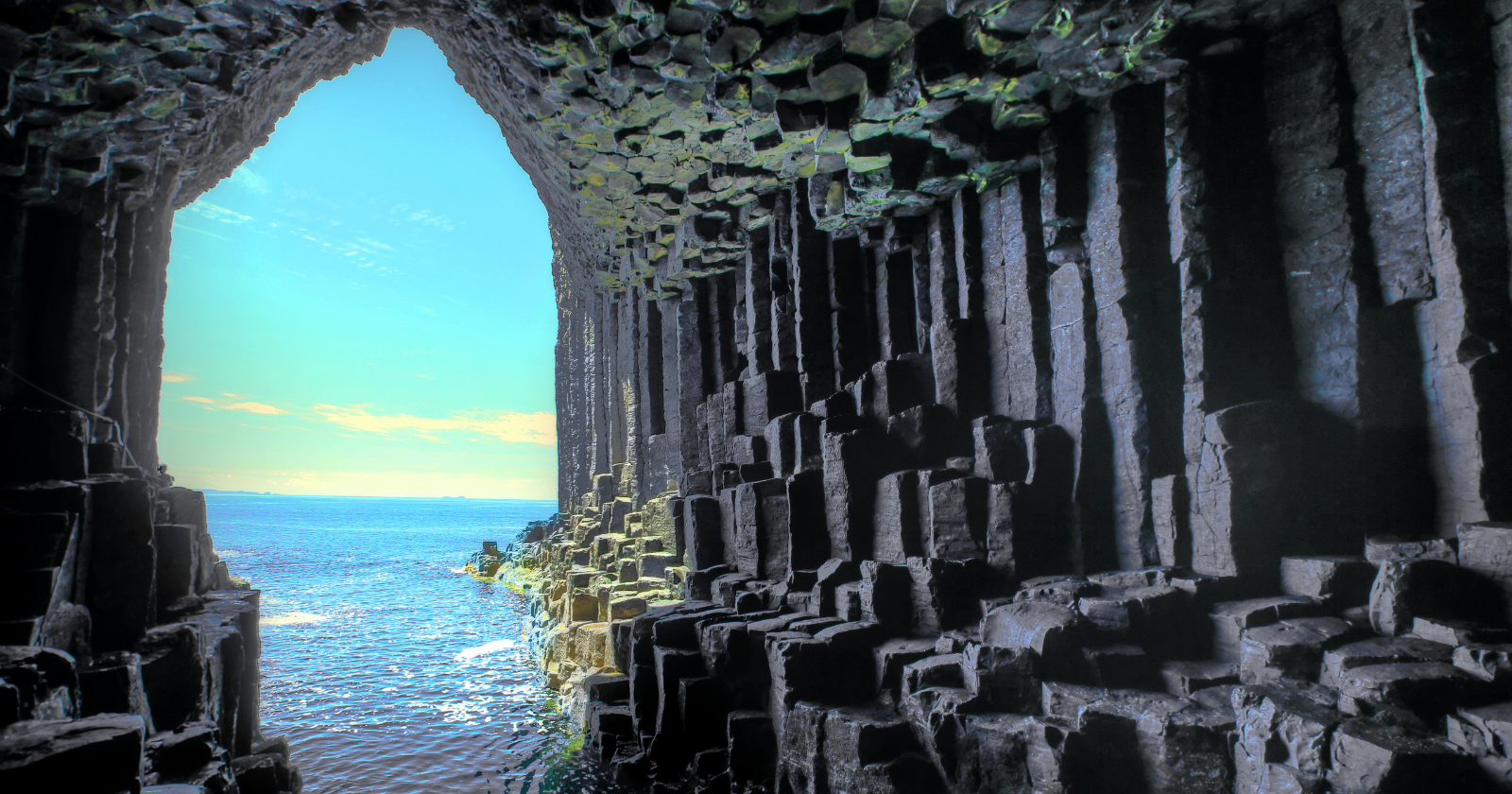
When a nauseated composer stumbled into a Scottish sea cave, he heard something no one had quite captured in music before—and spent the next two years trying to translate its otherworldly voice into sound. The post Atlantic waves carved a concert hall into 60…
In August 1829, a young German composer embarked on a journey that would leave a lasting imprint on classical music. Felix Mendelssohn, aboard a small boat off the Isle of Mull in Scotland, made his way to Staffa, an uninhabited volcanic island in the North Atlantic. Despite suffering seasickness throughout the crossing, Mendelssohn encountered a natural marvel that would inspire one of his most enduring orchestral works.
Staffa is renowned for its striking geological formations: towering basalt columns formed some 60 million years ago during volcanic activity associated with the Palaeogene Mull volcanic centre. These hexagonal stone prisms were created by the cooling and contraction of lava flows, a process that cleaves the rock into orderly polygonal shapes. This phenomenon is shared across the region, including sites like the Giant’s Causeway in Northern Ireland and other islands such as Skye and Arran.
Related stories

Among the island’s remarkable features is Fingal’s Cave, a sea cave extending approximately 70 meters into the basalt cliff, with walls composed entirely of these geometric columns. The cave’s floor is intermittently flooded by the Atlantic waves, creating a dynamic acoustic environment unlike any conventional concert hall. The interaction between the hard, angular basalt surfaces and the constant movement of water produces a reverberant soundscape characterized by diffuse echoes that linger and overlap rather than returning as clear, singular reflections.
The cave’s acoustic signature has fascinated scientists and artists alike. Recent studies have attempted to characterize this unique sonic environment by playing controlled sound sweeps inside the cave and analyzing the resultant echoes amidst the constant background noise of wind and surf. These investigations confirm the complexity of the acoustic reflections, which envelop listeners in a rich, sustained auditory field. However, capturing the cave’s sound is inherently site-specific, as any measurement represents only a snapshot of one particular position and moment within this ever-changing space.
Mendelssohn’s encounter with Fingal’s Cave was both physical and artistic. Battling seasickness, he nonetheless absorbed the cave’s haunting soundscape deeply enough to compose the opening bars of what would become the Hebrides Overture, Op. 26. He quickly transcribed his musical impressions, detailing instrumentation, tempo, and dynamics in a letter home that survives to this day. Originally titled The Lonely Island, the piece evolved over three years into a refined orchestral work that evokes the cave’s turbulent natural atmosphere.
The overture’s manuscript is preserved in Oxford’s Bodleian Library, testament to its cultural significance. The composition remains a vivid translation of Mendelssohn’s personal experience—an aural portrait of the cave’s unique resonance as heard during a singular visit. Each subsequent visitor to the cave encounters a different acoustic moment, influenced by tide, weather, and the shifting ocean.
Historically, Fingal’s Cave gained prominence after 18th-century explorations by figures like Joseph Banks, who documented the cave’s grandeur and introduced its anglicized name, drawn from literary sources. The cave’s Gaelic name, An Uamh Bhinn, meaning “the melodious cave,” hints at its long-recognized sonic distinctiveness. Over time, artists, poets, and tourists have been drawn to this natural amphitheater, cementing its place in cultural and scientific histories.
Geologically, the cave’s formation is a product of the relentless Atlantic surf exploiting natural joints and weaknesses in the basalt columns. Waves fracture and remove rock chunks, gradually hollowing out the cave and shaping its acoustics. This process continues today, underscoring the dynamic relationship between geology, oceanography, and human artistic response.
Mendelssohn’s Hebrides Overture stands as a bridge linking natural phenomena with musical expression. It captures the essence of a fleeting moment when the forces of nature inspired a creative breakthrough. Through this work, the ancient volcanic landscape and the ceaseless Atlantic waves echo in concert halls worldwide, allowing listeners to share in the haunting soundscape of a Scottish sea cave carved by time and tide.
Full story & global impact
This article was synthesized and rewritten by MusicTop Editorial from reporting published by spacedaily.com. Read the publisher's report for the complete source context.
Read original source: spacedaily.com