Iran-Friendly Media Hypes Macklemore's 'Pro-Palestinian' Ed Sheeran Feud
Published September 17, 2026 · US
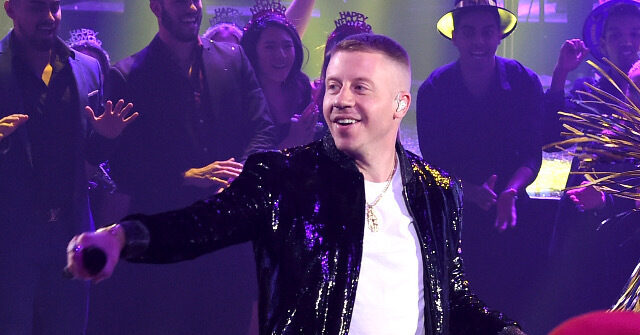
The front page of the Iran-friendly media outlet Al Mayadeen featured multiple articles and videos on Thursday promoting Seattle rapper Macklemore's ongoing feud with former touring partner Ed Sheeran, which erupted after tour organizers reportedly removed Ma…
Seattle-based rapper Macklemore has recently found himself at the center of a contentious dispute involving fellow musician Ed Sheeran, a controversy that has unexpectedly garnered significant attention from Middle Eastern media outlets with pro-Iranian leanings.
The conflict reportedly originated after Macklemore was removed from Sheeran’s tour following incidents where Macklemore used his platform to advocate for Palestinian causes, including a politically charged performance at New Jersey’s MetLife Stadium. This led to backlash from concert attendees expecting a conventional pop music experience, as well as from tour organizers who cited the politically sensitive nature of his statements.
Related stories

Al Mayadeen, a Lebanese news network known for its pro-Hezbollah and anti-American editorial stance, prominently featured Macklemore’s dispute with Sheeran across its front page in multiple articles and videos. The coverage notably emphasized Macklemore’s vocal support for Palestine and framed his removal from the tour as a consequence of his outspoken activism. This media outlet also highlighted Macklemore’s announcement of a $1 million donation to Palestinian support organizations, including the United Nations Relief and Works Agency (UNRWA), an agency recently scrutinized for alleged links to extremist activities.
The controversy is compounded by the backdrop of the broader Israeli-Palestinian conflict, especially following the devastating October 7, 2023 attacks in Israel, which involved significant civilian casualties and allegations of atrocities. Al Mayadeen’s coverage omitted critical context about the negative reaction from concertgoers and the complexities surrounding the organizations Macklemore supports, reflecting the outlet’s editorial biases.
In contrast to Macklemore’s activism, Ed Sheeran publicly distanced himself from taking a clear political stance on the Israeli-Palestinian issue. Sheeran’s refusal to endorse pro-Palestinian activism led to calls, amplified by Al Mayadeen, for boycotts of his music and live performances. Sheeran’s position underscores a broader debate about the role of musicians in political discourse, particularly when their audience expects entertainment rather than political messaging.
The dispute also reignited discussions about selective political engagement. Critics pointed out that Sheeran had previously shown public support for Ukrainian civilians affected by the ongoing conflict due to the Russian invasion, highlighting a perceived inconsistency in his political expressions. This contrast was used by Al Mayadeen and allied voices to question Sheeran’s apolitical stance or suggest it was selectively applied based on geopolitical alliances.
Macklemore’s association with politically charged content is not new. His recent work includes songs that reference contentious incidents, such as the violent takeover of Columbia University’s campus by pro-Hamas activists in 2024, reflecting his continued commitment to addressing political and social issues through his music.
Historically, Macklemore rose to prominence in the early 2010s as part of the duo Macklemore & Ryan Lewis, achieving mainstream success with hits like “Thrift Shop” and “Can’t Hold Us.” However, his position as a white rapper in a predominantly Black hip-hop culture sparked debates about representation and cultural authenticity. Throughout his career, Macklemore has addressed these issues openly, including through his 2016 track “White Privilege II.”
The renewed focus on Macklemore’s political activism and his fallout with Sheeran illustrates the challenges artists face when navigating the intersection of entertainment, personal beliefs, and global politics. The attention from outlets such as Al Mayadeen also exemplifies how cultural conflicts in Western music scenes can resonate within broader geopolitical narratives, often shaped by external media agendas.
Details regarding the internal dynamics of the tour and the full scope of responses from both artists remain limited. Nonetheless, this incident exemplifies the increasingly complex role of musicians as both entertainers and public figures whose statements can have reverberations far beyond the stage.
Full story & global impact
This article was synthesized and rewritten by MusicTop Editorial from reporting published by breitbart.com. Read the publisher's report for the complete source context.
Read original source: breitbart.com