Whether it’s banning books or preventing Macklemore from touring, silencing artists often backfires
Published October 5, 2026 · US
A large-scale study of library circulation finds that attempts to censor books often boost their readership.
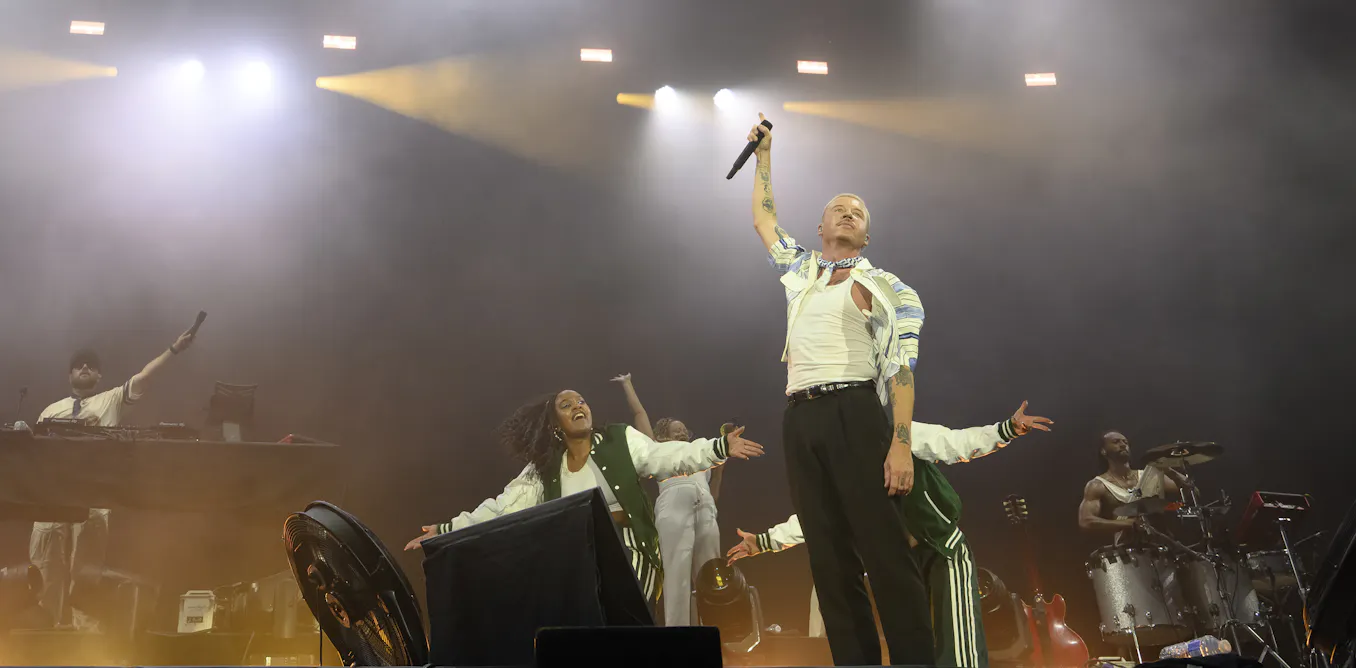
Efforts to suppress artistic expression, whether through concert cancellations or book bans, have increasingly produced the opposite of their intended effect, leading to greater public attention and engagement. This dynamic was vividly demonstrated in 2026 when rapper Macklemore faced backlash after voicing political views during a concert, and it echoes in a recent academic study analyzing the impact of book censorship in the United States.
In early September 2026, Macklemore used his platform at MetLife Stadium in New Jersey, while opening for Ed Sheeran, to express support for Palestinians amid the ongoing conflict in Gaza and the West Bank. His performance of the protest song "Hind’s Hall" and accompanying monologue went largely unnoticed initially. However, within ten days, he was removed from the tour after intervention by Robert Kraft, the owner of the New England Patriots and Gillette Stadium, a venue on Sheeran’s planned tour route. Kraft reportedly pressured Sheeran to exclude Macklemore, and influenced other stadium owners to follow suit.
Related stories
Kid Rock Shares Why Eminem Switched Songs on His Faith-Based Album – And Whether They Talk Politics Together
 Audrey Hobert on Charting Her Pop Career and Ignoring the Noise: ‘Whether It’s Positive or Negative, It’s Not True’
 Bigg Boss 20: Who is Bhagirath Bhatt? Singer clarifies whether he is joining Salman Khan’s reality show
Contrary to silencing the rapper, this exclusion sparked widespread media coverage and a surge in public interest. Macklemore’s Instagram followers surged by over 1.6 million shortly after the announcement, and streaming numbers for his music climbed significantly. Additionally, other opening acts for Sheeran withdrew in solidarity, and some radio outlets even removed Sheeran’s music from rotation. This series of events exemplifies what is commonly known as the Streisand effect—named after Barbra Streisand’s failed attempt to suppress online images of her home, which only increased public attention to them.
Motivated by such cases, researchers from multiple universities conducted a comprehensive study investigating whether similar patterns hold true for book censorship, a contentious issue that has intensified in recent years. Since 2021, the rate of book bans in U.S. public schools and libraries has escalated sharply, often targeting works addressing race and gender. The American Library Association reported a rise from 729 unique banning attempts in 2021 to 1,269 in 2022.
By analyzing library circulation data from 38 states over an 18-month period beginning in January 2021, researchers identified a consistent trend: books that were banned experienced an average circulation increase of 12% in the six months following the ban, relative to similar non-banned titles. This effect was particularly pronounced for works by authors who were not widely known beforehand.
Moreover, the more frequently a book was banned across different districts, the higher its readership grew. Each additional ban corresponded to an approximate 2% increase in circulation, underscoring a cumulative amplification effect. Surprisingly, circulation gains were not confined to regions where bans occurred; states without bans saw increases nearly as substantial.
This pattern suggests that local censorship efforts often have unintended nationwide repercussions, broadening a banned book’s audience far beyond the initial context. The study further revealed that the current wave of book bans garners significantly more media attention than earlier eras, with local news stories quickly picked up by national outlets and widely disseminated on social media platforms such as X. This exposure appears to be a critical factor driving readers to seek out these challenged works.
Titles like "Gender Queer" and "Lawn Boy," which became focal points for online discussions, saw remarkable spikes in circulation, whereas banned books that received little social media buzz did not experience notable readership growth. This highlights the importance of digital discourse in shaping contemporary cultural consumption.
The researchers interpret these findings within the broader context of today’s saturated publishing market, where millions of books compete annually for visibility. For many titles, obscurity is a larger obstacle than censorship. Paradoxically, bans function as a form of spotlight, elevating otherwise overlooked books and introducing them to new audiences.
Overall, the evidence demonstrates that attempts to suppress artists, whether musicians or authors, often backfire in the digital age. Macklemore’s tour removal and the surge in banned book circulation both illustrate how censorship efforts can inadvertently amplify the very messages they seek to mute, reaffirming the complexities of controlling cultural narratives in an interconnected world.
Full story & global impact
This article was synthesized and rewritten by MusicTop Editorial from reporting published by theconversation.com. Read the publisher's report for the complete source context.
Read original source: theconversation.com