Decolonise Fest is a loud and colourful course correction
Published October 9, 2026 · US
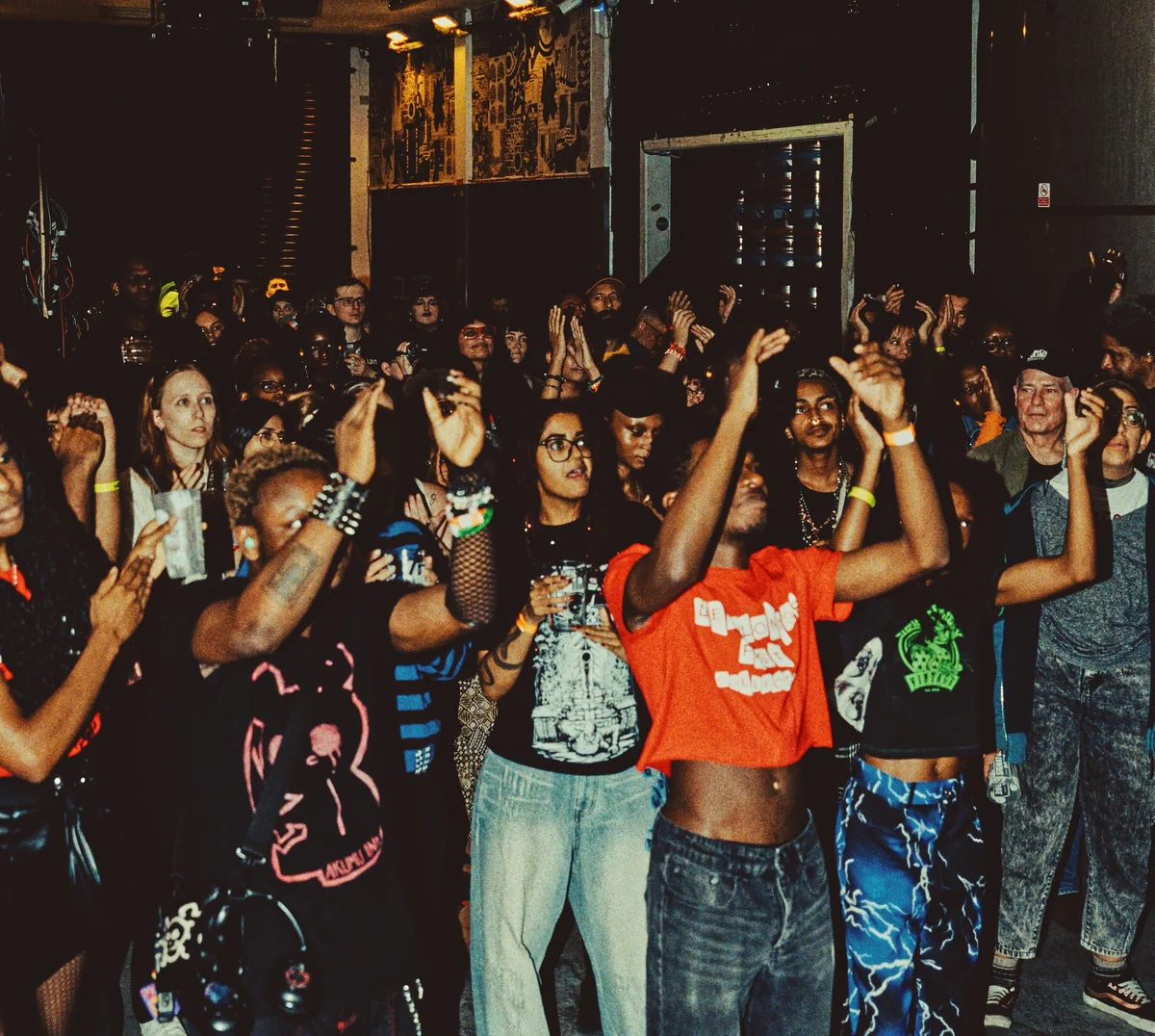
Over two days of arts, activism, and music in a North London brewery, Kayla Sandiford discovers what Decolonise Fest is doing to give punx of colour their flowers.
Since its inception in 2017, Decolonise Fest has established itself as a vital platform dedicated to amplifying the voices and talents of punx of colour within punk and alternative music scenes. Originating from North London’s vibrant DIY culture, the festival was co-founded by Stephanie Phillips of Big Joanie and the DIY Diaspora Punx Collective, responding to a persistent underrepresentation of people of colour in alternative music spaces.
The festival’s mission is clear: to forge a safe, inclusive environment created by and for punx of colour. It recognizes the historical contributions of artists from diverse backgrounds—spanning African, Caribbean, Asian, Middle Eastern, Latin American, Australasian, North American, and Romany Traveller heritages—who have been foundational yet frequently overlooked in punk’s narrative. Decolonise Fest actively challenges the erasure of these artists, emphasizing that their presence in punk is not a recent addition but a continuous legacy demanding acknowledgment.
Related stories

Held annually, the festival combines live performances, workshops, and panel discussions focused on social justice themes such as anti-racism, cultural resistance, and solidarity. The 2023 edition, marking its ninth year, took place over two days at Signature Brew Blackhorse Road in North London. The diverse lineup showcased an array of punk and alternative sounds, featuring artists like Frozemode, eatboys., Uninvited, Dygora, Mashaal, Third Kulture, Silver Tabby, Baby Said, TM Distant, Hang Linton, and the Miki Berenyi Trio. This variety not only highlighted musical diversity but also reinforced the festival’s ethos of inclusivity.
Beyond music, Decolonise Fest foregrounds activism through interactive workshops such as zine-making, bell assembly, and discussions on topics like opposing far-right movements, abolitionist education models, and land justice. These components underscore the festival’s commitment to fostering a politically conscious community that extends beyond performance spaces.
Alex Ekong, co-organiser and frontman of Sunday Best, reflects on the festival’s origins as a corrective to the marginalization experienced by punx of colour in mainstream festival circuits. Despite challenges including venue closures, financial difficulties, and hostile media coverage, the festival has persisted, driven by a dedication to providing a platform for young people of colour who have long felt alienated in predominantly white alternative scenes.
Ekong emphasizes that the festival is not about requesting inclusion but asserting an inherent right to space within punk culture. He advocates for community-building among punx of colour, encouraging mutual support and networking to strengthen representation and visibility in the scene.
Performances at Decolonise Fest often resonate deeply with attendees, reflecting a blend of nostalgic connection and contemporary urgency. For example, local band Silver Tabby's chaotic indie rock and socially aware lyricism fostered a palpable sense of community among the audience. Subsequent acts like Baby Said and TM Distant delivered intense, cathartic sets, while the Miki Berenyi Trio and Sacred Paws offered textured, genre-blending sounds that expanded the festival’s sonic palette.
Despite some industry shifts following 2020, including more diverse festival bookings, Ekong notes that progress remains incomplete and cyclical. Conversations around decolonization and systemic change have become increasingly contentious, and many talented artists at the grassroots level continue to face barriers to exposure and support.
Looking ahead to its tenth anniversary, Decolonise Fest stands as both a testament to the necessity of its work and a reminder of the ongoing struggles within alternative music spaces. The festival’s endurance signals that the mission to reclaim punk’s diverse roots and promote equitable representation remains urgent and unresolved.
Ultimately, Decolonise Fest represents more than a series of performances—it is a sustained movement affirming that punx of colour have always been integral to punk’s history and future. By creating dedicated spaces and dialogues, the festival redefines the narrative, ensuring these contributions are recognized and celebrated without compromise.
Full story & global impact
This article was synthesized and rewritten by MusicTop Editorial from reporting published by thelineofbestfit.com. Read the publisher's report for the complete source context.
Read original source: thelineofbestfit.com