I Went to the Macklemore Show Devised After He Was Kicked Off Ed Sheeran’s Tour. It Was Quite Something.
Published November 3, 2026 · US
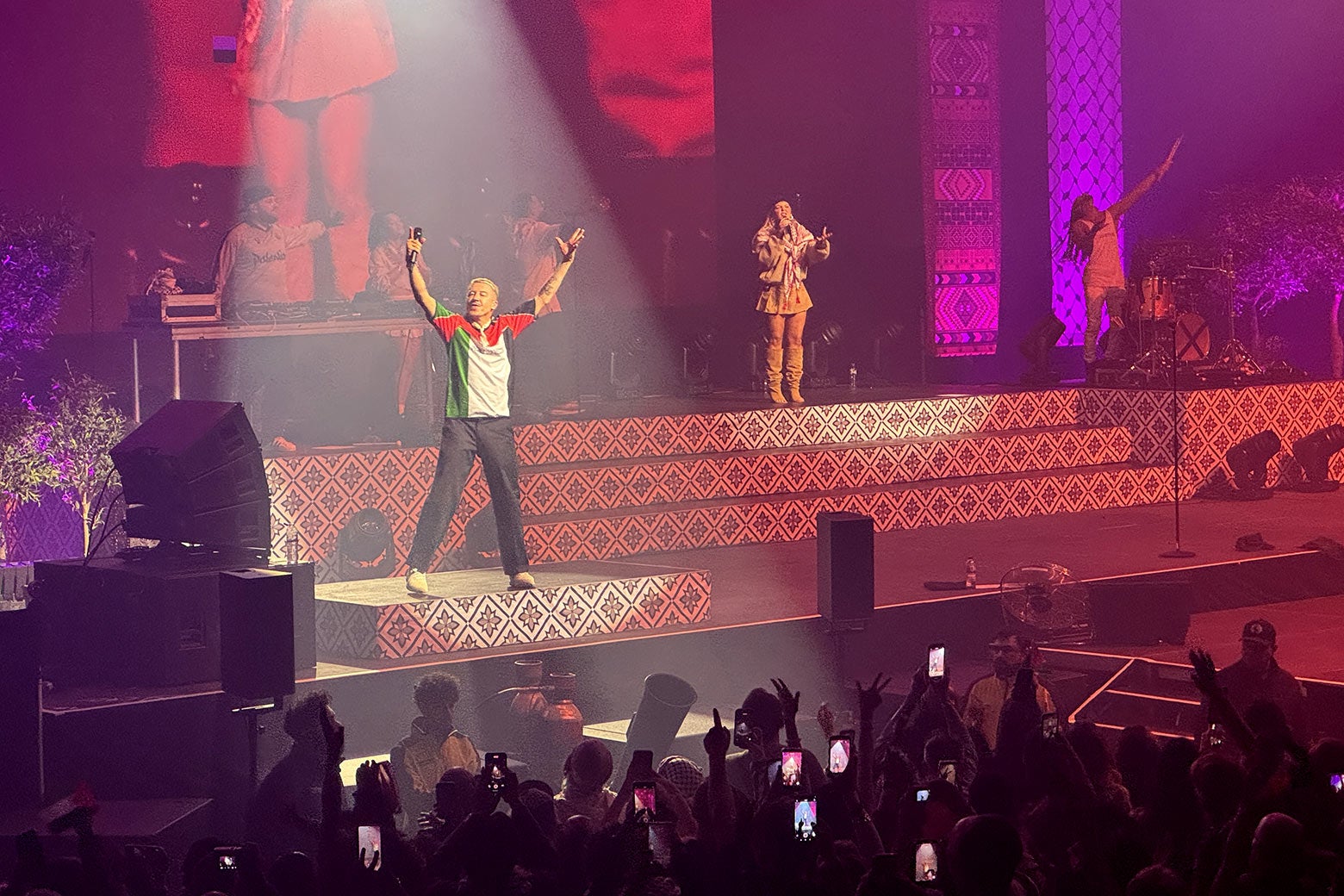
It was sold out, and yes, some people were actually there for the performance.
Ben Haggerty, widely known as Macklemore, has recently emerged as a prominent figure in the intersection of music and activism. Once famous for his 2012 breakout single “Thrift Shop,” Macklemore’s public profile has evolved significantly, culminating in his outspoken support for Palestinian rights.
The catalyst for his latest high-profile activism came in September when Macklemore was removed from Ed Sheeran’s tour. This decision followed backlash from billionaire Robert Kraft, who objected to Macklemore performing the pro-Palestinian protest song “Hind’s Hall.” Kraft reportedly influenced venue operators across the United States, threatening cancellations of Sheeran’s remaining shows if Macklemore remained part of the lineup.
Related stories



The expulsion triggered a strong reaction within the music community. In a show of solidarity, all other supporting acts on Sheeran’s tour withdrew in protest. This collective stand put pressure on Sheeran to address the controversy, challenging the notion that celebrities with large platforms can remain “apolitical,” a stance Sheeran has maintained despite his public comments on other global issues.

In response to his removal, Macklemore immediately announced the “Macklemore and Friends Free Palestine Tour,” a multi-city European series designed to spotlight Palestinian causes. The tour included stops in Dublin, Paris, and London. The London show, held at the OVO Arena in Wembley, was particularly noteworthy due to the political tensions surrounding support for Palestine in the UK.
Ahead of the London date, fifty members of the House of Lords attempted to block Macklemore’s entry into the country, though they were ultimately unsuccessful. The concert itself sold out quickly, signaling robust public interest and support. Attendees often wore the kaffiyeh and other symbols associated with Palestinian solidarity, creating an atmosphere centered on advocacy rather than celebrity.
Inside the venue, the event’s focus was clear. Merchandise primarily featured pro-Palestinian slogans, and proceeds from the three-city tour were dedicated to Palestinian charities. Several speakers and performers contributed to the program, including poets, activists, and musicians who shared personal stories and calls for justice. The presence of Arab Barghouti, son of imprisoned Palestinian politician Marwan Barghouti, was met with enthusiastic applause, underscoring the tour’s political significance.

Despite the political weight of the event, Macklemore’s performance retained a celebratory energy. He opened with “Thrift Shop,” humorously referring to it as an “anti-capitalist anthem,” before progressing through a setlist that included both his crowd-pleasers and explicitly political songs like “Hind’s Hall.” Throughout the evening, he emphasized that the event’s mission transcended his own career, framing his activism as a fundamental human imperative rather than a daring or controversial act.
The lineup also featured UK singer Paloma Faith, who openly expressed her apprehensions about potential professional risks in supporting Palestine. Her participation highlighted the personal stakes for artists who choose to align publicly with contentious geopolitical issues.
Audience demographics reflected a mix of Macklemore fans and individuals primarily motivated by solidarity with Palestine. Some attendees admitted they were unfamiliar with Macklemore’s catalog but attended to support the cause. Others praised his consistency in advocating for marginalized groups, referencing his past work addressing topics such as homophobia.
The event symbolized a broader cultural moment where artists are increasingly willing to leverage their platforms for political expression, even at the risk of professional consequences. For Macklemore, the transition from mainstream pop success to outspoken advocate illustrates a growing trend of musicians intertwining their artistry with activism. Meanwhile, the controversy surrounding Sheeran’s tour raises questions about the limits of neutrality in celebrity and entertainment.
While the full ramifications of Macklemore’s activism and the industry’s response remain to be seen, the success of the Free Palestine Tour suggests a strong appetite among audiences for music events that engage with urgent social and political issues. The London show, in particular, demonstrated that music can serve not only as entertainment but as a vehicle for community, awareness, and change.
Full story & global impact
This article was synthesized and rewritten by MusicTop Editorial from reporting published by slate.com. Read the publisher's report for the complete source context.
Read original source: slate.com