Nepal and China step up rescue efforts day after catastrophic flood (VIDEOS)
Published August 27, 2026 · WORLD
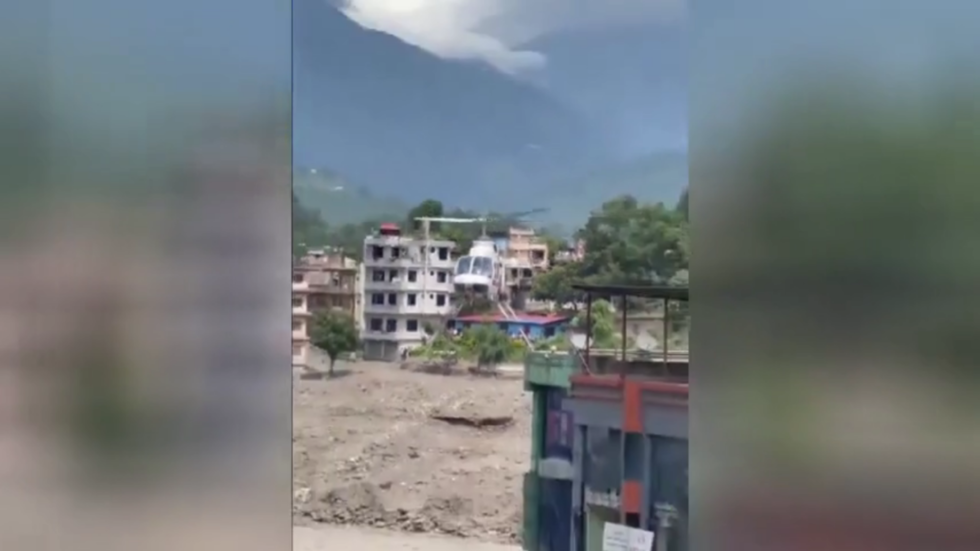
The Nepalese and Chinese armies have deployed troops and helicopters to rescue people trapped in mud and debris as thousands, including tourists, remain missing
In the wake of a catastrophic flash flood that struck the northern border region between Nepal and China, both nations have mobilized extensive rescue operations to aid those trapped and missing amid widespread destruction. The disaster, which unfolded on a Wednesday morning, has resulted in a death toll exceeding 350, with thousands more unaccounted for in the affected districts.
Nepalese officials report that the hardest-hit areas include the Nuwakot and Rasuwa districts, where entire communities have been engulfed by mud and debris, obliterating homes and infrastructure. The National Disaster Risk Reduction and Management Authority has confirmed over 800 individuals remain missing, including personnel from the Nepalese Army, police, and Armed Police Force, underscoring the scale of the calamity.
Related stories

Military and emergency services in Nepal have deployed a combination of army and private helicopters to conduct search and rescue missions. Brigadier General Raja Ram Basnet, a spokesperson for the Nepalese Army, indicated that rescue teams had successfully extracted approximately 100 individuals from perilous conditions, including those stranded within the Trishuli hydropower project site. The operations have also extended assistance to foreign nationals caught in the disaster zone, with at least eight airlifted to Kathmandu for medical care.
Visual documentation from aerial surveys reveals the vast extent of damage, with villages submerged under thick, concrete-like mud, raising questions about the vulnerability of riverbank housing in this mountainous terrain. Restoration of access routes remains a critical challenge, as many roads have been severely damaged or washed away, complicating relief efforts.
The Nepalese government has emphasized the pressing need for rehabilitation and social reintegration of displaced populations. Hemraj Aryal, representing the Prime Minister’s Office, highlighted the complexities involved in restoring normalcy following such widespread devastation.
Meanwhile, China has intensified its emergency response in Tibet, where over 550 people are reported missing. The People’s Liberation Army dispatched over a hundred rescue personnel equipped with life-saving and communication tools to the Gyirong Port area. Due to impassable roads, these teams were airlifted from Chengdu to Shigatse to spearhead operations. The Chinese military command has assumed coordinated control over the joint rescue efforts, deploying aviation, medical, engineering, and transport units.
A significant obstacle in the rescue campaign is the formation of a barrier lake near Gyirong Port, which poses ongoing risks and hinders access to affected zones. Authorities are monitoring this development closely, understanding its potential to exacerbate the disaster's impact.
Among those missing are an estimated 500 foreign nationals, many of whom were undertaking religious pilgrimages to sacred sites in Tibet. Nepalese officials have engaged with foreign embassies to track these individuals, affirming a commitment to the safety of all persons within the affected regions.
High-level Nepalese leaders, including Prime Minister Balendra Shah and the Infrastructure Development Minister, have personally visited the disaster areas to oversee relief coordination and infrastructure repair planning. Concurrently, international assistance is being funneled into Nepal, with India delivering multiple shipments of essential supplies such as shelter materials, hygiene kits, and medical provisions. Both India and China have extended offers of support, pending formal requests from Kathmandu in accordance with established protocols.
Additional aid proposals have emerged from global institutions, including the World Bank, which has indicated readiness to provide substantial financial assistance for emergency response and reconstruction efforts. This international cooperation signals a concerted effort to address both immediate humanitarian needs and the long-term recovery challenges facing Nepal and its neighbors.
As rescue teams continue their work amid difficult terrain and unstable conditions, authorities remain focused on locating survivors, restoring essential services, and initiating the complex process of rebuilding communities shattered by one of the region’s most severe natural disasters in recent memory.
Full story & global impact
This article was synthesized and rewritten by MusicTop Editorial from reporting published by rt.com. Read the publisher's report for the complete source context.
Read original source: rt.com