Liberal lawmakers, activists rally behind Macklemore after Sheeran tour removal over 'Free Palestine' stance
Published September 15, 2026 · WORLD
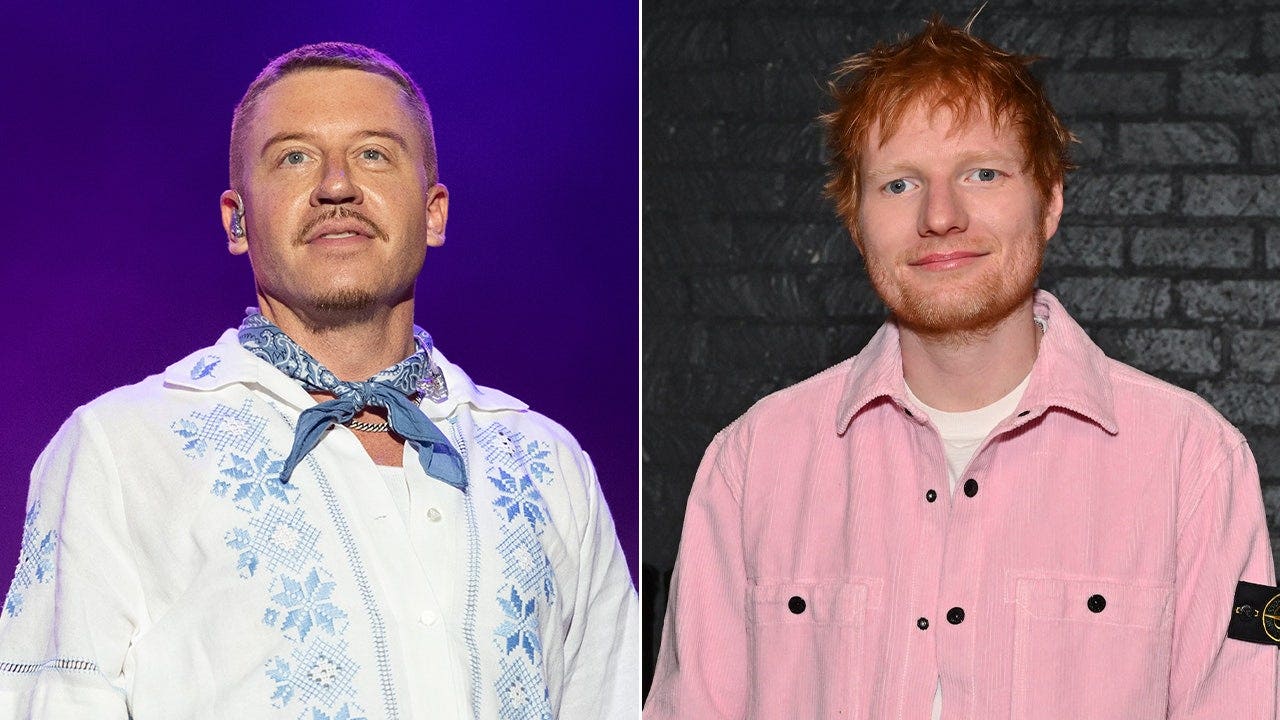
Macklemore claims Robert Kraft rallied stadium owners to force Ed Sheeran's hand, sparking a free speech debate over his pro-Palestinian stance.
Rapper Macklemore was removed from the remaining U.S. dates of Ed Sheeran’s "Loop Tour" after publicly expressing support for Palestine during recent performances. The decision, which emerged in late September 2026, has ignited discussions around artistic expression and venue control within the music industry.
Macklemore’s removal followed his repeated calls for a "Free Palestine" message on stage, as well as the performance of his song "Hind’s Hall," which carries anti-Israel themes. These actions prompted objections from several stadium operators, including Robert Kraft, owner of the New England Patriots and Gillette Stadium. Kraft explicitly stated that Macklemore’s participation at Gillette Stadium, slated for concerts on September 25th and 26th, was not acceptable due to concerns over hate speech and offensive content towards the Jewish community.
Related stories
‘Belzebubs’ Created by JP Ahonen Is a Relatable Story About Liberal Values Where ‘The Addams’ Family Meets ‘Modern Family’ – and Satanism (EXCLUSIVE)
 Who is Hungary’s Péter Magyar and how he overturned Viktor Orbán’s illiberal democracy
According to statements relayed through various media outlets, Kraft emphasized that the ban was not intended to negate the suffering of Palestinians but was a response to material and rhetoric deemed antisemitic and harmful. This stance influenced other venue owners, who collectively pressured Ed Sheeran’s team to remove Macklemore from the tour to prevent cancellations and disruptions affecting hundreds of thousands of fans.
Ed Sheeran’s concert promoter, Messina Touring Group, confirmed that venue restrictions led to the decision to exclude Macklemore from the lineup. The promoter highlighted the risk of tour cancellations if the rapper remained on the bill, framing the move as a necessary response to venue demands rather than a unilateral choice by Sheeran himself.
Macklemore publicly communicated that Ed Sheeran informed him of Kraft’s ultimatum, which extended to other stadium operators, effectively barring him from performing in multiple locations. He criticized Sheeran for acquiescing to this pressure instead of standing firm in support of freedom of speech. This dismissal has sparked a wave of solidarity from liberal lawmakers, activists, and commentators who view Macklemore’s removal as a suppression of political expression.
Among the voices defending Macklemore is Representative Pramila Jayapal (D-Wash.), who condemned the decision as prioritizing political sensitivity over humanitarian concerns regarding Palestinian civilians. Other supporters include Representative Ro Khanna (D-Calif.), pop band MUNA, and public figures such as actress Rosie O’Donnell, who used social media platforms to highlight the controversy and call attention to alleged injustices.
In contrast, critics argue that opening acts should align with the headliner’s brand and touring message, particularly when the main artist maintains a family-friendly and apolitical image. Some commentators suggest that clearer boundaries regarding political statements during concerts might have avoided the conflict, noting that Macklemore functions as part of Ed Sheeran’s tour team and thus represents his brand to some extent.
The incident coincides with a broader debate about the limits of free speech in entertainment venues and the responsibilities of artists and promoters when addressing contentious geopolitical issues. It also reflects ongoing tensions between advocating for human rights causes and navigating the business realities of large-scale music tours.
Details remain limited concerning any direct involvement from Ed Sheeran’s management in the decision-making process, as requests for official comments were not immediately fulfilled. The repercussions of Macklemore’s removal continue to reverberate in discussions about political activism, artist autonomy, and the influence of venue owners in shaping concert lineups.
This episode adds to a series of recent controversies where artists faced professional consequences tied to their political views, illustrating the complex interplay between creative freedom, fan expectations, and institutional gatekeeping within the live music industry.
Full story & global impact
This article was synthesized and rewritten by MusicTop Editorial from reporting published by foxnews.com. Read the publisher's report for the complete source context.
Read original source: foxnews.com