A Career Spent Collecting Earth’s Seismic Clues
Published September 24, 2026 · WORLD
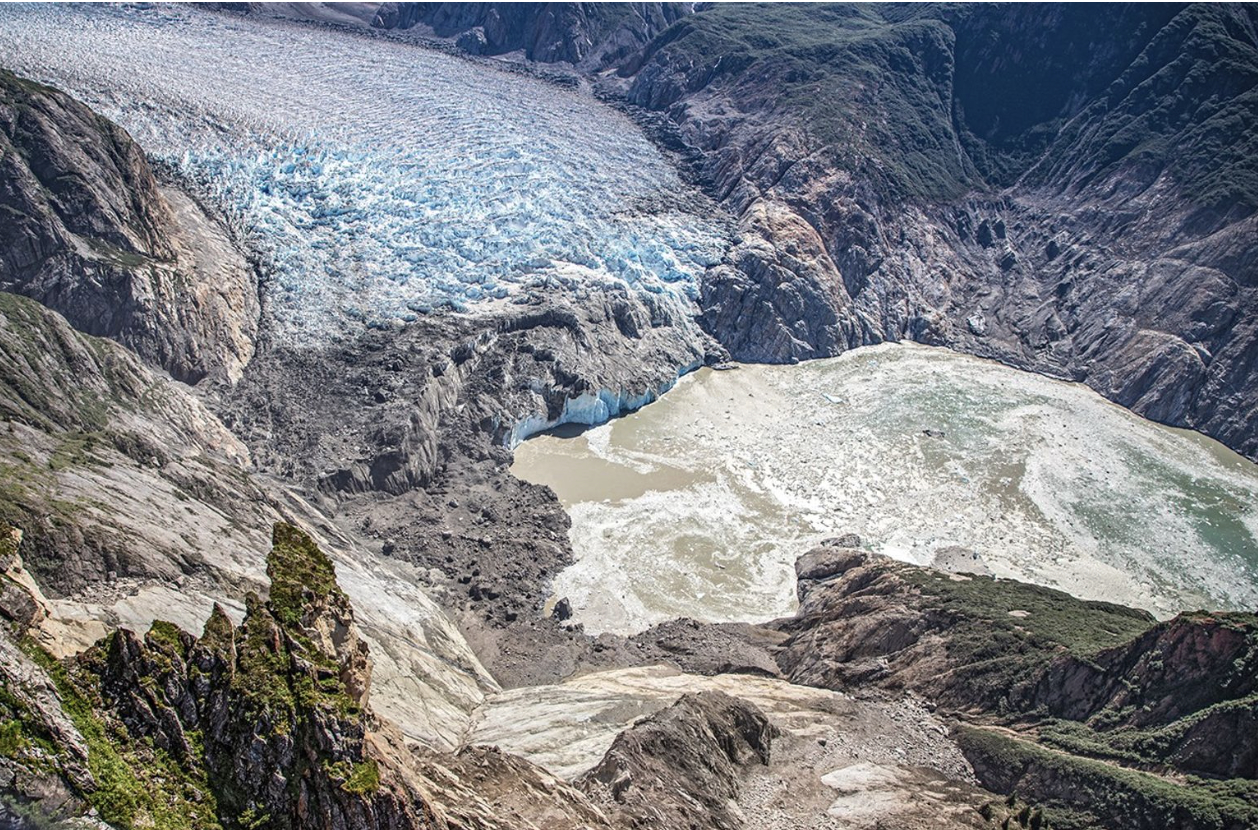
Göran Ekström tracks incidents like landslides and glacier collapse using tools once used only to monitor earthquakes.
In the remote Tracy Arm fjord of southeast Alaska, a dramatic geological event unfolded in the summer of 2025 that captured the attention of earth scientists worldwide. A colossal rock mass detached from the steep fjord walls and plunged into the water, generating a tsunami that surged more than 1,500 feet up the fjord’s towering cliffs. The sheer force of this natural disaster left lasting scars on the landscape, stripping forests along the slopes and underscoring hazards that could threaten future visitors, such as cruise ship passengers who routinely explore the area.
This incident, remarkable both for its scale and its timing, was closely studied by Göran Ekström, a distinguished professor affiliated with Columbia University’s Lamont-Doherty Earth Observatory and the Columbia Climate School. Ekström, who holds the Newberry Professorship in Earth and Environmental Sciences, has dedicated his career to adapting seismic monitoring techniques historically used to detect earthquakes, extending these methods to track landslides, glacier collapses, and related geological phenomena.
Related stories



The Tracy Arm event serves as a stark example of how climate change influences geophysical hazards. The fjord’s steep walls, shaped by glacial carving over millennia, proved vulnerable to rock slope failure—an occurrence that can suddenly displace massive volumes of earth and generate powerful waves. Researchers, including Ekström and his colleagues from multiple institutions, analyzed seismic data alongside physical observations to reconstruct the event’s dynamics, publishing their findings in the journal Science.
Their study reveals that when the rock mass entered the fjord, the displaced water surged dramatically, producing waves that rebounded against the fjord’s opposing cliffs and oscillated along its length. This complex wave behavior was visually confirmed by the extensive damage to vegetation, providing a natural record of the tsunami’s height and reach. Such evidence is critical for understanding the potential impact of similar events on human activities and infrastructure.
The integration of seismic monitoring into landslide research marks a significant advancement in hazard assessment. By detecting subtle ground vibrations caused by slope failures, scientists are better equipped to identify and analyze events that were previously difficult to observe remotely. This improved detection capability is essential in regions like southeast Alaska, where rugged terrain and limited accessibility pose challenges to traditional geological surveys.
Moreover, Ekström’s work emphasizes the growing importance of interdisciplinary collaboration in addressing climate-related risks. The insights gleaned from combining seismology, geology, and climate science inform risk mitigation strategies and public safety planning. For areas frequented by tourists—such as the Tracy Arm fjord—this research underpins efforts to monitor environmental changes and forecast potential threats posed by accelerating geological processes.
While the 2025 event did not impact any visitors, its implications highlight the increasing volatility of natural systems under climate stress. As warming temperatures contribute to glacier retreat and permafrost thaw, the stability of mountain slopes can deteriorate, elevating the likelihood of sudden landslides and resultant tsunamis. These phenomena present complex challenges for communities, policymakers, and scientists striving to anticipate and manage future hazards.
The research led by Ekström and his team contributes valuable data to the broader understanding of how Earth's dynamic systems respond to environmental shifts. By refining seismic monitoring tools and applying them to diverse geological events, they are expanding the toolkit available for early warning and disaster preparedness worldwide.
Though much remains to be learned about the precise mechanisms and triggers of such landslides, the Tracy Arm incident underscores the urgency of continued observation and study. As climate change reshapes landscapes and alters patterns of natural hazards, the work of researchers like Göran Ekström becomes increasingly vital in safeguarding both natural environments and human populations.
Full story & global impact
This article was synthesized and rewritten by MusicTop Editorial from reporting published by news.climate.columbia.edu. Read the publisher's report for the complete source context.
Read original source: news.climate.columbia.edu