Nine Great Albums You (Probably) Haven’t Heard
Published October 7, 2026 · WORLD
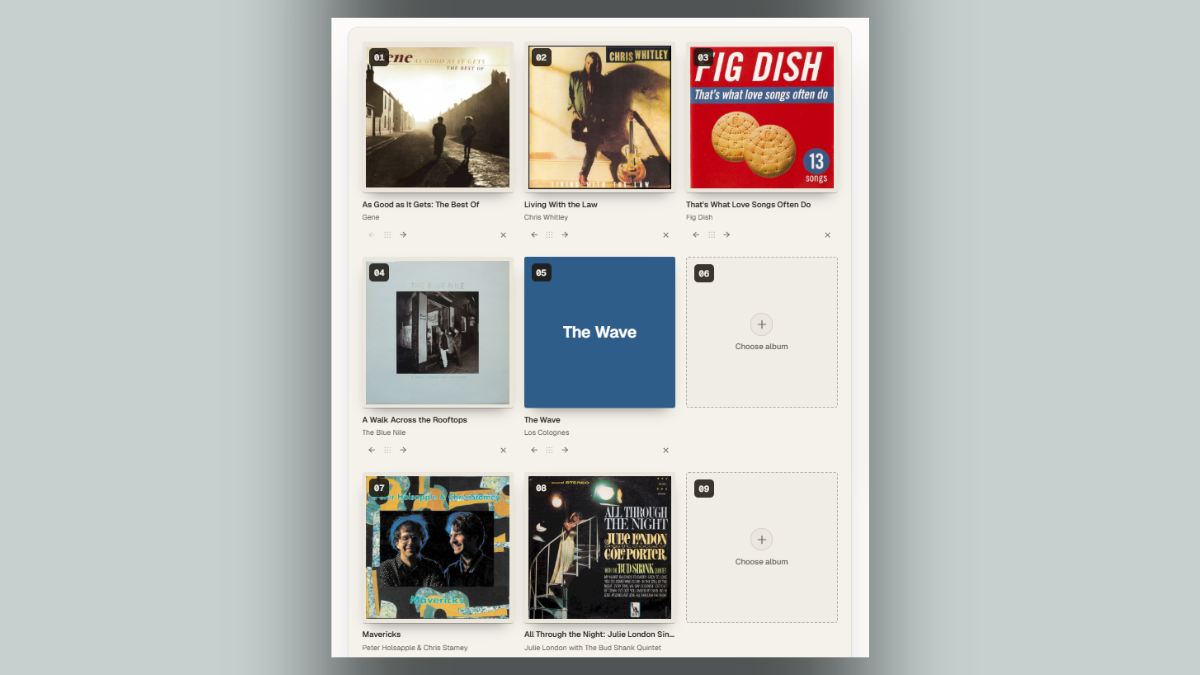
The 'Nine Albums That Made Me' trend is sweeping the socials, but let's try something a little more interesting.
In an era where social media trends often dictate musical conversations, the recent "Nine Albums That Made Me" challenge has inspired a wave of sharing personal favorites. However, beneath the familiar names dominating these lists lies a trove of lesser-known records deserving of attention. Drawing on perspectives compiled by thefederalist.com, this feature uncovers nine albums that remain underappreciated despite their artistic merit and distinctive qualities.
The 1990s Britpop scene, often narrowly defined by bands like Oasis and Blur, concealed many remarkable acts. One such example is Gene, a band whose 1997 collection "As Good As It Gets" serves as a compelling greatest hits compilation. Although technically a retrospective, the album’s cohesion and the involvement of Trainspotting author Irvine Welsh, who penned its liner notes, enrich its cultural footprint. Tracks like "Where Are They Now?" showcase the band’s enduring appeal despite their relative obscurity today.
Related stories


American singer-songwriter Chris Whitley offered a unique voice and guitar style that fused rock with the resonant tones of the dobro, an instrument rarely seen in mainstream rock. His 1991 release "Living With The Law" stands out for its subdued yet deeply affecting mood, capturing the vastness of Americana with tracks such as "Big Sky Country". Whitley’s blend of introspective lyricism and distinctive musicianship remains a hidden treasure for those willing to explore beyond the grunge-heavy narratives of the early ’90s.
Similarly, Chicago’s Fig Dish, whose 1995 album "That’s What Love Songs Often Do" received critical praise but limited commercial traction, offers a bridge between the angst of Nirvana and the melodic sensibilities of Weezer. Produced by Lou Giordano, the record balances catchy hooks with dynamic shifts, evident in singles like "Seeds". The band’s brief initial run ended with their sophomore album in 1997, yet their 2024 reunion and subsequent release signal a renewed appreciation for their nuanced contribution to alternative rock.
From Scotland comes The Blue Nile, a band whose sparse but impactful discography spans over four decades. Their debut, "A Walk Across Rooftops," is emblematic of their elusive nature, having been difficult to acquire outside the UK. Revered among musicians and critics alike, The Blue Nile’s influence is subtly acknowledged even in contemporary pop culture references, including a nod in Taylor Swift’s 2024 song "Guilty As Sin?" Their sophisticated merging of melancholy and sonic experimentation, as heard in "Tinseltown in the Rain," underscores their lasting, albeit understated, legacy.
Nashville-based Los Colognes presents another fascinating case. Their album "The Wave" channels an authentic 1980s production aesthetic—complete with signature gated reverb and Linn Drums—without succumbing to nostalgia’s pitfalls. This record’s infectious melodies and polished sound draw parallels to artists like Dire Straits and Phil Collins, making Los Colognes a compelling discovery for fans of meticulously crafted rock with a retro flair.
Echo and the Bunnymen’s 1990 release "Reverberation," created without lead singer Ian McCulloch, often escapes mainstream recognition. Despite the band’s internal struggles and mixed critical reception, this album features Noel Burke’s vocals and maintains a consistent post-punk psychedelia that merits reevaluation. Its relative absence from streaming platforms and the band's apparent wish to distance themselves from it have contributed to its obscurity, yet it stands as a distinct chapter in the band’s evolution.
The collaborative efforts of Peter Holsapple and Chris Stamey, members of the 1980s college rock outfit The dB’s, resulted in the 1991 album "Mavericks." This work showcases a maturation from their earlier power pop roots into a refined songwriting craft. Although it did not achieve widespread commercial success, its intricate melodies and thoughtful arrangements resonate with influences like R.E.M. and Big Star, marking it as a sophisticated yet overlooked gem.
Jazz vocalist London offers an intimate experience through her self-titled album, which captivated listeners with smoky balladry and impeccable arrangements. Accompanied by jazz luminary Joe Pass, the record’s nuanced performances and timeless standards establish it as a remarkable entry in the realm of jazz chanteuses. Despite her relative anonymity, London’s artistry invites discovery by aficionados seeking depth and elegance in vocal jazz.
Finally, the band initially known as No, later renamed Black English and subsequently No Los Angeles, illustrates the challenges of identity in the digital age. Their album, originally titled "El Prado," suffered from marketing confusion compounded by multiple name changes and a covering sticker altering the album’s presentation. Nonetheless, this indie rock record delivers compelling hooks and anthemic energy, with a vocal style reminiscent of The National and sonic textures evoking The Killers, underscoring the band's potential that was hindered by branding missteps.
These nine albums, spanning genres from Britpop and alternative rock to jazz and beyond, collectively highlight the rich diversity often overlooked in mainstream music discourse. They represent stories of artistic innovation, unfortunate timing, and the complexities of music marketing. As listeners continue to explore beyond the familiar, these records offer rewarding experiences that enrich the broader musical landscape.
Full story & global impact
This article was synthesized and rewritten by MusicTop Editorial from reporting published by thefederalist.com. Read the publisher's report for the complete source context.
Read original source: thefederalist.com