38 Years Ago, This Forgotten Disney Movie Helped Spark the Animation Renaissance Beloved By 80s Kids
Published October 17, 2026 · WORLD
If you grew up with Disney movies in the 1980s, there was a good chance you knew exactly what you were supposed to feel when their enchanted castle appeared on screen. The music started, the lights went down, and for the next hour and a half, everything was g…
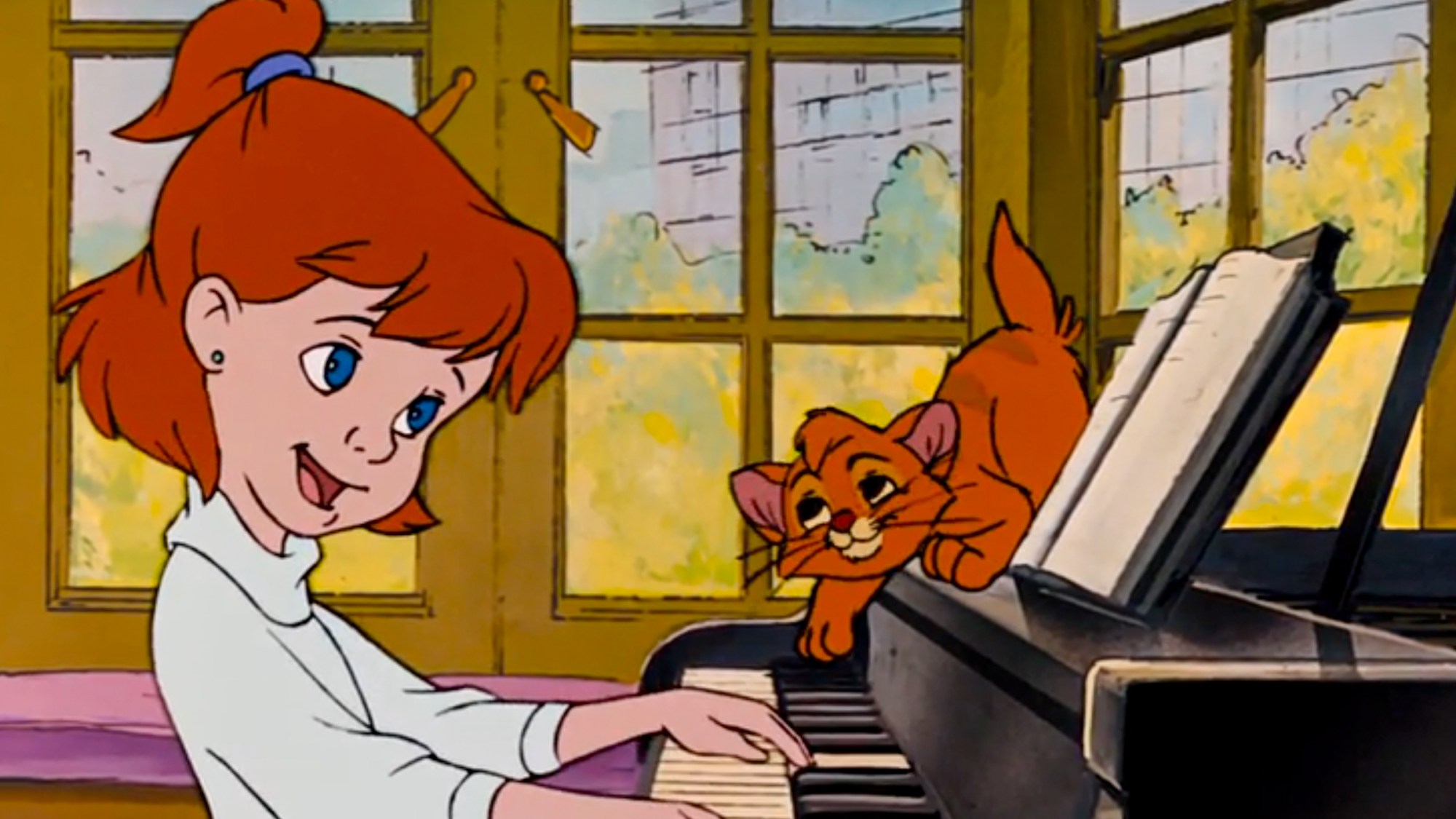
In the late 1980s, Disney animation found itself at a crossroads, struggling to reclaim the enchantment that had once defined its golden era. Amid this transitional phase, a distinctive film emerged that many contemporary viewers might overlook: Oliver & Company. Released in November 1988, this animated feature quietly contributed to setting the foundation for what would become known as Disney's animation renaissance.
Oliver & Company took the classic Charles Dickens narrative of Oliver Twist and transplanted it from Victorian London into a vibrant, modern New York City setting. Instead of focusing on human characters alone, it introduced a cast of street-smart dogs and an endearing kitten as the protagonist. This bold reimagining was further enriched by notable voices such as Billy Joel lending his talents to the character Dodger, and Bette Midler voicing Georgette. The film's soundtrack, blending contemporary music styles, found a devoted audience among children, reflecting the studio’s intent to resonate with the realities of its young viewers’ world.
Related stories

The production behind Oliver & Company was notable for its ambitious integration of traditional and emerging techniques. Disney artists conducted extensive on-location research in New York City, capturing street-level perspectives to inform their hand-drawn animation. While hand-drawing remained the centerpiece, the film also incorporated computer-generated imagery to animate vehicles, urban infrastructure, and other elements, marking an early and significant use of digital tools within Disney’s animation pipeline.
With over 300 artists and technicians involved, the film demonstrated a commitment to craftsmanship and innovation. The hybrid approach of combining hand-drawn artistry with computer animation hinted at a new direction for Disney, contrasting with the studio’s earlier reliance solely on traditional methods.
Financially, Oliver & Company was a modest success. It earned over $53 million domestically during its initial release and, with subsequent re-releases, surpassed $74 million. Remarkably, it debuted on the same day as The Land Before Time, a non-Disney animated feature that achieved global acclaim. However, in the United States, Disney’s urban-set tale outperformed its competitor, signaling that audiences were ready to embrace a refreshed style of animation from the venerable studio.
What makes Oliver & Company particularly significant in retrospect is the involvement of key figures who would later shape Disney’s most celebrated works. Animators and creatives such as Joe Ranft, Kirk Wise, Gary Trousdale, Roger Allers, Kevin Lima, and Mike Gabriel contributed to the film before leading projects like Beauty and the Beast, The Lion King, Tarzan, and Pocahontas. Glen Keane, a pivotal animator renowned for his work on The Little Mermaid, also participated in this production.
Moreover, the film’s musical dimension included contributions from Howard Ashman, whose collaborations with composer Alan Menken on subsequent Disney classics played a substantial role in the studio’s resurgence. Oliver & Company, therefore, can be seen as an incubator for the creative and technical talent that fueled Disney’s next era.
Despite these contributions, Oliver & Company has not maintained a prominent place in Disney’s public narrative. It lacks dedicated promotional material on official Disney channels, and its legacy is often overshadowed by the blockbuster successes that followed in the early 1990s. Yet, it remains a testament to a pivotal moment when Disney began aligning its animation with contemporary culture and technology.
The film stands as an example of how Disney embraced innovation without abandoning its artistic roots. The successful fusion of hand-drawn animation with emerging computer graphics foreshadowed the increasingly digital processes that would come to dominate the industry. This approach allowed Disney to retain the charm of traditional animation while exploring new creative possibilities.
Looking back, Oliver & Company embodies a transitional chapter in Disney’s history, bridging a difficult period with a creative spark that would ignite a renaissance beloved by a generation. For those interested in the evolution of animation and Disney’s legacy, revisiting this film offers insight into how a seemingly modest project helped redefine an entire studio’s trajectory.
Full story & global impact
This article was synthesized and rewritten by MusicTop Editorial from reporting published by comicbook.com. Read the publisher's report for the complete source context.
Read original source: comicbook.com