"Ladies who longform": Getting bookish with Emma-Lee Moss and Kathryn Williams
Published July 28, 2026 · CLASSICAL
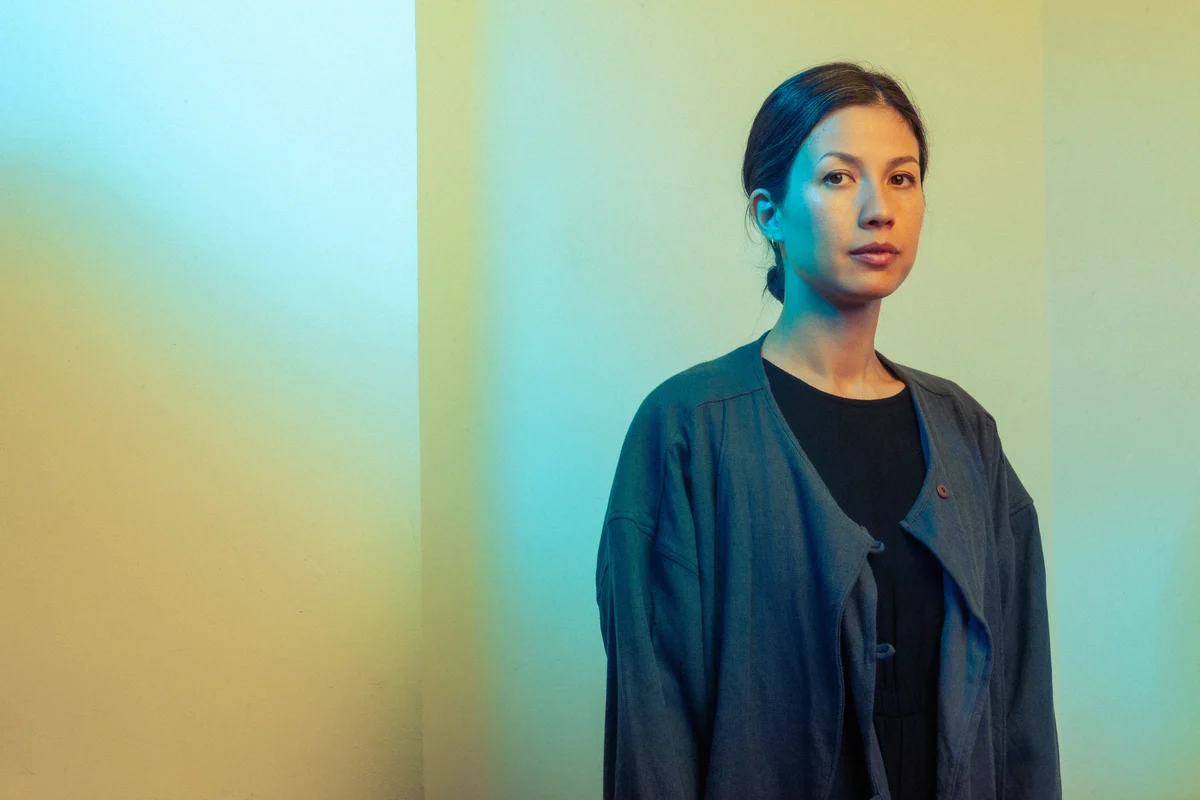
To mark the release of her memoir My Cantopop Nights, Emma-Lee Moss dives into the brave, new, and slightly muddled world of being an author-musician with Kathryn Williams.
Emma-Lee Moss, known in the music world as Emmy the Great, and Kathryn Williams, a prolific British singer-songwriter, have each embarked on parallel journeys that bridge the realms of music and literature. Their recent engagement at the Hay Festival provided a rare glimpse into how artists accustomed to songwriting are adapting to the demands of longform writing.
Moss’s debut memoir, My Cantopop Nights, released recently, marks a significant milestone in her creative career, capturing her personal history and cultural background with a focus on her upbringing in Hong Kong. This work contrasts with Williams’s tentative steps toward a second novel following her 2021 debut, The Ormering Tide, which is set on a fictional island inspired by the Channel Islands, reflecting her husband's Jersey roots.
Related stories



Both artists bring decades of musical experience to their literary pursuits. Moss, who concluded the Emmy the Great chapter with a farewell show in 2023, has released five albums and several EPs, while Williams boasts an extensive discography of 18 studio albums, inclusive of side projects such as the 2024 Willson Williams. Despite stepping away from performing under her stage name, Moss continues to blend music and writing by performing select songs at literary events, highlighting the ongoing interplay between the two disciplines.
Their conversation at Hay illustrated a shared recognition that creativity defies mastery and instead requires persistent engagement and openness to uncertainty. Williams emphasized the concept of “learning on the job,” noting that this applies equally to songwriting, novel writing, and even other artistic expressions like painting. Moss echoed this sentiment, acknowledging her ongoing struggle to fully grasp the craft of book writing despite her successful memoir.
Place emerges as a central theme in both authors’ works, serving not just as backdrop but as a formative element shaping their narratives. Moss’s memoir weaves the soundscape and cultural layers of Hong Kong into its fabric, while Williams’s novel confines its story to a tightly focused setting that deepens the emotional and psychological complexity of her characters.
Their reflections on the literary festival experience revealed a contrast between the worlds of literature and music. Williams spoke warmly of the civility and comfort found at literary events, noting the welcoming atmosphere and the ease of communication, which stands in stark contrast to the sometimes chaotic nature of the music industry. Moss highlighted her adjustment to the more structured and responsive environment of publishing, contrasting it with the unpredictability she encountered in music career management.
Both artists have a history of collaborating with writers and poets, merging music with literary forms. Williams recounted projects with notable poets and authors, including setting poetry to music and composing fictional albums for literary characters, underscoring the fluidity between their artistic domains.
Their dialogue also touched on the evolving nature of audience engagement. Moss expressed a desire to foster a more collaborative and immersive connection with her audience through writing, moving beyond the traditional one-way dynamic of live music performance. Williams highlighted platforms like Patreon as tools for maintaining intimate, ongoing exchanges with supporters, reflecting a modern approach to artistic interaction.
The creative process itself presents new challenges and opportunities. Williams described novel writing as an unstructured, intuitive endeavor requiring patience and a willingness to be led by the story’s unfolding. Moss detailed how her memoir’s structure was influenced by her previous work in musical theatre, seeking to craft an emotional arc that spans a lifetime, involving not only her own experiences but those of her family.
Despite their different approaches—memoir versus novel—the two creators share a commitment to exploring the unknown in their art. Both acknowledge the difficulty of translating intuition into form and express a continual sense of being beginners in their literary crafts. This humility and dedication underline their transition from musicians to authors, illustrating the porous boundaries between creative fields and the ongoing evolution of artistic identity.
Full story & global impact
This article was synthesized and rewritten by MusicTop Editorial from reporting published by thelineofbestfit.com. Read the publisher's report for the complete source context.
Read original source: thelineofbestfit.com