Why music in Iran is more than just entertainment
Published October 7, 2026 · JAZZ
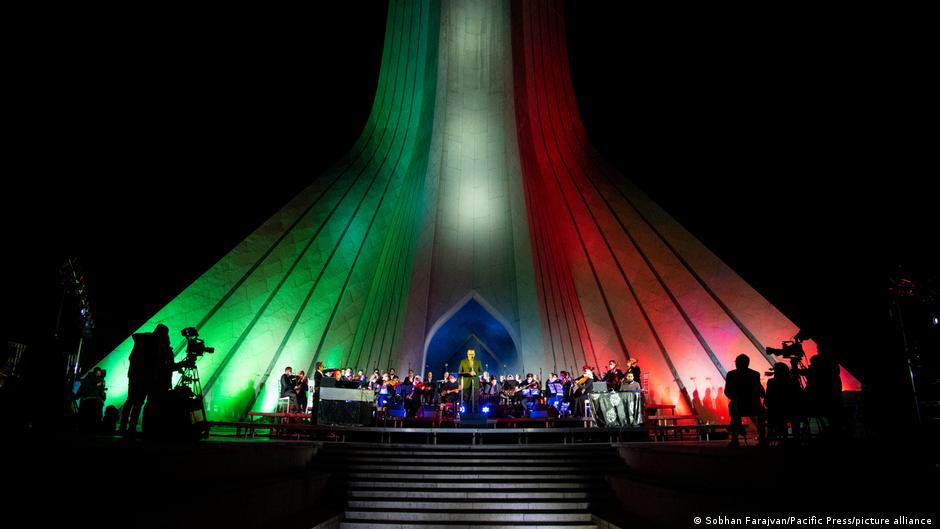
Iranian authorities are trying to persuade prominent singers in exile to return home. While the state seeks to harness music as a political tool, music has also become a powerful expression of dissent and resistance.
After decades abroad, prominent Iranian musicians such as Bijan Mortazavi and Mohsen Namjoo have recently returned to their homeland, signaling a complex intersection of culture and politics. Mortazavi, a celebrated violinist who gained international acclaim with a FIFA World Cup performance in 2026, and Namjoo, known for his experimental fusion of Persian traditional music with blues and jazz, are among the notable figures the Iranian government is encouraging to come back.
The Iranian Ministry of Culture, led by Abbas Salehi, has reportedly created a list of over 100 distinguished expatriate Iranians, aiming to facilitate their travel or return. This initiative extends even to individuals who have been critical of the regime, though it does not necessarily guarantee performance opportunities within the country. The ministry’s approach appears to focus on cultural outreach while maintaining political oversight.
Related stories

However, the right of Iranian citizens to enter their own country is enshrined in international law, specifically in the International Covenant on Civil and Political Rights, to which Iran is a signatory. Experts emphasize that such rights should not be conditional upon political loyalty, underscoring ongoing debates about freedom of movement for artists and intellectuals.
The relationship between music and governance in Iran has long been fraught. Following the 1979 Islamic Revolution, music was explicitly condemned by the new leadership, with Ayatollah Ruhollah Khomeini categorizing it as detrimental to society and calling for its eradication. During the subsequent Iran-Iraq War, music resurfaced primarily as a tool for promoting nationalistic and religious fervor, often through revolutionary songs.
Despite restrictions, female voices remained present, albeit largely confined to choral arrangements, reflecting the regime’s partial concessions in controlling musical expression. Public visibility of instruments was heavily restricted; musicians often concealed their instruments from authorities, and broadcasts rarely featured them.
The evolution of Iranian pop music emerged within this environment of cultural tension, as domestic artists sought to rival the influence of Persian-language music produced abroad, particularly from Los Angeles. Over the last decade, social media platforms have become vital in bypassing state control, facilitating a burgeoning underground music scene. Notably, young Iranian women have increasingly defied traditional dress codes by performing publicly with instruments like guitars.
The role of music has taken on profound political significance amid recent social upheavals. During the widespread protests sparked in late 2025, which were met with lethal repression, families of victims have used music as a form of mourning and resistance. Departing from established religious traditions, these communities have incorporated songs and dance into memorial services, creating new modes of public protest that challenge the state’s authority.
This cultural shift represents a marked departure from historical norms and highlights music’s capacity to serve as both solace and defiance. In this context, music transcends entertainment, embodying collective grief and a yearning for change.
The Iranian state’s attempts to reclaim exiled artists can be interpreted as an effort to co-opt influential cultural figures and shape the narrative surrounding music’s place within society. At the same time, musicians and their audiences continue to negotiate space for artistic freedom amid political constraints.
While details about the full extent of the government’s strategies remain limited, the simultaneous resurgence of musical expression and political repression illustrates the enduring power and complexity of music in Iran’s socio-political landscape. The ongoing tension between control and creativity underscores the vital role of music as a form of identity, resistance, and cultural memory.
Full story & global impact
This article was synthesized and rewritten by MusicTop Editorial from reporting published by dw.com. Read the publisher's report for the complete source context.
Read original source: dw.com